


Second Sunday of Easter, Year B
First Reading: Acts 4:32–35
Second Reading: 1 Jn 5:1–6
Gospel Reading: Jn 20:19–31
This Sunday is Divine Mercy Sunday. Hardon’s Modern Catholic Dictionary defines “mercy” as “the disposition to be kind and forgiving.”
Mercy is “founded on compassion,” but compassion is “the feeling of sympathy,” whereas mercy is “putting this feeling into practice with a readiness to assist.” Mercy is “therefore the ready willingness to help anyone in need, especially in need of pardon or reconciliation.”
The night before Jesus died, he said he was shedding his blood “in behalf of many for the forgiveness of sins.” The evening of his resurrection, he came through locked doors to give his apostles the power to forgive sins in his name. A week later, he identified himself to Thomas by the wounds he had suffered for our forgiveness.
What Jesus “most wanted to give his Church was mercy for sins,” says Cardinal Timothy Dolan: to “share with his priests the power to absolve them.”
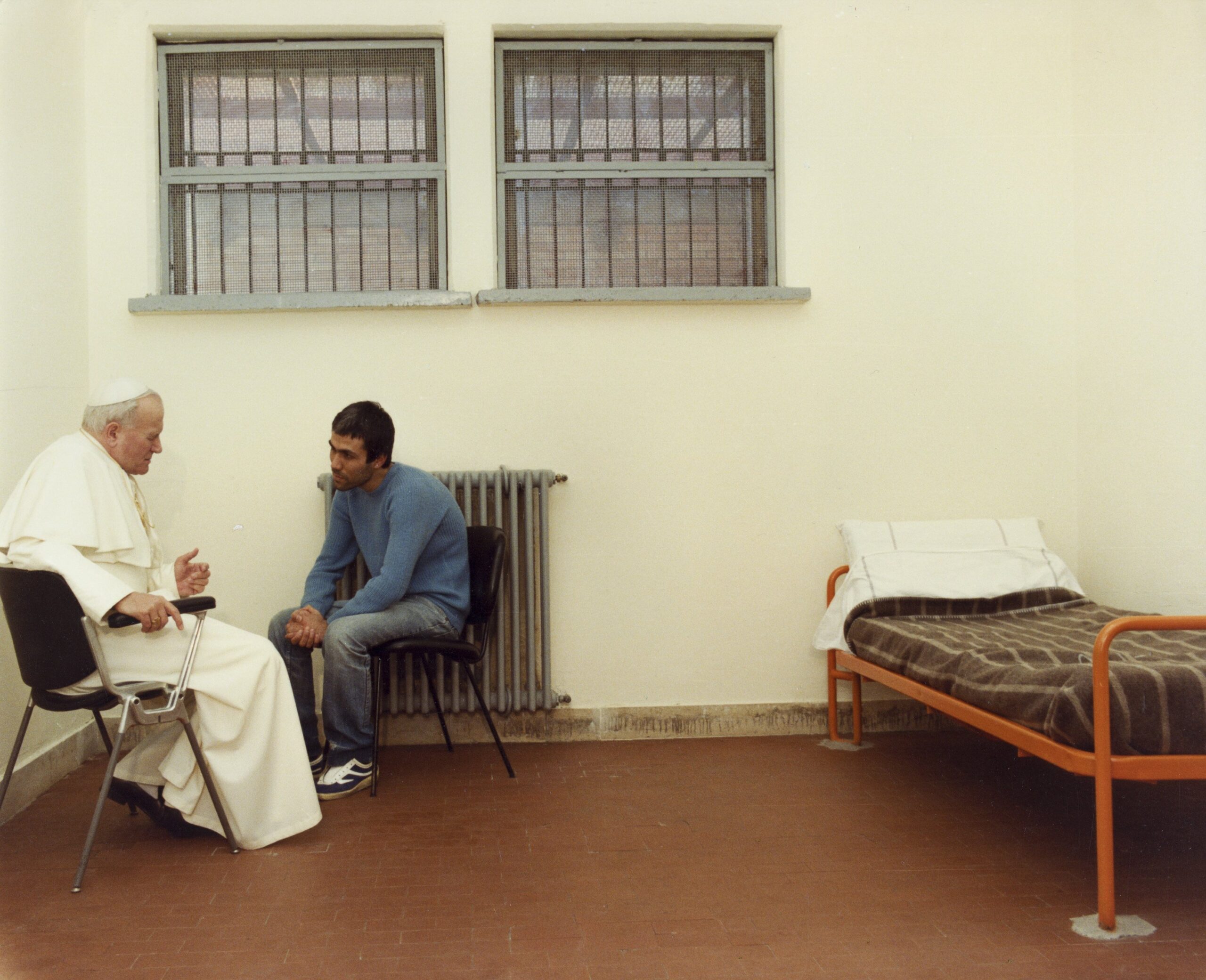
The only unforgivable sin is to refuse that mercy, Pope St. John Paul II explained. It is “the sin committed by the person who claims to have a ‘right’ to persist in evil—in any sin at all—and who thus rejects redemption.”
In such a person, the Holy Spirit, who must “convince us of our sin” before we can be forgiven, encounters what the Bible calls “hardness of heart”: a state of “spiritual ruin.” If it persists to the end, God cannot forgive us, for he respects our free will.
However, those of us who do accept God’s mercy can be guilty of another sin: presumption. We acknowledge that sin is offensive to God, but we presume that, of course, he will forgive the sins we commit—those that the world, the flesh, and the devil have taught us to consider “normal” or “natural.”
The truth is that (1) all sins offend God, whether we think them acceptable or find them abhorrent, and (2) God offers mercy to all sinners without exception.
It is the Church’s difficult task to keep both these facts before our minds.
For example, in the Catechism of the Catholic Church she says that “divorce is a grave offence against the natural law” and that a spouse who contracts “a new union” enters “a situation of public and permanent adultery.”
However, she adds that “toward Christians who live in this situation, and who often keep the faith and desire to bring up their children in a Christian manner, priests and the whole community must manifest an attentive solicitude, so that they do not consider themselves separated from the Church, in whose life they can and must participate as baptized persons.”
For another example, the Church says that “homosexual acts are intrinsically disordered” and “contrary to the natural law”; “under no circumstances can they be approved.”
However, she adds that people with “deep-seated homosexual tendencies” do not “choose their homosexual condition; for most of them it is a trial. They must be accepted with respect, compassion, and sensitivity”; every “sign of unjust discrimination in their regard should be avoided.”
Sin always offends God, but his mercy is infinite. All we have to do is admit our sins before a priest, stating that we regret them and are firmly resolved not to repeat them.
Knowing how difficult confession can be, Pope Francis has urged priests to make it an experience of “forgiveness and mercy,” not “a prosecuting court,” and to be ready to bless self‑acknowledged sinners who enter the confessional saying, “Bless me, Father, for I have sinned.”
As a priest, my most important job is celebrating Mass, where we relive what Jesus began at the Last Supper and finished on Calvary. However, my favourite job is what I do in the confessional, where I apply its saving power to the forgiveness of sins.
Jesus came to call sinners, not the just; to heal the sick, not the healthy.
May we never hinder his work.
Father Hawkswell is again teaching The Catholic Faith in Plain English with new insights, in print and YouTube form at beholdvancouver.org/catholic-faith-course. He is also teaching the course in person on Sundays (2–4 p.m. at the John Paul II Pastoral Centre, 4885 Saint John Paul II Way, 33rd Avenue and Willow Street, Vancouver) and Mondays (10 a.m.–noon in St. Anthony’s Church Hall, 2347 Inglewood Avenue, West Vancouver). The title of next week’s talk is Bearing Witness: Living as a Catholic.
Your voice matters! Join the conversation by submitting a Letter to the Editor here.







