


3rd Sunday of Advent, Year A
First Reading: Is 35:1–6a, 10
Second Reading: Jas 5:7–10
Gospel Reading: Mt 11:2–11
“Truly I tell you,” Jesus said, “among those born of women no one has arisen greater than John the Baptist; yet the least in the kingdom of heaven is greater than he.”
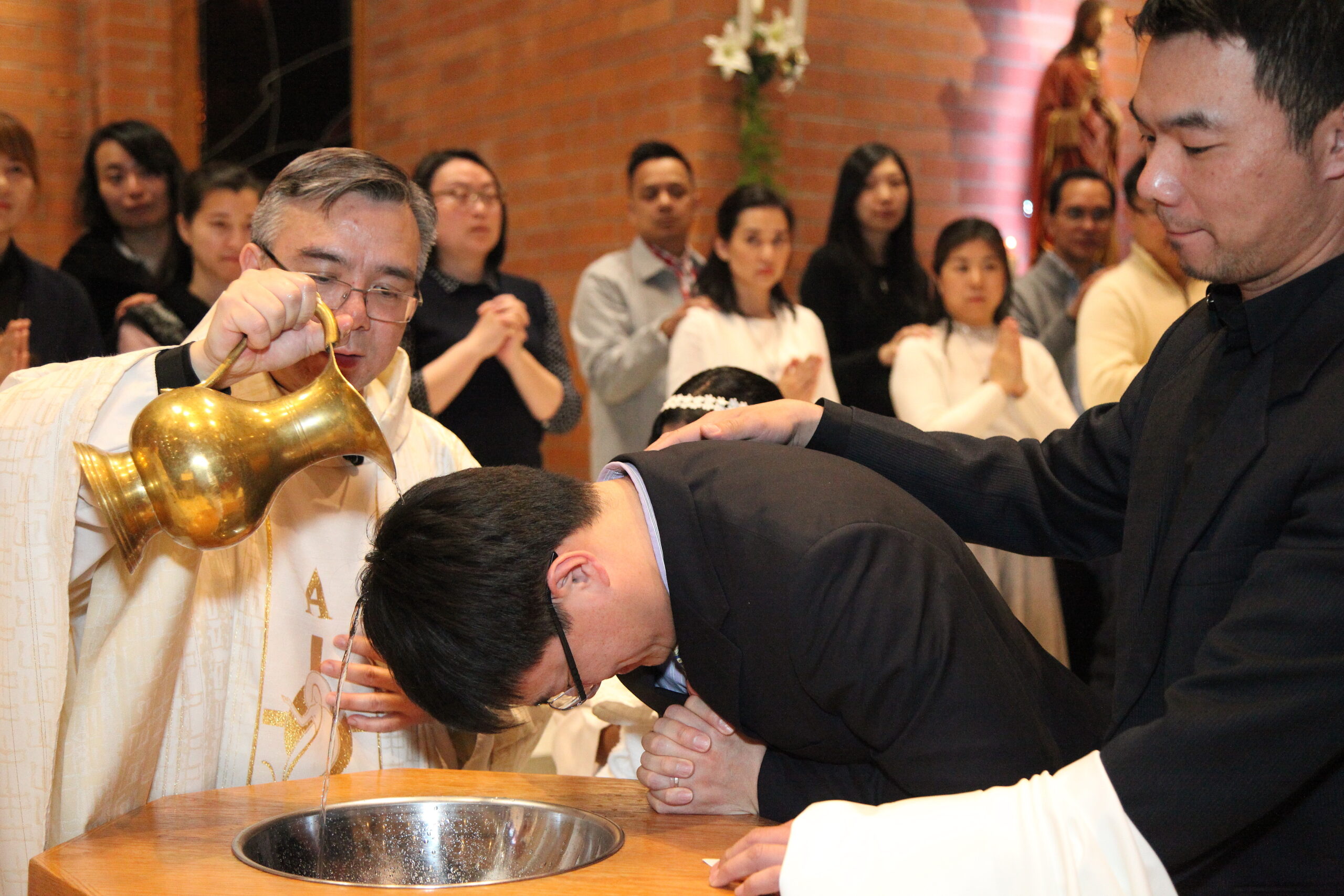
To understand this, we must distinguish between baptism of repentance, which frees us from sin, and baptism of the Holy Spirit, which gives us rebirth into supernatural life – divine life, God’s life.
“John baptized with water,” Jesus told his apostles, “but within a few days you will be baptized with the Holy Spirit.” When the people of Ephesus told Paul that they had received “the baptism of John” without even hearing of the Holy Spirit, Paul explained that “John’s baptism was a baptism of repentance”; he himself then “laid hands” on them and “the Holy Spirit came down on them.”
John was “a prophet,” Jesus said, and “something more than a prophet”: he was his “messenger,” sent to prepare his way.
Now John’s message was, “Reform your lives! The reign of God is at hand.” John’s baptism of repentance, then, was essential, part of “God’s plan,” St. Luke says.
However, John’s baptism did not confer supernatural life. He himself, then, although the greatest among those “born of woman” – those alive with natural human life – was less than “the least born into the kingdom of God” – those alive with supernatural life.
Christian baptism not only purifies us from sin, but also makes us “a new creation,” St. Paul said: adopted children of God, reborn with supernatural life, “partakers of the divine nature.” It introduces us into “the intimacy” of the Holy Trinity, says the Catechism of the Catholic Church, for the Holy Spirit communicates to us, intimately and personally, the divine life that originates in the Father and is offered to us in the Son.
“This gift exceeds all [other] gifts,” said Pope Leo the Great: “that God should call man ‘son,’ and man should name God ‘Father.’”
After baptism, then, as God’s adopted sons and daughters, speaking in union with his only begotten Son, we may indeed dare to say “our Father” – Jesus’ and ours.
You can see why once, impulsively, after baptizing a baby, I said, “This child now has as much right to heaven as Jesus Christ himself!” I shuddered – had I blasphemed? No; as St. John the evangelist exclaimed, “See what love the Father has bestowed on us in letting us be called children of God! Yet that is what we are.”
“Think about it in everyday terms,” says Scott Hahn. “You can forgive your auto mechanic if he overcharges you; but it’s unlikely that, upon forgiving him, you’ll adopt him into your family. Yet that is precisely what God has done.”
“In baptism we are identified with Christ, baptized in the Trinitarian name of God,” he says; “we take on his family name, and thus we become sons in the Son. We are taken up into the very life of the Trinity, where we may live in love forever.”
“Baptized into Christ,” we are “baptized into one body,” says the Catechism: Christ’s Mystical Body. Like Jesus’ conception in Mary’s womb, our supernatural regeneration in the baptismal font is virginal: “not by blood, nor by carnal desire, nor by man’s willing it, but by God,” as St. John said.
Just as the Holy Spirit made Mary conceive Jesus, so he makes the baptismal font “regenerate the believer,” says the Catechism. In Mary’s womb, “Christ was formed; in the waters of the Church, Christ is put on”; we are “clothed” with him.
However, repentance remains “essential.” During these last days of Advent, let us take advantage of what the Catechism calls “the sacrament of conversion, confession, penance, or reconciliation,” by which “sins committed after baptism” are forgiven.
It demands an examination of conscience, regret for sin, and a firm purpose of amendment, but only thus can we welcome Christ at Christmas wholeheartedly.
Father Hawkswell is again teaching The Catholic Faith in Plain English, with new insights. The whole course is available in written form and, one session per week, in YouTube form at beholdvancouver.org/catholic-faith-course. Father is also teaching the course in person: on Sundays at 2 p.m. in the John Paul II Pastoral Centre, 4885 St John Paul II Way, Vancouver (33rd and Willow); and on Mondays at 10 a.m. in St. Anthony’s Church hall, 2347 Inglewood Ave., West Vancouver. The title of the next session is The Communion Among the Saints in the Body of Christ.
Your voice matters! Join the conversation by submitting a Letter to the Editor here.







