


5th Sunday of Lent, Year C
First Reading: Isa 43:16-21
Second Reading: Phil 3:8-14
Gospel Reading: Jn 8:1-11
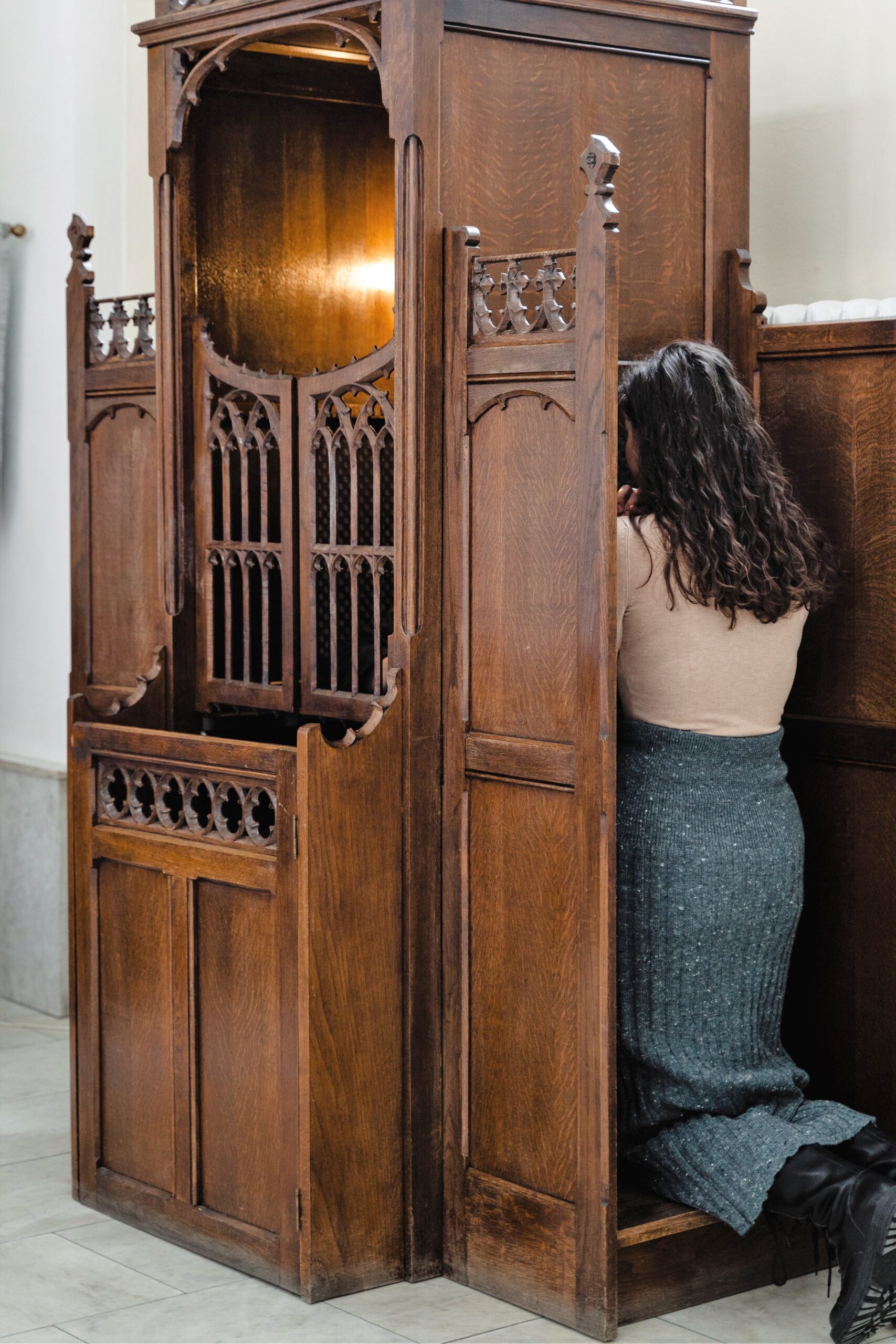
In Lent, we examine our consciences, repent our sins, confess them, accept forgiveness for them, and make reparation for them.
When I was editor of The B.C. Catholic, I once published an examination of conscience to help a reader who did not know how to confess his sins. Afterward, a woman wrote urging that we stop thinking about our sins and instead focus on our relationship with God.
She was partly correct, partly incorrect. We must examine our consciences and repent our sins precisely because they interrupt or even break off our relationship with God. Then, however, we should focus on God, as we hear in this Sunday’s Readings.
God tells us not to remember “the former things,” for he is about to do “a new thing.” St. Paul says that he forgets what lies behind and strains forward to what lies ahead. Jesus does not condemn the woman caught committing adultery, but tells her not to sin again.
Analogously, an astronomer views the stars through a telescope. If the lens is dirty or imperfectly shaped, the stars are unclear. Accordingly, he examines his telescope and cleans the lens or buys a new one. Then he looks back at the sky. Insofar as his telescope demands his attention, it is a poor telescope.
An author conveys a picture or idea with words. If the words are badly chosen, the light on the book is bad, or the print is too small, our attention is jerked away from the picture or idea to the difficulty of reading. Perfect reading occurs when we can forget we are reading and focus entirely on the picture or idea.
Similarly, our attention should be on God. Our sins get in the way, so we must repent them and accept God’s forgiveness — but then we should look back at God. Like St. Paul, we should regard as “rubbish” anything that distracts us from “the prize of the heavenly call of God in Christ Jesus.”
St. Paul uses that phrase in Christ three times in the Second Reading and over 70 times in the Bible. St. John and St. Jude also use it.
If it is not just a pious metaphor, what does it mean?
God has made Christ “Head of the Church, which is his Body,” St. Paul said. Baptism, therefore, not only makes us members of the Church, but also incorporates us into Christ as organs of his Mystical Body, says the Catechism of the Catholic Church. (Corpus or corporis is Latin for “body.”)
That is what it means to be “in Christ.”
Now “what the soul is to the human body, the Holy Spirit is to the Body of Christ, which is the Church,” says the Catechism. It is because of him “that all the parts of the Body are joined one with the other and with their exalted head.” Like the human soul in the human body, he “is the principle of every vital and truly saving action in each part of the body.”
“He works in many ways” to build up the body: by the authority given to the apostles — “which holds first place among his gifts”; by Scripture and sacred tradition, interpreted authoritatively by the Church; by the sacraments; by the virtues of the body’s members; and by special graces called “charisms.”
The Holy Spirit works in the Church, for it is to her that he was “entrusted,” says the Catechism. He establishes and builds our person-to-person relationship with Christ in the Church, for it is in her “that communion with Christ has been deposited.”
God does not save us as individuals. “No one has gone up to heaven except the one who came down from heaven, the Son of Man, who is in heaven,” Jesus told Nicodemus.
What God saves is Christ’s body. We shall share Christ’s victory only by being in him and thus sharing his righteousness.
Father Hawkswell is again teaching The Catholic Faith in Plain English. The whole course is available in written form and Sessions 1-26 in YouTube form at beholdvancouver.org/catholic-faith-course. Session 27, “How to Go to Confession,” will be available in YouTube form starting April 3.







