

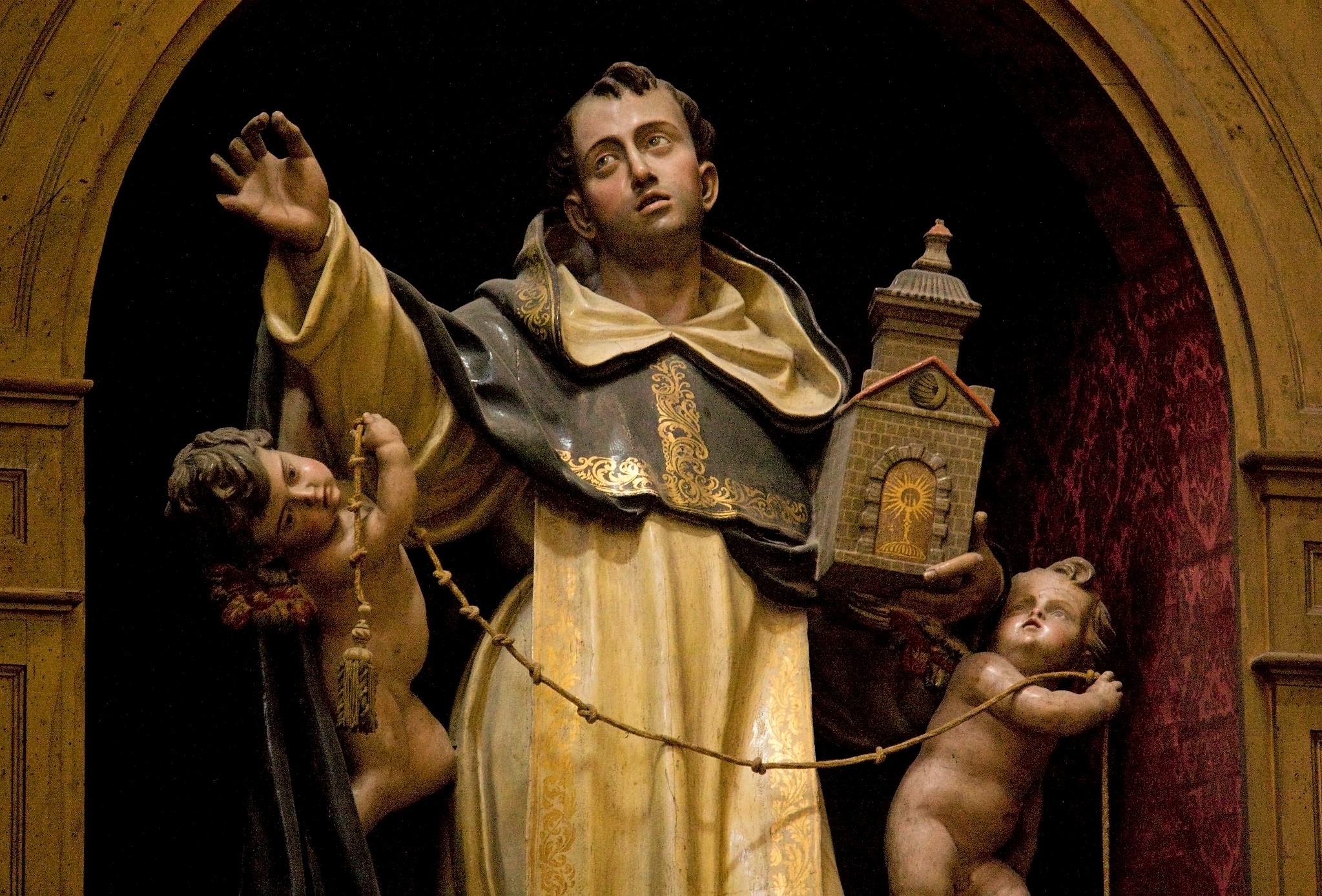

St. Thomas Aquinas, where are you?
That’s a rhetorical question. We know where the patron saint of education is – in heaven doing his best to intercede for us 21st-century dunces who are as arbitrary, contradictory, and bewildering as anyone Aquinas had to deal with in the 13th century.
If ever there was a need for rational thinking about faith, reason, natural law, politics, and society, it’s now. The insight that Aquinas could bring would certainly benefit Canadians, who are all over the map about religion and public life according to the latest survey from Angus Reid.
The survey results are a confounding collection of paradoxes and inconsistencies that cry out for interpretation. As Angus Reid puts it, Canadians show strong support for religious freedom in Canada “alongside limitations as to how far that faith should extend in public life.”
For example, more than 60 per cent of Canadians say Canada benefits from freedom of religion. At the same time, more than half say reducing the presence of religion in public life is a sign of progress.
On the question of a political candidate’s religion, 55 per cent say personal faith should not be a matter of concern for media during an election campaign, and 63 per cent say it does not matter to them whether a political leader is a person of faith. Yet, when asked about the Catholic faith of Conservative Leader Andrew Scheer, a slim majority saw it negatively. Meanwhile, the faith of NDP Leader Jagmeet Singh, a practising Sikh, was seen negatively by less than a quarter of respondents.
If you’re confused, it gets worse. Offered a hypothetical situation about a pro-life politician who makes it clear their personal views will not influence their political actions, nearly 60 per cent said that would be acceptable. Initially that might sound fair, until you consider why the question was asked, and why Canadians would think it’s acceptable for a politician to keep their deeply held beliefs buried, refusing to act on them.
If a politician were to say they were inspired by Pope Francis’ teachings on the environment, it’s inconceivable that Canadians would insist those beliefs be kept private. If a political leader professed to be motivated by a Franciscan spirit of charity toward the poor and homeless, would that trouble anyone? Of course not.
So, here’s what we have. Canadians value religious freedom, but don’t want to see it in the public square. They say a leader’s faith doesn’t matter to them and should be off limits, yet they view a practising Catholic’s faith negatively. And they say a politician who has pro-life views but won’t act on them is acceptable. (My heroes are the 13 per cent who said they are disappointed by a politician who is pro-life but keeps it to himself.)
As Angus Reid put it, there are “competing perspectives in Canadian society when it comes to faith in the public square.”
There’s only one way to make sense of all this: recognize that at its core, the debate is not about personal beliefs or religious faith, but about what those beliefs are or what that faith teaches.
Canadians are simply being like cafeteria-Catholics on a broad scale, picking and choosing what they want, even if their choices are incompatible with each other, like ordering from the cafeteria’s healthy diet selection, then topping the meal off with a chocolate sundae.
Canadians who profess to support religion but don’t want it influencing anything, who say faith contributes to Canada but don’t want politicians to reflect it, and who think politicians should keep their religious views to themselves on issues like abortion, are basically lying to themselves and others.
They’re trying to say the right things about religion when speaking to pollsters, but their ultimate belief is to suppress anything that might disturb their conscience.







