


Earlier this summer, the following text came into our family group chat from our eldest: “Nobody freak out, but I’m currently holding Pope St. John Paul II’s vestments.”
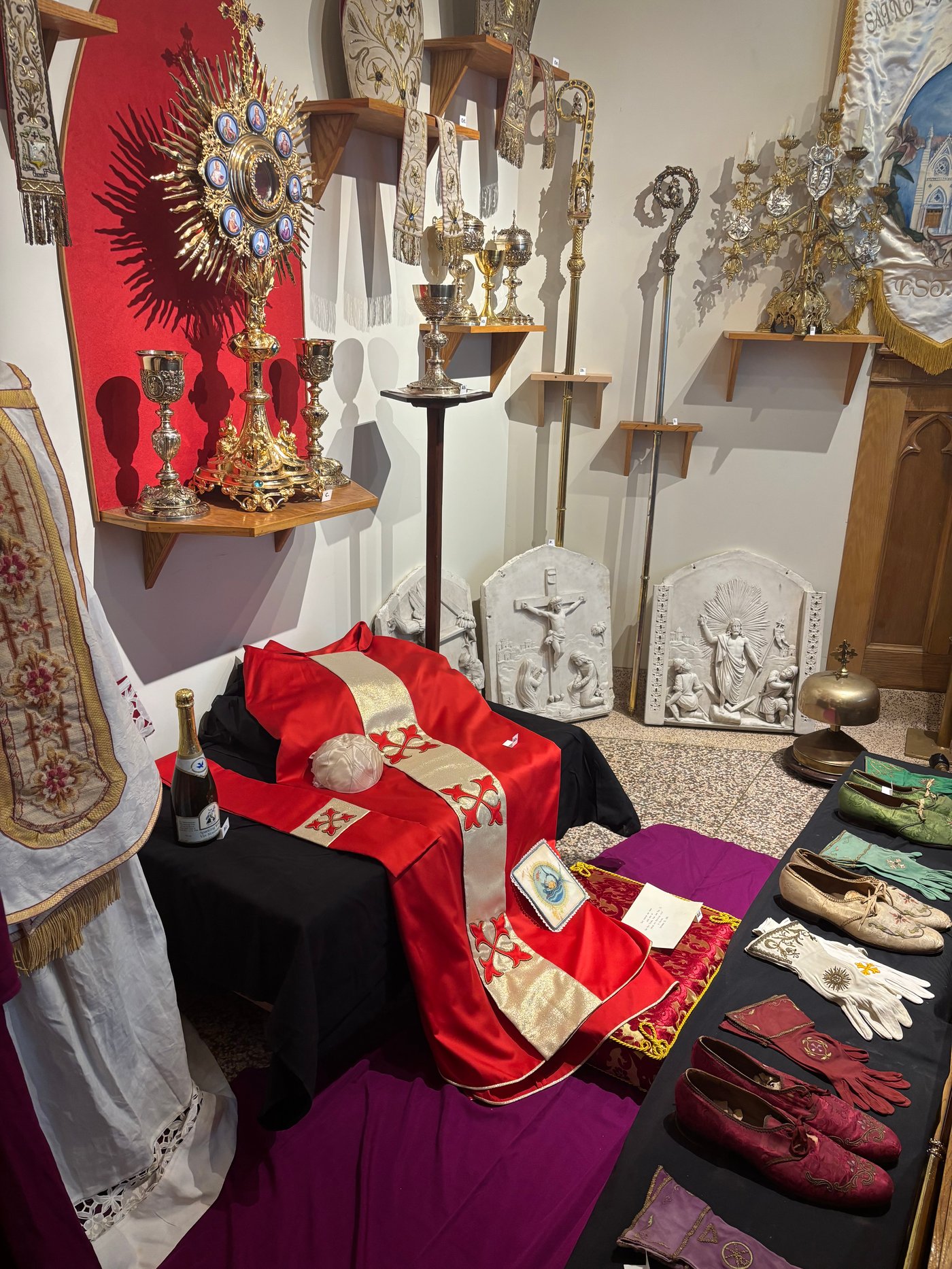
As part of her recent internship with the Office of Archives at the Archdiocese of Halifax-Yarmouth, our daughter was helping refresh a museum exhibit, which included cataloging and rearranging artifacts used by Pope John Paul II during his 1984 visit to Halifax. The stop was part of a 12-day tour of Canada and marked the first time a pope had visited our country.
Pope St. John Paul II’s vestments are now considered second-class relics, since they were touched by a saint. The same goes for other things he touched on that visit, including a cushion he kneeled on and the chalice he used at Mass. Not only is getting to handle relics a cool task for a young historian, but it is also a centuries-old tradition held dear by many Catholics.
The veneration of relics is a curious thing. While not uniquely Catholic, the large number of saints recognized by the Catholic Church lends itself to an exponentially larger number of relics. The Church recognizes the significance of items that were intimately connected to saints. First class relics are body parts of saints or items directly connected to Jesus’s passion. Second class relics are items worn or used by a saint during his or her lifetime, or the instruments of torture or death in the case of martyrs. Third class relics are anything (rosaries, crucifixes, medals, holy cards, etc.,) touched to a relic.
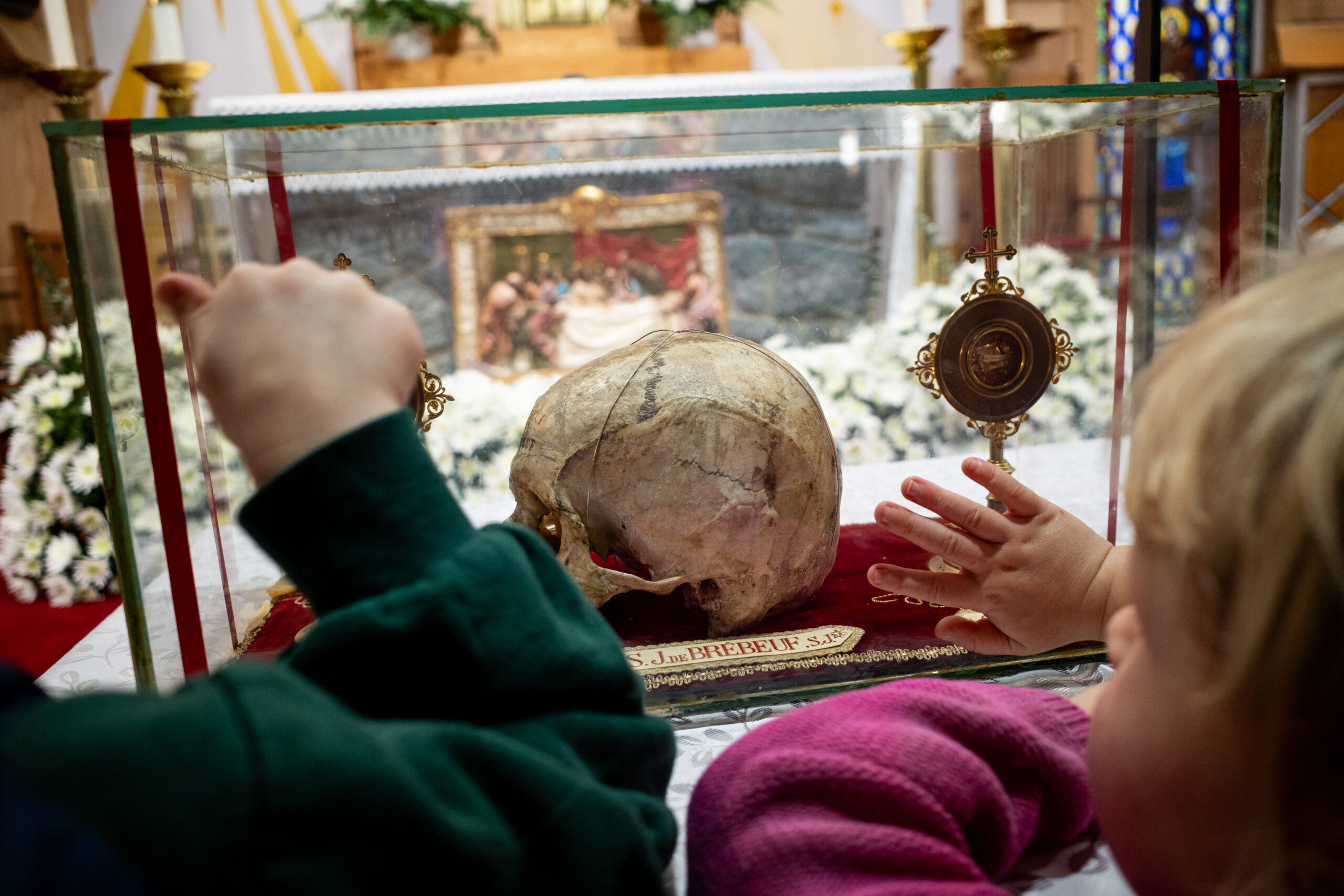
By way of personal knowledge, I happen to know that even one’s family vehicle can become a third-class relic. Last fall, two Jesuits priests from the Martyrs’ Shrine in Midland, Ontario made a visit to our parish with some of the relics of the Canadian Martyrs, including the skull of St. John de Brebeuf. Our parish was one stop of several on their Atlantic Canada tour. When their vehicle broke down before they could continue on to Newfoundland, we leant them our vehicle for the last leg of their journey. In return, we received the privilege of being able to say our car is now a third-class relic.
But why does the Church give such importance to relics? Is it not rather morbid to hold on to body parts and display them in churches and shrines, sometimes drawing large crowds? Undoubtedly, there are some who treat this tradition like a superstition, but that is not the Church’s intention. Relics are not good luck charms or automatic healers.
The Catechism of the Catholic Church says this: “The religious sense of the Christian people has always found expression in various forms of piety surrounding the Church’s sacramental life, such as the veneration of relics, visits to sacristies, pilgrimages, processions, the stations of the cross, religious dances, the rosary, medals, etc.” (CCC No. 1674).
Venerating relics should help us to pray. Contemplating the holy life of the saint whose relic is being venerated should inspire us to also become saints someday. The lives of the saints are practical applications of holiness in various moments in history, cultures, circumstances and walks of life. There is, literally, a saint story for everyone. And since the saints did their best while on this earth to emulate Christ, we can take their examples to heart.
When we venerate relics, we are reminded that we are always supposed to be about the business of striving for sainthood. Relics can also remind us about the time limit we all have in this life. The Church offers us the canon of saints to point out that all these men and women have come and gone and used their time on this earth wisely to ensure they spend eternity in Heaven.
There are plenty of relics associated with healing and miracles. The Shrine of St. Anne de Beaupré in Quebec is one of the most famous examples in Canada. Pilgrims flock to the shrine to visit three first class relics of the mother of the Blessed Virgin Mary, and countless people have reported being healed through her intercession. St. André Bessette’s relics can be viewed at St. Joseph Oratory in Montreal, and in Old Montreal, at Notre-Dame de Bon Secours, the relics of St. Marguerite Bourgeoys, founder of the Congregation de Notre Dame, are on display.
If you don’t have any relics of your own, ask your parish priest if your parish has any. At one time, almost all fixed altars contained a first-class relic — try to find out if your parish has one and whose relic it is. Churches, especially older ones, often have other reliquaries that may or may not be on display. Ask around to other Catholics you know and see what interesting relic stories they might have.
While we are privileged to house these and many more relics in our own country, this is only a small dent in the relics that can be found in Catholic Churches and museums around the world. As new saints are being named by the church, the number of relics continues to grow, along with opportunities to learn about the lives of these holy men and women.







