

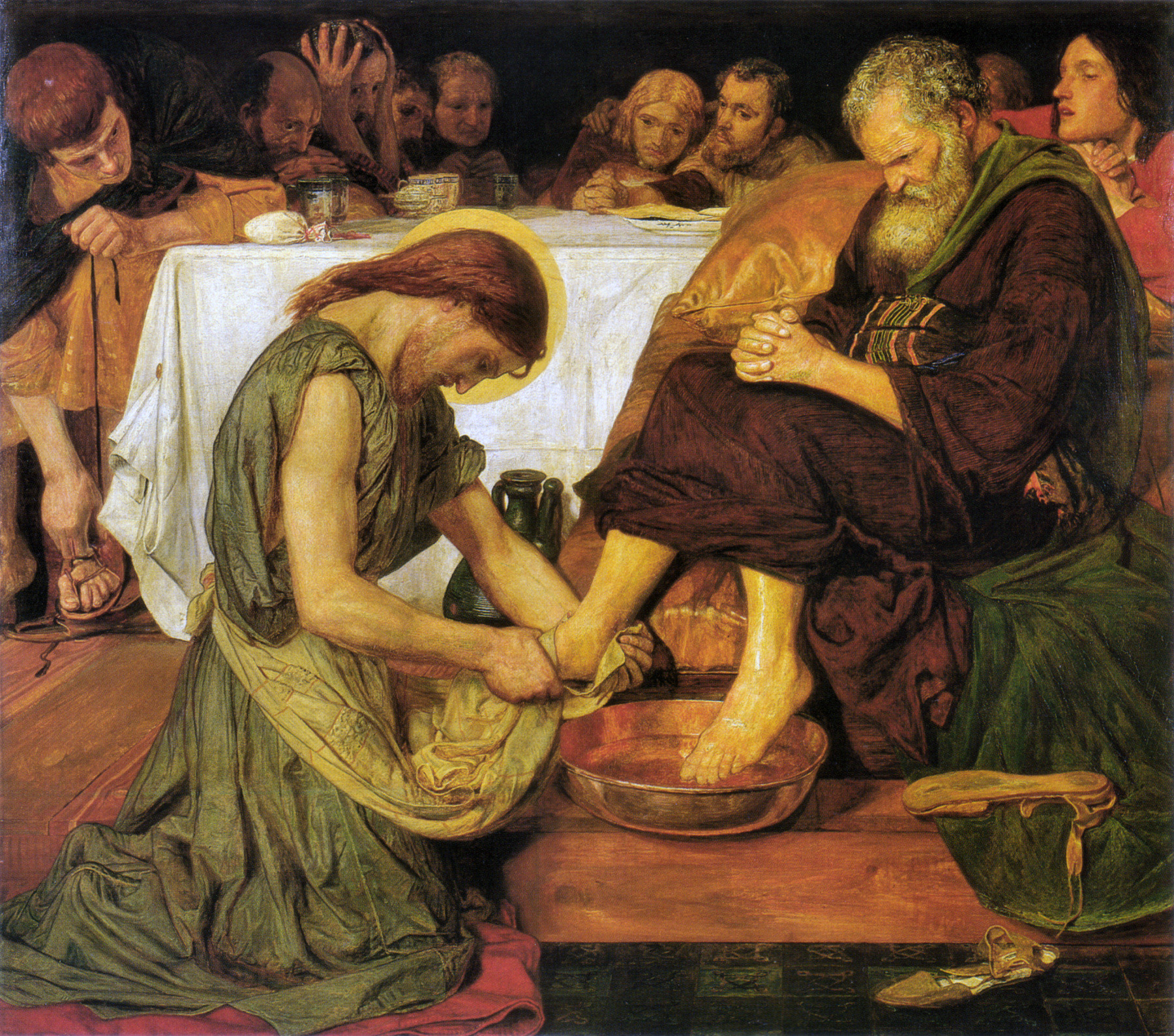

Christ is the humblest man in human history, and Our Lady is the humblest woman. Humility is a fundamental virtue in Christian life. According to a Bible themes dictionary, humility is “an attitude of lowliness and obedience, grounded in the recognition of one’s status before God as his creatures.”
God commands humility and exalts the humble: “Take my yoke upon you, and learn from me; for I am gentle and lowly in heart, and you will find rest for your souls” (Mt 11:29).
Our Lady said, “he has put down the mighty from their thrones, and exalted those of low degree” (Lk 1:52).
Our Lord later said, “For every one who exalts himself will be humbled, and he who humbles himself will be exalted” (Lk 14:11).
St. James wrote, “Humble yourselves before the Lord and he will exalt you” (Jas 4:10). “God opposes the proud, but gives grace to the humble” (Jas 4:6; 1 Pet 5:5).
St. Vincent de Paul (1581–1660) said, “Humility is nothing but truth, and pride is nothing but lying.” Therefore, reflection on the reality of “nothing” and “grace” is a great remedy against pride. According to Father Reginald Garrigou-Lagrange, OP, humility “presupposes the knowledge of two dogmas: that of creation ex nihilo, and that of the necessity of actual grace for taking the slightest step forward in the way of salvation.”
Father Garrigou-Lagrange’s writings help us to reflect on these truths: in the natural order, we came from nothing and rely for our very existence on our Creator; in the supernatural order, we can do nothing without the grace of God, and without the help of God we cannot persevere and grow in the life of grace. Sinning is worse than doing nothing. How many times we have committed sin! The realization that we are sinners should keep us very humble.
Regarding humility, St. Vincent de Paul (1581–1660) said, “I have tried over and over again to find out the best means of living in union with God and in charity with my neighbours, and I have never found anything that helped as much as humility – the lowering of oneself below everyone else with the sense that one is really worse than others, and the refusal to judge anyone.”
One day, a poor relative from the country came to visit St. Vincent. The poor young man was lacking in education and social manner. At first St. Vincent responded with fear of embarrassment and had the porter take the youth to his room, where he might meet with him privately. Soon, St. Vincent realized that by doing so, he had given in to the sin of pride. Therefore, he apologized to his relative and took him to the rest of the community members and introduced him as a valued member of his family.
St. Vincent practised humility in speech. He made it a practice, whenever two ways of saying something came to his mind, to choose the less brilliant. St. Gabriel of Our Lady of Sorrows (1838–1862) made this resolution: “I will not say a word that might, in the least, turn to my praise.”
The saints practised humility by rejoicing in the great things God did through them, without taking credit for themselves. After being praised by St. Elizabeth (Lk 2:42-45), Our Lady praised God with her Magnificat (Lk 2:46-55).
God performed many miracles through St. Bernard of Clairvaux (1090–1153). However, St. Bernard was not affected by the enthusiasm and praise of the people. It always seemed to him that the people were really honouring someone more worthy than himself.
St. Francis de Sales (1567–1622) told St. Vincent de Paul that sometimes he wept with joy while reading his own books. He did so not with pride, but with gratitude, knowing the wisdom contained in the books was given to him by God.
“Humble yourselves therefore under the mighty hand of God, that in due time he may exalt you” (1 Pet 5:6).
「謙遜就是真相」 何庭耀
人類歷史中,基督是最謙遜的男人,聖母是最謙遜的女人;而謙遜是基督徒基本生活的道德。「聖經字典」解釋:「謙遜是一個人在天主面前,作為祂的受造物,感到應該卑微與聽命的心態。」
天主要我們謙遜,並會舉揚謙遜的人。「你們背起我的軛,跟我學罷!因為我是良善心謙的:這樣你們必要找得你們靈魂的安息。(瑪竇福音11:29)」吾主說:「祂從高座上推下權勢者,卻舉揚了卑微貧困的人。(路加福音1:52)」祂又說:「因為凡高舉自己的,必被貶抑;凡貶抑自己的,必被高舉。(路加福音14:11)」聖雅各伯宗徒呼籲:「你們務要在上主面前自謙自卑,祂必要舉揚你們。(雅各伯書4:10)」聖伯多祿亦記錄著:「天主拒絕驕傲人,卻賞賜恩寵於謙遜人。(伯多祿前書5:5)」
聖文生(1581-1660)說過:「謙遜無他,只顯露真相。驕傲無他,只會說謊。」因此,這反映出「自謙與聖寵」能抵消驕傲。道明會會士、雷金納.加里.拉格朗分析:「謙遜展示出兩個要理:天主從虛無中創造,和天主的寵祐是我們得救起步線。」
雷金納.加里.拉格朗的箸作,讓我們認識兩個真理:在自然律之內,我們來自虛無,我們的存在只能依賴造主。超自然律之內,缺乏天主的聖寵,我們什麼都不能作,沒有天主的助佑,我們不能在聖寵內增長。我們一生中曾多次犯罪,認識到我們是罪人,應該要非常謙遜。
有關謙遜之德,聖文生(1581-1660)說:「我曾多次嘗試尋找有效的生活方式,讓我能活在天主之內,用愛德和鄰人共處;最後,發現謙遜是最有效的德行 ── 在眾人前謙遜自己,認為自己不比他人好,亦不應判斷他人。」
有一天,一位貧窮年青的親戚來訪聖文生,他缺乏教養和社交禮教,聖文生對他的到訪,有點兒尷尬,怕有失大體,使人帶他到房間,準備私下相見。後來,聖文生明白這全因內心的驕傲,遂向這位年青人致歉;隨即把他介紹給其他人,把他以家庭上賓看待。
聖文生均以在天主內的謙遜,喜悅地應付每件事情,不會歸功自己;就如聖母被聖依撒伯爾稱讚(路加福音2:42-45)後,她馬上讚頌天主(路加福音2:46-55)。
天主通過聖納德(1090-1153)行了許多奇蹟,聖人對他人對他的稱讚和羨慕,無動於衷,只看作是為別人而設。
聖方濟.沙雷(1567-1622)向聖文生透露,有時翻閱自己的箸作時,會喜極而泣,不是自傲,而是感恩,知道是天主賜給他智慧,寫下那些箸作。
「你們該屈服在天主大能的手下,這樣在適當的時候,他必舉揚你們。(伯多祿前書5:6)」
fatheranthonyho@gmail.com www.fatheranthonyho.ca







