

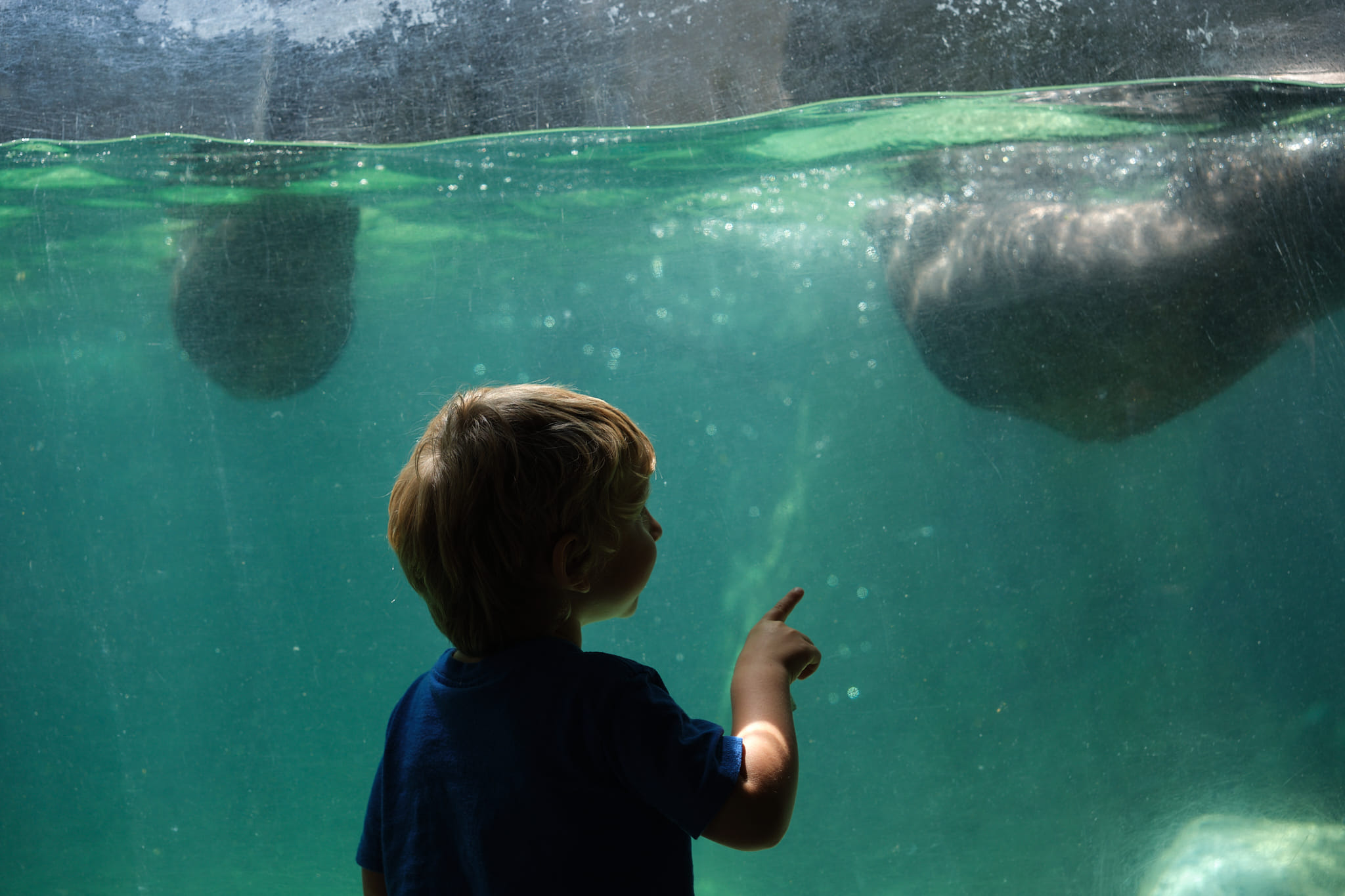

While wading through the disenchanted swamp of modernity, the approach of Father’s Day offers a chance to reflect on how children and fatherhood re-enchant the world like few things can.
It’s not just that children bring an explosion of wonder, enthusiasm, and imagination to every moment, but the experience of building a relationship with a person who lacks all the pretensions and hang-ups associated with adulthood will explode your perception of human value—and all value—if you let it. (Clarification: this is a good explosion.)
So much of the modern world’s concept of personhood and human value is wrapped up in productivity, competence, and, by consequence, economics. My children are neither productive nor competent, and they bring me no money to speak of (unless you count that time my daughter gave me a quarter she found on the sidewalk).
Children are, by their very nature, bumbling and curious and time consuming … Actually that isn’t quite right. They don’t consume my time, they fulfil it. They don’t give value to my life, they give it meaning.
These aren’t simply semantic distinctions, they are clarifications about the nature of human worth. They are clarifications about the nature of reality.
Economic and material language is the great hidden serpent of our age. Without thinking too hard we have invited it into our homes, places of worship, and political institutions, where it whispers slow death and decay, framing our conception of human value with implied economic calculus.
Saying my children “consume my time,” or that they are “valuable,” may seem harmless enough. They reflect observable phenomena: I have only so much time, and when I spend (Ack! “Spend:” there it is again!) time with my kids, that time is technically used.
Likewise, “Consumption” seems like an adequate turn of phrase to describe this occurrence, except the word exists in a larger linguistic context. It is usually used to describe the way in which commodities (and, more recently, content—another disgusting modern perversion) are used in market environments. If the go-to reference point I have for my time is its relationship to money, real or imaginary, what am I really implying by “my kids consume my time”?
Language is not a value-neutral tool. It forms the substrate of our reality. Practically speaking, things don’t exist for us if they can’t be named. There is a cognitive linguistic phenomenon in which people’s perception of colour is limited by the words their language has for various colours. African tribesmen who have no word for orange find it near impossible to distinguish between red and orange. Their language restricted their perception.
The Athenians worshipping an unknown god suffered a similar fate. Without Paul they wouldn’t and couldn’t know the truth of Christ. This is one of the great tragedies of human existence. The Athenians intuited an emptiness, but their perception was limited to the shadows in Plato’s cave.
Children are a wonderful antidote to modernity’s shroud over reality. Our obsession with disenchantment, of rooting our understanding exclusively in the quantifiable realm of measurement, doesn’t survive contact with children in 2025. Children embody Peter Pan and fairy magic too strongly for the dullness of materialism to constrict their exploration.
Of course, there is danger to this. Fairies, even the Disneyfied Tinker Bell kind, are unstable and capable of great violence. There is danger in exploration devoid of direction. Unchurched religion does not lead to fulfilment and purpose; it leads to paganism and human sacrifice. Unstructured engagement with reality does not lead to enlightenment, it leads to madness.
Institutions and structure are important, and this is why children have parents. My job as Dad is to help my children filter their experiences and direct their attention to the wondrous and Divine. Grace and love are reciprocal, so in fulfilling my purpose I am enlightened and grow with my children.
This is fundamentally because true human flourishing is only found in relationship, be that with God, within a church, or within the tiny political institution we refer to as the family. A lone wolf isn’t a hero—he is dead.
Every Father’s Day my wife asks what I want to do. Often, I am tempted to say I want time with friends, or time alone, but it never feels right. Treating the day like a relaxing reward for good behaviour as a father feels like a betrayal of the vocation God has entrusted me with. It also removes an opportunity to experience something with my children. And every day I spend with my kids, is a day I get to see a little more of what reality is. How could anyone want anything else?
Your voice matters! Join the conversation by submitting a Letter to the Editor here.







