

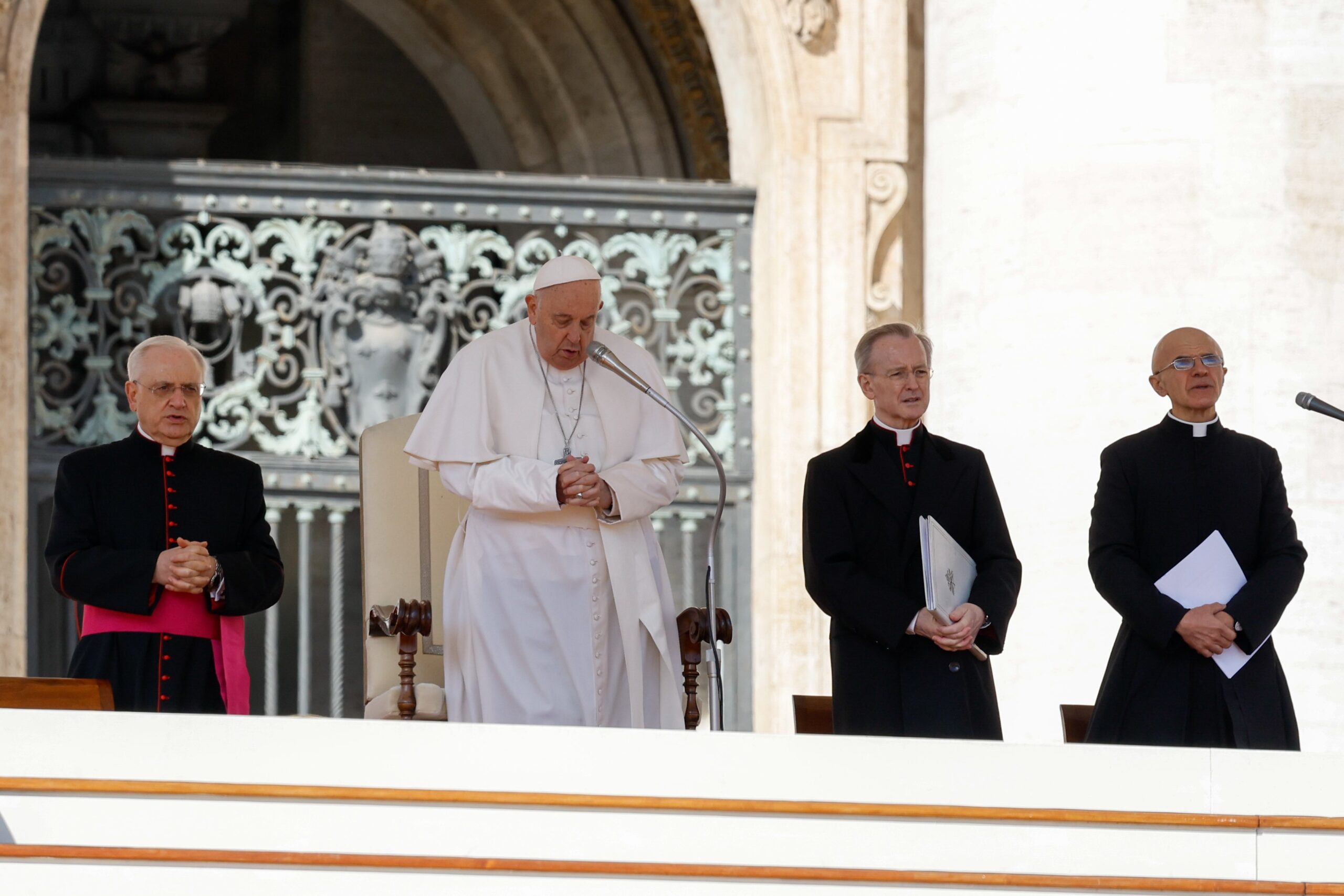

Prayer can be challenging, even for Pope Francis.
“Praying is not something easy, and this is why we flee from it. Every time we want to pray, we are immediately reminded of many other activities, which at that moment seem more important and more urgent,” he said.
“This happens to me too: I go to pray a little… and ‘no, I must do this and that’… We flee from prayer; I don’t know why, but that is how it is. Almost always, after putting off prayer, we realize that those things were not essential at all, and that we may have wasted time. This is how the enemy deceives us.”
Distractions, dryness, and sloth are common difficulties in prayer.
Regarding distraction, the Holy Father said, “The battle to achieve and maintain concentration does not relate only to prayer. If one does not attain a sufficient level of concentration, one cannot study profitably, nor can one work well. Athletes know that contests are not won solely through physical training, but also with mental discipline: above all, with the capacity to concentrate and to remain focused. Distractions are not to blame, but they must be fought. In the heritage of our faith there is a virtue that is often forgotten, but which is quite present in the gospel. It is called ‘vigilance,’ And Jesus said, ‘Keep vigil. Pray.’”
The Catechism addresses dryness. “Another difficulty, especially for those who sincerely want to pray, is dryness. Dryness belongs to contemplative prayer when the heart is separated from God, with no taste for thoughts, memories, and feelings, even spiritual ones. This is the moment of sheer faith clinging faithfully to Jesus in his agony and in his tomb. ‘Unless a grain of wheat falls into the earth and dies, it remains alone; but if it dies, it bears much fruit.’ If dryness is due to the lack of roots, because the word has fallen on rocky soil, the battle requires conversion.” (CCC 2731)
Sloth is “a form of depression due to lax ascetical practice, decreasing vigilance, carelessness of heart,” according to the Catechism.
Pope Francis asks, “So what can we do in this succession of enthusiasms and discouragements? One must learn to always walk. True progress in spiritual life does not consist in multiplying ecstasies, but in being able to persevere in difficult times: walk, walk, walk on… and if you are tired, stop a bit and then start walking again. But with perseverance.”
During a general audience in May 2021, the Holy Father gave a valuable lesson on prayer: “We have all experienced this: we have prayed, prayed, for the illness of a friend, of a father, of a mother, and then they were gone. God did not grant our request! It is an experience we have all had. The Catechism offers us a good summary of the matter. It puts us on guard against the risk of not living an authentic experience of faith, but of transforming the relationship with God into something magical. Prayer is not a magic wand: it is a dialogue with the Lord.”
He added that we must be careful to remember that we serve God, not the other way around. He warned against “a prayer that is always demanding, that wants to direct events according to our own design, that admits no plans other than our own desires.”
Instead, he said, follow Jesus’ example.
“Jesus, on the other hand, had great wisdom in teaching us the Lord’s Prayer. It is a prayer of questions only, as we know, but the first ones we utter are all on God’s side. They ask for the fulfilment not of our plan, but of his will for the world. Better to leave it to him: ‘Hallowed be thy name, thy kingdom come, thy will be done.’… Let us look back a little: how many times have we asked for a grace, a miracle, let’s say, and nothing has happened? Then, over time, things have worked out but in God’s way, the divine way, not according to what we wanted in that moment. God’s time is not our time.”
祈禱需要警醒和恆心
教宗方濟各曾說過:「祈禱並不是一件容易的事,這就是為什麼我們會逃避。每當我們想要祈禱時,立刻就會想起許多其他的事情,那些事情在當時似乎更重要、更緊急。這種情況也發生在我身上:我想去祈禱一會兒…但不,我必須先做這事個和那事…。我不知道為什麼要逃避祈禱,但事情就是這樣。幾乎總是在推遲祈禱之後,我們才意識到那些事情根本不重要,我們可能浪費了時間。這就是敵人欺騙我們的方式。」
在祈禱中,分心、枯燥、懶惰是常見的障礙。關於分心,教宗說:「努力達到和保持專注不僅適用於祈禱。如果一個人沒有足夠的專注,就無法有效地學習,也無法工作得好。運動員知道比賽不僅單靠身體訓練就能贏得,還需要心理上的紀律:尤其是專注和保持專注的能力。不應該責怪分心,但必須對抗。在我們信仰的傳承中,有一種美德經常被遺忘,但在福音中卻很常見,被稱為『警醒』。耶穌說過:『保持醒寤。祈禱。』」
天主教教理說明:「特別對那些真誠願意祈禱的人來說,另 一個困難就是枯燥。枯燥屬於心禱的一部分。 在枯燥時,心靈好似與天主分離,對思想、記 憶、情感,甚至對屬靈的事物都感到乏味。這正是信德要真實地表現的時刻:忠誠地伴隨耶 穌進入痛苦中和到墓穴裡。『一粒麥子如果不 落在地裡死了,仍只是一粒;如果死了,才結 出許多子粒來』(若12:24)。如果枯燥是因聖 言落在石頭上而沒有根的緣故,那這戰鬥便要求皈依。」(天主教教理#2731)
懈怠是「名詞來表示因靈修功夫的鬆懈、警醒的低落、心靈的漫不經心而導致的消沉。」(天主教教理#2733)教宗方濟各說:「在這一連串的熱誠和挫折中,我們該怎麼辦呢?人必須學會始終如一地前行。在靈修生活中真正的增長不在於倍增神魂超拔,而在於能夠在困難時堅持不懈:走,走,繼續走下去… ,如果你感到疲累,就停下來休息一下,然後再開始走。但要有恆心。」
在2021年5月26日的一次公開接見中,教宗提供了一個關於祈禱的寶貴教訓:「我們都有這樣的經歷:我們曾經為朋友、父親、母親的疾病祈禱,祈禱了又祈禱,然後他們離開了。天主沒有應允我們的請求!這是我們都有過的經歷。《天主教教理》為我們提供了一個很好的總結。讓我們警惕不要過著沒有真實信仰體驗的風險,並將與天主的關係轉化為某種魔法。祈禱不是一支魔法棒:是與主對話。實際上,當我們祈禱時,我們可能陷入一種風險,即不是我們在服事天主,而是期望天主在服事我們。(參考《天主教教理》#2735)。這是一種始終苛求的祈禱,希望按照我們自己的計劃來做事,除了自己的意願,不接受其他計劃。另一方面,耶穌以非常的智慧教導我們《天主經》。如我們所知,這只是一個提問的祈禱,但我們首先提出的都是關於天主的問題。不是要求我們的計劃得以實現,而是隨從天主的旨意。最好只聽從衪:「願祢的名被尊為聖,願祢的國來臨,願祢的旨意承行於地。」(瑪6:9-10)…。讓我們回顧一下:我們多少次求恩寵、求奇蹟,但什麼也沒發生。然而,隨著時間的流逝,事情的發展是按照天主神聖的計劃,而不是當時我們想要的結果。天主的時間不是我們的時間。」







