

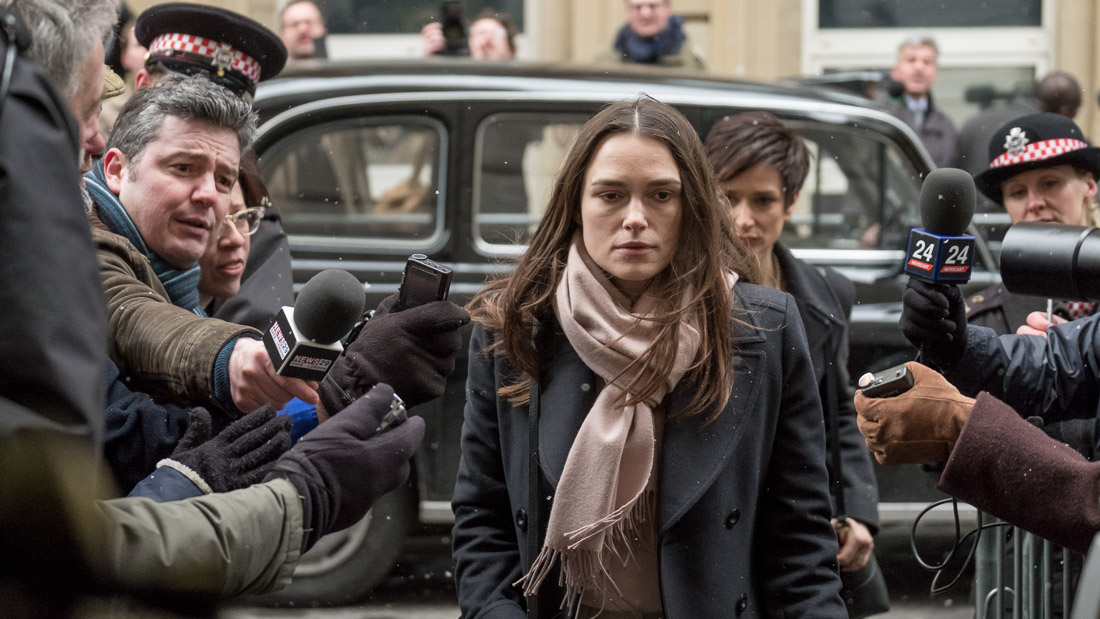

When governments lie, is whistle-blowing morally justified? Is this patriotism or treason, bravery or betrayal?
In this computerized age, the “leaking” of sensitive information – whether by Wikileaks or Snowden or others – has become very familiar. People relatively far down in the power structures of government may have access to documents. That some of the people who release confidential data publicly have signed official secrets acts makes them guilty of a crime.
This issue is at the heart of a gripping new film, appropriately called Official Secrets, based on the real-life story of Katharine Gun, who used to work for the Government Communications Headquarters (GCHQ), a British intelligence agency.
Gun discovers the British government under the leadership of Prime Minister Tony Blair is joining forces with the United States to pressure countries to vote at the United Nations in favour of a declaration of war on Saddam Hussein in Iraq. While today it is well known that the excuse for such a war was based on misinformation that Hussein was manufacturing weapons of mass destruction, the film is not directly concerned with the terrible tragedy of the war itself.
Made firmly in the fine tradition of All the President’s Men – to which, in fact, the film pointedly refers – Official Secrets also presents a human story. It focuses primarily on the impact the whistle-blower’s actions had on herself and her husband (a Kurdish refugee and a Muslim), and the staff of The Observer attempting to determine whether the newspaper should print the story and ultimately bringing it to public attention, as well as lawyers and Gun’s co-workers. It shows the manner in which the information was leaked and the government’s attempts to discredit Gun, above all by charging her with treason.
The film makes clear Ms. Gun thought she was acting honourably as a public servant who felt that she was working for the British people, not for a government she knew to be lying. Regardless of what one thinks of her actions, Official Secrets is enormously relevant. It even shows how modern technology not only can be used to spread information but might also accidentally affect that information.
Drawing on a book about Gun by Marcia and Thomas Mitchell, a team of writers including director Gavin Hood have come up with an intelligent script, which weaves in actual newsreel footage. Hood directs the film with a documentary clarity, making the complex of events easy to follow and leading viewers on a suspenseful and involving journey.
The film does occasionally falter: in particular, scenes involving Ed Vullamy, the American correspondent for The Observer, border on the farcical. However, a strong cast of actors, led in a beautifully understated performance by Keira Knightley, and a clever alternation between emotional and informative scenes together hold the viewer’s attention.
The film is more disturbing than reassuring when many countries are plunged into chaos today because of a questioning of political leadership. Regardless of political persuasion, many viewers will find it both challenging and very entertaining.







