

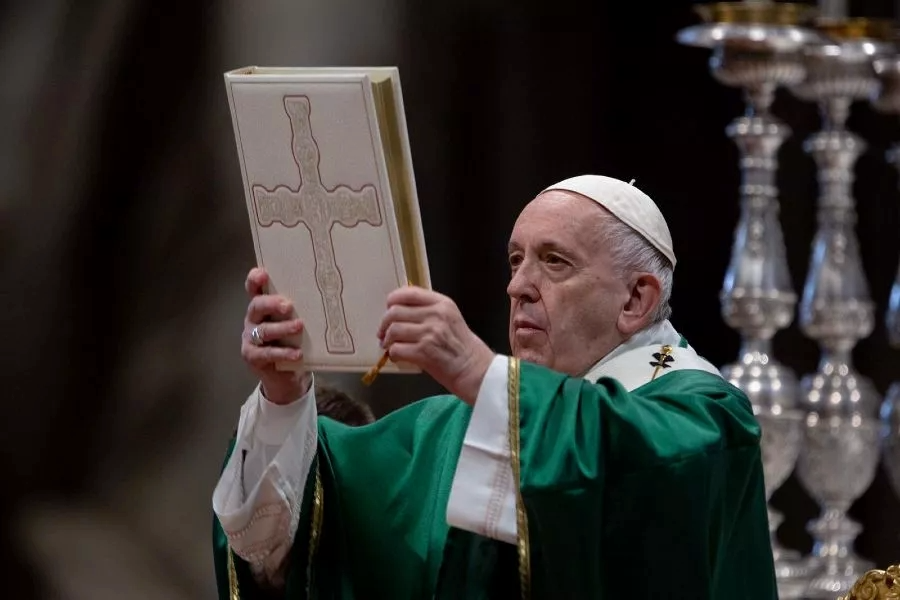

At the Centre for Christian Engagement at St. Mark’s College we mourn the passing of Pope Francis.
When Pope Francis was elected Pope, I was writing a Scripture column for America Magazine, the Jesuit magazine of North America. The Jesuits at America were surprised and excited at the new Jesuit Pope. I first came to learn of his thought through the major interview published on September 30, 2013, in Jesuit journals around the world titled A Big Heart Open to God.
I responded to that interview with a piece I wrote for America called The Pope’s Interview and the Bible. As a Scripture scholar, I wanted to understand the biblical foundations of his thought as they emerged in that interview.
I saw three key passages as foundational for his thought. The first was the call of St. Matthew 9:9-13, in which the Pope identifies not as a religious expert but as a sinner called by Jesus to follow him, as we all are. The Pope said, “that finger of Jesus, pointing at Matthew. That’s me.”
The second passage was the parable of the Good Samaritan found in Luke 10:25-37. Jesus’ command from Matthew 9:13 is to “Go and learn what this means, ‘I desire mercy, not sacrifice.’” The Good Samaritan parable puts into practice Jesus’ command to learn what mercy means, for at the end of the parable, Jesus asks the lawyer, which person had acted like a neighbour in this parable. The lawyer answered, “The one who showed him mercy.” Jesus said to him, “Go and do likewise.”
The third biblical reference in that interview was to Luke 24 when Pope Francis said, “proclamation in a missionary style focuses on the essentials, on the necessary things: this is also what fascinates and attracts more, what makes the heart burn, as it did for the disciples at Emmaus.”
Jesus appears to his downtrodden disciples, and when they recognize that it is Jesus, they say, “Were not our hearts burning within us while he was talking to us on the road, while he was opening the scriptures to us?”
To recognize Jesus, though, you need an encounter and for that you need an introduction. Pope Francis understood mercy as the best way to introduce people to Jesus.
Pope Francis’s first Apostolic Exhortation, Evangelii Gaudium (2013), represented his blueprint for the Church’s renewal. It called for the creation of a “culture of encounter,” and for the Church to become “a place of mercy freely given, where everyone can feel welcome, loved, forgiven and encouraged to live the good life of the Gospel.”
In 2023 we held our first international conference to reflect upon the theology of Pope Francis. In that same year we offered our first annual Laudato Si’ lecture in honour of his 2015 encyclical.
We are thankful for his life dedicated to sharing the Gospel of love with all people. His life challenges us to answer, what matters most to us, the love of power or the power of love? May he rest in peace and may we continue to witness to God’s love, here in Vancouver and throughout the world.
Dr. John W. Martens is a professor of theology and the director of the Centre for Christian Engagement at St. Mark’s College at UBC.
Your voice matters! Join the conversation by submitting a Letter to the Editor here.







