


Sixth Sunday of Easter, Year A
First Reading: Acts 8:5-8, 14-17
Second Reading: 1 Pt 3:15-18
Gospel Reading: Jn 14:15-21
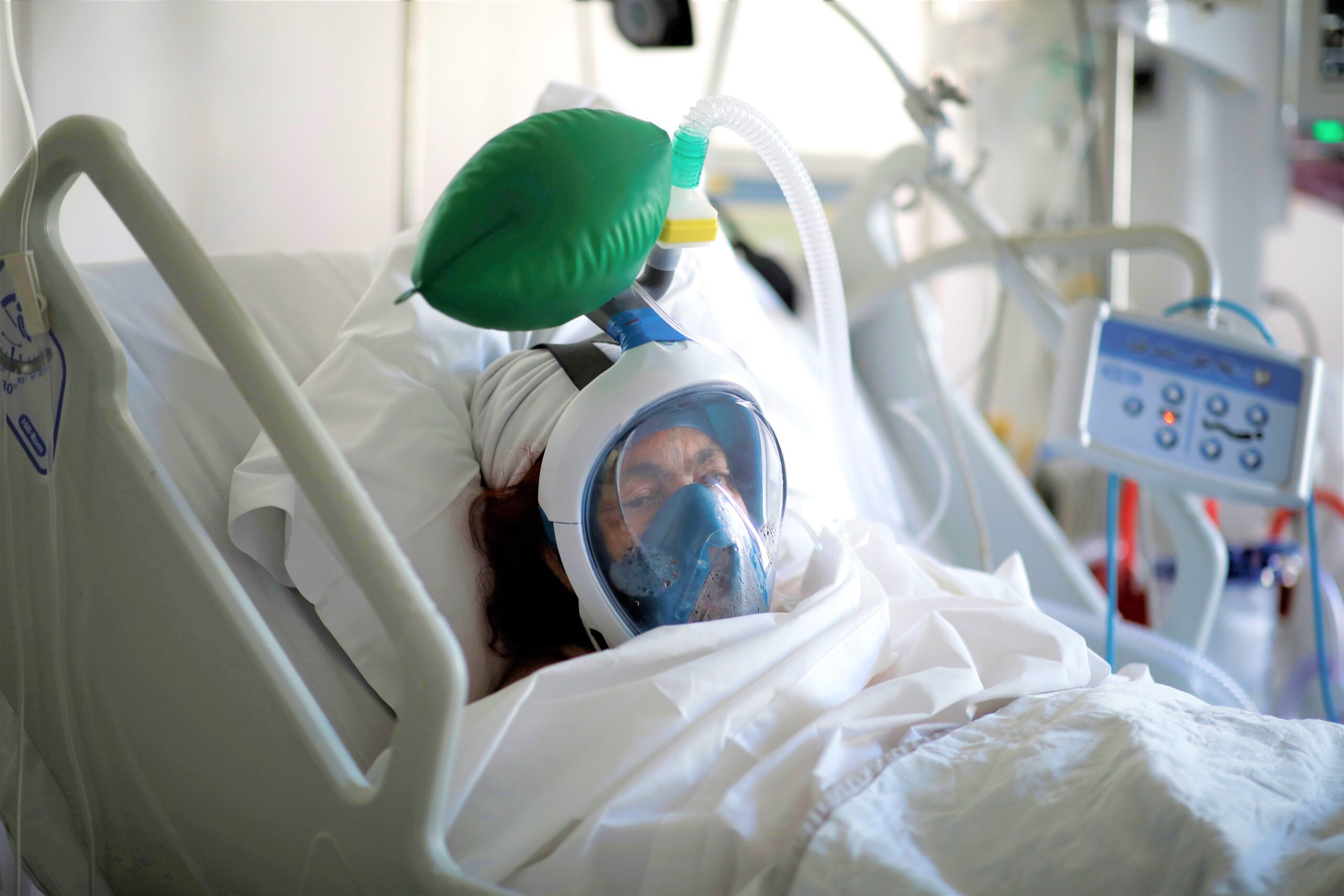
If God the almighty Father cares for all his creation, why do evil and suffering exist? The Catechism of the Catholic Church answers the question briefly, “because love exists.”
In the words of the catechism, evil is “the lack of a good that should be present.” Even at our happiest, “there is an emptiness in our souls.” But at times like the present, we can be tempted to think that God is “absent” or “incapable of stopping evil.”
God created us in his own image with the “vocation,” the “capacity,” and the “responsibility” of “love and communion,” says the Catechism. But love, by its nature, cannot be compelled. Accordingly, God gave us the freedom we needed to love or refuse to love.
Loving means being vulnerable: open to wounds and injury. The only place we can be truly invulnerable is hell.
The New Age philosophy envisages the annihilation of suffering through the melting of individuals into the cosmic self: the abolition of difference and opposition in a cosmic harmony.
But this would be to annihilate love. Love involves another distinct person. A Christian “searches for unity in the capacity and freedom of the other to say yes or no to the gift of love,” says the Vatican’s 2003 document on the New Age movement.
Vulnerability is intrinsic to love. It is the risk God took when he created us, the risk he takes as he brings us to our final end, and the risk he calls us to take, for only love “brings man to himself and makes him what he should be,” said Pope Benedict XVI.
Of himself, God needs nothing; we can give him nothing that is not already his. However, because he has made us free to withhold our hearts and wills from him, we can, in that sense, give them. We can dare to say that when we – God’s artifacts – respond to his love, we please our Creator; when we reject it, by sin, we grieve and offend him.
Probably we all know from bitter experience how loving God or our neighbour makes us vulnerable. Repeatedly God chastises us. Repeatedly we let each other down.
But that vulnerability is inherent in a world where souls can meet. Creation “did not spring forth complete” from the Creator’s hand, but rather “in a state of journeying toward its ultimate perfection,” says the Catechism. God’s plan includes “both constructive and destructive forces of nature,” the existence of “physical evil” alongside “physical good.”
“I make well-being and create woe,” God said. “It is I who bring both death and life, I who inflict wounds and heal them.”
We must never try to “excuse” God for something “evil” – like the coronavirus – on the grounds that, in some sense, he could not help it. On the contrary, says the Catechism, his providence is concrete and immediate. We think of “good” as our right and “evil” as undeserved, but it is all God’s gift. “We accept good things from God,” Job said; “and should we not accept evil?”
What God offers us – full communion in his Trinitarian life – is so great, and our understanding of it so limited, that we should not be surprised if, in order to accept it, we must give up lesser goods.
“The Kingdom of Heaven is like a merchant’s search for fine pearls,” Jesus said. “When he found one really valuable pearl, he went back and put up for sale all that he had and bought it.”
“What little sense you have!” he told his disciples after his passion and death. “Did not the Messiah have to undergo all this so as to enter into his glory?”
Suffering is “the discipline of God,” who treats us as his children. We submit to our earthly parents’ discipline; should we not submit to God’s?
Suffering, then, is part of God’s design. How does he use it?
God created humans “intelligent and free” to seek him “by their free choice and preferential love.” But for them to give God that preference consciously, they had to do so even against their inclinations, as Job and Abraham did.
However, Adam and Eve did not. Thus “moral evil, incommensurably more harmful than physical evil, entered the world,” says the Catechism. “God is in no way, directly or indirectly,” its cause, but he permits it because he respects our freedom.
Today’s suffering “cannot be divorced” from Adam and Eve’s original sin or our own sins. However, the connection is “complex,” said Pope John Paul II. “We must use great caution in judging man’s suffering as a consequence of concrete sins.” It is true that when suffering “is connected with a fault,” it “has a meaning as punishment,” but “it is not true that all suffering is a consequence of a fault and has the nature of a punishment.”
Speaking of the man born blind and the Galileans killed by Pilate, Jesus explicitly condemned this mistake. Nevertheless, he warned that we will suffer the same fate unless we “reform.”
In itself, suffering is evil. However, God derives good from it, even when we cannot see how. Only at the end, “when we see God face to face,” says the Catechism, “will we fully know the ways by which – even through the dramas of evil and sin,” God has guided creation to its perfection.
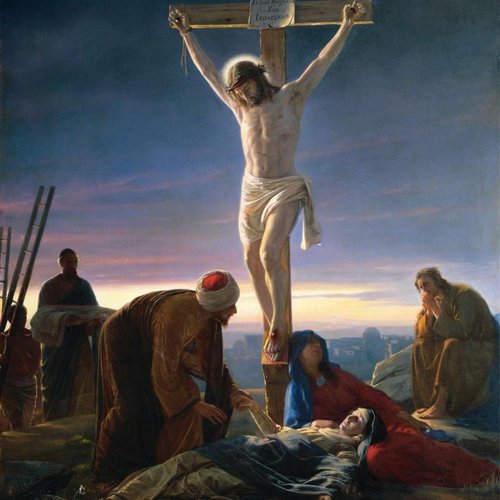
Consider Jesus’ own suffering. At his incarnation, he assumed “the world of human suffering,” says Pope John Paul II. At his baptism, he let himself “be numbered among sinners.” At his last supper, by giving us his body and blood as food, he united sinful humanity to himself like infected branches to a sound vine. Then he began to suffer sin’s full agony: separation from God.
Jesus entered his passion “willingly,” completely aware of its purpose: “that man should not perish, but have eternal life.” He knew that only through the cross could he “strike at the very roots of evil, sin, and death” in human souls and man’s history.
Jesus answers our questions about suffering, then, not only by his teaching and his compassion, “but most of all by his own suffering.” His “final, definitive word” is the way of the cross.
In itself, suffering is evil. However, God uses it to save, test, teach, discipline, heal, and call us – to reveal himself to us and, through us, to others.
We may try to avoid suffering by all lawful means, as Jesus begged his Father in his agony. Like him, we must work to alleviate it in others. However, like him, we accomplish God’s purposes by accepting it.
Jesus made his suffering the firm base of our salvation. Our suffering, now, completes his, just as the Church, his Mystical Body, completes his crucified and risen body.
Paradoxically, then, suffering is something to welcome. “It is something good, before which the Church bows down in reverence with all the depth of her faith in the Redemption,” Pope John Paul said.
Christ infuses our suffering with a power that “draws” us “interiorly close” to him; “a special grace” by which we discover not only its “salvific meaning,” but also “a new dimension of our life and vocation.” Accordingly, we should never waste our suffering, but always “offer it up,” as we do in the Morning Offering.
Suffering still makes us ask why. We should continue asking, Pope Benedict says: not challenging God, not suggesting that he is mistaken, weak, or indifferent, but “affirming our faith in his sovereign power” – “Not my will, but yours.”
Christ answers: not directly, nor in the abstract, but from the heart of his own suffering. He says simply, “Just do it!” Then, above all, he says, “Follow me!”
Thus we overcome the world’s false sense that suffering is useless. We become certain that we, like Christ, are contributing to our neighbours’ salvation and realize that our suffering is valuable – in fact, irreplaceable.







