

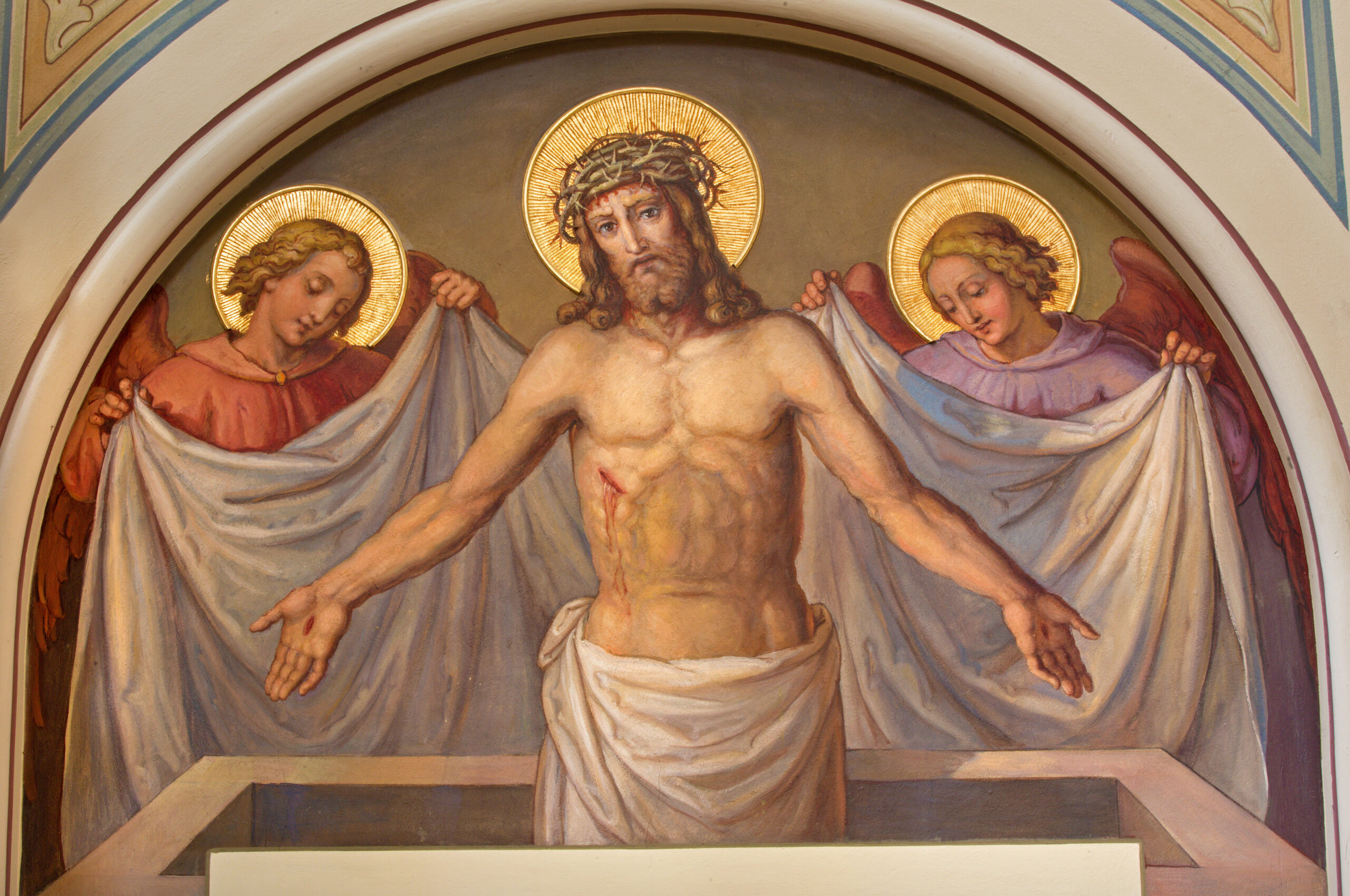

In the First Letter to the Corinthians, St. Paul asked two questions regarding the resurrection and used the remainder of Chapter 15 to answer them: “But someone will ask, ‘How are the dead raised? With what kind of body do they come?’”
Catholic author Stephen Ray wrote, “Ancient writers often responded to prevailing questions or objections by setting up an imaginary opponent … St. Thomas Aquinas formatted his Summa Theologica in somewhat the same way. He asked questions an interlocutor would ask, and then he answered them. With this method, you can be a little rougher on the imaginary opponent than you would be if you were responding to a real person.”
St. Paul described the nature of the risen body, saying: “What is sown is perishable; what is raised is imperishable” (1 Cor 15:42) and “It is sown a natural body; it is raised a spiritual body” (1 Cor 15:44). “The risen body will be imperishable and spiritual; it will be raised in glory and power” (1 Cor 15:43).
Pope St. Pius X explained: “The endowments that shall adorn the bodies of the elect are: (1) Impassibility, by which they can never again be subject to evil, nor to any kind of pain, nor to need of food, of rest or the like; (2) Brightness, by which they shall shine as the sun and as so many stars; (3) Agility, by which they shall be able to pass in a moment and without fatigue from one place to another and from earth to heaven; (4) Subtlety, by which without hindrance they shall be able to penetrate any body, as did Jesus Christ when risen from the dead.”
St. Irenaeus wrote, “Just as bread that comes from the earth, after God’s blessing has been invoked upon it, is no longer ordinary bread, but Eucharist, formed of two things, the one earthly and the other heavenly: so too our bodies, which partake of the Eucharist, are no longer corruptible, but possess the hope of resurrection.”
Regarding the manner of the resurrection, St. Paul wrote, “For the trumpet will sound, and the dead will be raised imperishable, and we shall be changed. For this perishable body must put on the imperishable, and this mortal body must put on immortality” (1 Cor 15:52–53).
Origen of Alexandria commented, “In regard to our bodily nature we must understand that there is not one body which we now use in lowliness and corruption and weakness and a different one which we are to use hereafter in incorruption and power and glory. Rather this same body, having cast off the weaknesses of its present existence, will be transformed into a thing of glory and made spiritual, with the result that what was a vessel of dishonour shall itself be purified and become a vessel of honour and a habitation of blessedness.”
The Catechism of the Catholic Church states: “In death, the separation of the soul from the body, the human body decays and the soul goes to meet God, while awaiting its reunion with its glorified body. God, in his almighty power, will definitively grant incorruptible life to our bodies by reuniting them with our souls, through the power of Jesus’ Resurrection. All the dead will rise, ‘those who have done good, to the resurrection of life, and those who have done evil, to the resurrection of judgment’” (997, 998).
Pope St. Pius X wrote, “God wills the resurrection of the body, in order that the soul, having done good or evil while united with the body, may also be rewarded or punished along with it.”
St. Paul wrote, “Thus it is written, ‘The first man Adam became a living being’; the last Adam became a life-giving spirit” (1 Cor 15:45).
Biblical scholar Father George Montague explained: “By the glorification of his body on Easter morning, Jesus possessed the Holy Spirit as the Spirit’s supreme and unique source, to be conveyed to all those who join themselves to him in faith.”
St. Augustine said, “The Lord who was heavenly became earthly that he might make heavenly those who were earthly. From immortal he became mortal by taking the form of a servant, not by changing the nature of the Lord, that he might make immortal those who were mortal by imparting the grace of the Lord, not by retaining the offence of the servant.”
On Good Friday the Church prays: “We worship your Cross, O Lord, and we praise and glorify your Holy Resurrection, for the Wood of the Cross has brought joy to the world.”
Your voice matters! Join the conversation by submitting a Letter to the Editor here.
我們的身體懷有復活的希望
聖保祿在格林多前書第15章中提出了關於復活的兩個問題,並在隨後的章節中進行了解答:「可是有人要說:死人將怎樣復活呢﹖他們將帶著什麼樣的身體回來呢﹖」(15:35)
天主教作家Stephen Ray曾寫道:「古代作者常透過設立一個假想的反對者來回應當時的問題或異議 … 。聖多瑪斯阿奎那在《神學大全》(Summa Theologica)中也採用了類似的方式。他提出一個對話者可能會問的問題,然後予以解答。透過這種方法,對於假想的反對者,可以比對真實的人更直接地進行反駁。」
聖保祿描述復活後身體的特性時說:「播種的是可朽壞的,復活起來的是不可朽壞的。」(格前15:42)他又說:「播種的是屬生靈的身體,復活起來的是屬神的身體。」(15:44)「復活起來的是光榮的 … 復活起來的是強健的。」(15:43)
教宗聖庇護十世解釋說:「甄選者的身體將被賦予以下奇恩:(1)神健:使他們不再犯罪,不再痛苦,也不需要食物、休息等。(2)神光:使他們如同太陽和眾星般閃耀。(3)神速:使他們能夠瞬間、毫不費力地來去自如,從地上到天上。(4)神透:使他們能夠毫無阻礙地穿透任何物質,正如耶穌基督從死者中復活後所做的那樣。」
聖依勒內曾寫道:「正如來自大地的麵餅,在祝聖後,不再是普通的麵餅,而是聖體,由地上和天上兩方面而成;同樣地,我們領受聖體聖事的身體,不再是可朽壞的,而是懷有復活的希望。」
聖保祿在格林多前書第15章中寫道:「這是在頃刻眨眼之間,在末次吹號筒時發生的。的確,號筒一韾,死人必要復活,成為不朽的,我們也必要改變,因為這可朽壞的,必須穿上不可朽壞的; 這可死的,必須穿上不可死的。」(15:52-53)。奧利根的亞歷山大評論道:「關於我們的肉身,我們必須明白,並非現在在卑微、腐敗和軟弱中所使用的身體,將來會有一個不同的身體,在不朽、強健和榮耀中使用。相反,這同一個身體,擺脫了現存的軟弱,將被轉變為榮耀的,成為靈性的,使那曾是羞辱的器皿,經過淨化,成為榮耀的器皿和福樂的居所。」
天主教教理指出:「死亡,即靈魂和肉身的分離,使人的肉身墮入腐化的過程,而他的靈魂卻與天主相遇,雖然靈魂仍在期待與他受光榮的肉身結合。天主以其全能決定性地再賜我們的肉身不可腐朽的生命,使肉身因耶穌的復活而再度與我們的靈魂結合。所有死去的人:「行過善的,復活進入生命;行過惡的,復活而受審判」。」(997, 998)。教宗聖庇護十世寫道:「天主願意肉身復活,因為靈魂在與身體結合時行善或作惡,也應與身體一起受賞報或懲罰。」
聖保祿寫道:「經上也這樣記載說:『第一個人亞當成了生靈』,最後的亞當成了使人生活的神。」(格前15:45)聖經學者George Montague神父解釋道:「藉著光榮祂在復活節清晨的身體,耶穌成為聖神的至高無上的唯一泉源,將聖神賜予所有在信德中與他結合的人。」
聖奧斯定說:「那本是天上的主,成為地上的人,為使地上的人得以成為天上的人。那本是永生的,取了奴僕的形象而成為必死的,並非改變了天主的本性,而是為了使那些必死的人,藉著主的恩寵,得以成為不死的,而不再保留奴僕的過犯。」在聖週五,教會祈禱說:「主,我們朝拜你的十字架,我們讚頌、稱揚你的復活:因為藉這木架,喜樂來到了全世界。」
Your voice matters! Join the conversation by submitting a Letter to the Editor here.







