


“Grok, give me an analysis of auroral conditions probability for Yellowknife Jan. 5–9, 2026”
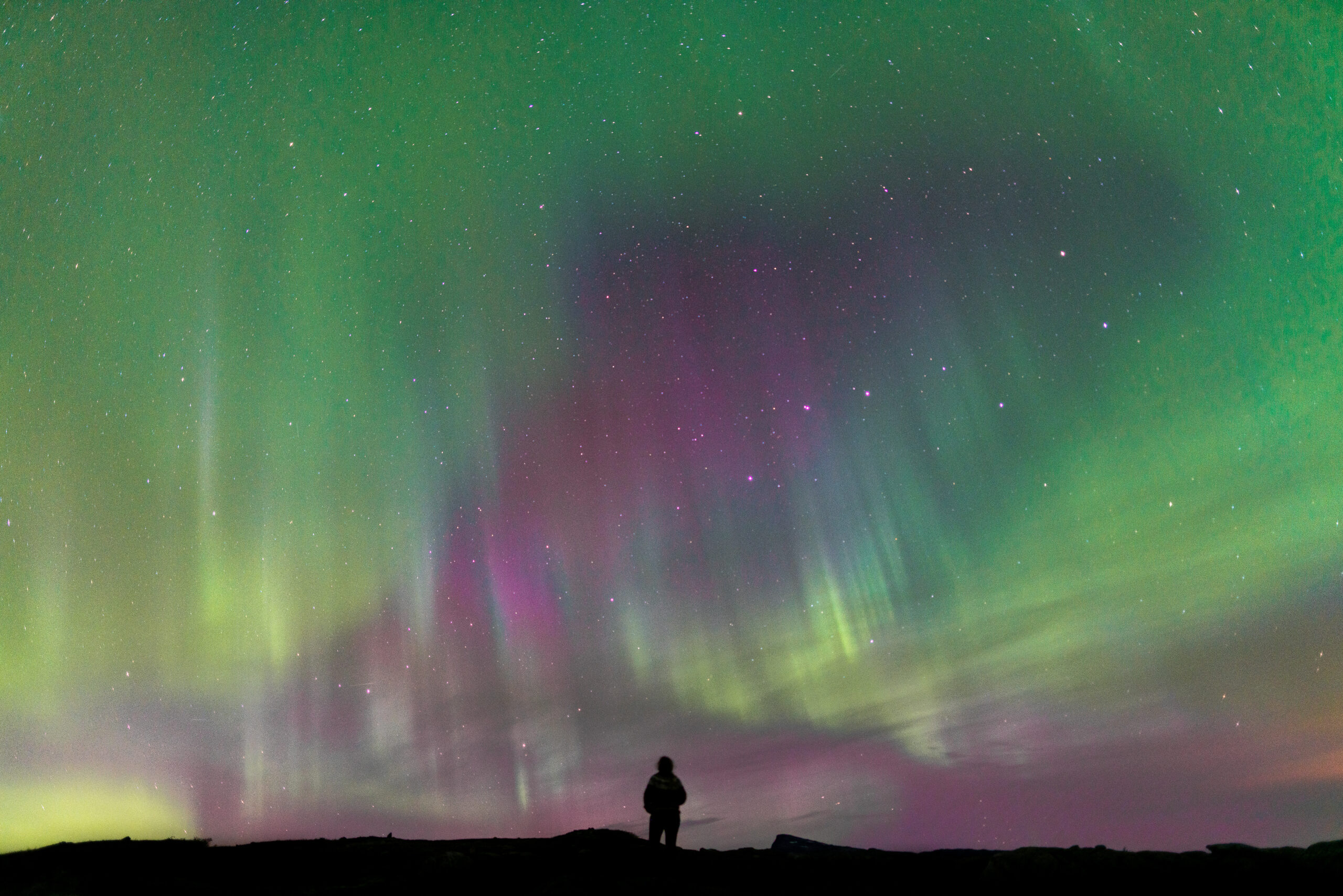
Recently I had occasion to speak with a fellow parishioner over coffee. He and his wife enjoy travelling, and he mentioned he had recently booked a trip to Yellowknife to hopefully see the northern lights, not unlike visitors from all over the world who flock to our North to see this phenomenon.
He was somewhat concerned that the date he had selected, through a company specializing in auroral viewing, might not work too well in terms of weather and other factors such as moonlight.
I proposed to him that we use Grok for an analysis of the matter. He hadn’t heard of Grok, or worked with any of the other large language model artificial intelligence engines, for that matter. And not unlike many seniors, the whole notion of using these sorts of tools for personal tasks was not only foreign, but almost off-putting.
In any case, I quickly explained that Grok is the artificial intelligence tool built into Twitter—or rather, X—the social media platform acquired by Elon Musk several years ago. Grok has expanded rapidly in the artificial intelligence space, gaining a reputation for accuracy and ease of use. Originating from the 1961 Robert A. Heinlein science fiction novel Stranger in a Strange Land, “grok” refers to understanding something deeply and intuitively.
We proceeded to give Grok a very simple instruction: “Grok, give me an analysis of auroral conditions probability for Yellowknife Jan. 5–9, 2026,” specifying the date range of the anticipated trip to the Northwest Territories capital.
Engines such as Grok have become very adept at handling these sorts of commands or directives. Grok is particularly good when it comes to reliable and accurate content, sometimes much to the chagrin of owner Musk after it identified him as a top spreader of misinformation. It should also be added that the platform has on occasion been tinkered with by unauthorized employees to spread such false information.
It is no wonder that these AI engines are among the fastest and most widely adopted technologies of the past several decades. They are rapidly becoming indispensable in daily life, and especially in many workplaces. As an aside, consider the recent announcement from the real estate firm run by so-called condo king Bob Rennie that it was laying off a quarter of its roughly 120-person workforce. One of three reasons cited was artificial intelligence tools.
Back to our hopeful aurora watcher: not only was Grok able to provide an analysis, it did so in a highly structured format and helpfully provided links for additional background, if desired. In a brief preamble to about 15 screens of output, Grok noted that tackling the question “involves analyzing several factors based on historical data, seasonal patterns, and the geophysical characteristics of the region.”
It proceeded to do just that. The various factors were listed and detailed. Grok then cut to the heart of the question: would auroral action occur during the specified period?
“Given Yellowknife’s location and the seasonal peak, there is a 90–95 per cent chance of seeing auroras on at least one night during this period, assuming clear skies. This aligns with the region’s average of 240 aurora nights per year.”
Equally heartening: “The probability of vibrant, dynamic displays (Kp ≥4) is estimated at 60–70 per cent for at least one night, based on typical winter geomagnetic activity and the declining phase of Solar Cycle 25.”
Yes, it indeed looks promising, according to Grok. And it really left nothing to chance, discussing weather and the complexities of the solar cycle, so-called sub-storms, which make it difficult to forecast flashes of auroral action that occur within a longer timeframe solar storm.
Grok also took pains to note its forecast wasn’t really a forecast but rather a set of predictions determined from an analysis of general patterns. Grok noted that January falls within the peak auroral-viewing season, November to April, and furthermore the probability of precipitation in January is rated at six per cent on any given day, suggesting a high probability of clear nights for at least some of the days in question.
Artificial intelligence engines of the large language model type are an important resource. In my own case, I keep a group tab in my browser pointing at various such engines (ChatGPT, Microsoft Designer, Perplexity, Gemini, Copilot). These tools are here to stay, and they are likely to shape our lives going forward.
In laying out a vision for his papacy, newly elected Pope Leo XIV spoke of newer threats to workers, such as artificial intelligence, saying AI poses “new challenges for the defence of human dignity, justice and labour.”
Consider just this single metric: ChatGPT has 160 million daily average users (DAU). The corresponding monthly average users count is 600 million (MAU). Google’s Gemini is far behind at 35 million for DAU and 350 million for MAU. Both sets of metrics came up in an American DOJ case seeking the breakup of part of the Alphabet/Google search engine behemoth.
With Twitter/X being privately held, it is more difficult to get a handle on how widely used the Grok AI platform might be. In my experience, dealing in technology circles, its use is very widespread.
Follow me on Twitter/X (@PeterVogel) or on Bluesky (petervogel.bsky.social).
pvogel@outlook.com.







