


“They said to him, ‘Teacher, this woman was caught in the very act of committing adultery. Now in the law, Moses commanded us to stone such women. So what do you say?’ They said this to test him, so that they could have some charge to bring against him. Jesus bent down and began to write on the ground with his finger. But when they continued asking him, he straightened up and said to them, ‘Let the one among you who is without sin be the first to throw a stone at her’” (Jn 8:4-7).
The Gospel from the fifth Sunday of Lent is one I quote and hear quoted often. Interestingly, it’s not always used in the context Jesus appears to have intended.
Sometimes people quote it when seeking justice. They refer to “let the one … who is without sin be the first to throw a stone” in order to defend someone else who is being criticized or punished by people who are doing something equally bad or even worse.
Other times, I notice that it is used out of self-righteousness. For instance, people will rationalize doing something they know they shouldn’t: “Oh, well. No one is perfect,” or “Others do worse,” almost as if to dare, “let the one … without sin be the first to throw a stone.”
It seems to me that while Jesus definitely wants us to defend others and to realize that no one is perfect, he does not want us to use our human sinfulness as an excuse to give up on growing in holiness. In this Gospel, Jesus did not condone the woman’s sins, but he wanted the people to admit their own sinfulness and to realize that to stone her to death would not change the past and would certainly prevent her from being able to make changes for the future.
For me, the future is really the key in this story. Jesus stressed that with forgiveness, there must be transformation. Jesus wanted the woman to face her sin, and he wanted the others to show mercy. More importantly, the One who truly could have thrown the first stone gave her another chance and asked her to change: “‘Woman, where are they? Has no one condemned you?’ She replied, ‘No one, sir.’ Then Jesus said, ‘Neither do I condemn you. Go, and from now on do not sin any more’” (Jn 8:10-11).
As we enter our final days of this Lenten season, let us remember to examine our own hearts before we are quick to judge others. It is through our own faults and failings – our own sinfulness – that we join the Good Friday crowd who yelled, “Crucify him!” Jesus does not want us to make excuses. He wants us to admit our faults, ask for forgiveness, offer pardon to others, and – in all these ways – to reform our hearts and sincerely strive to “not sin any more.”
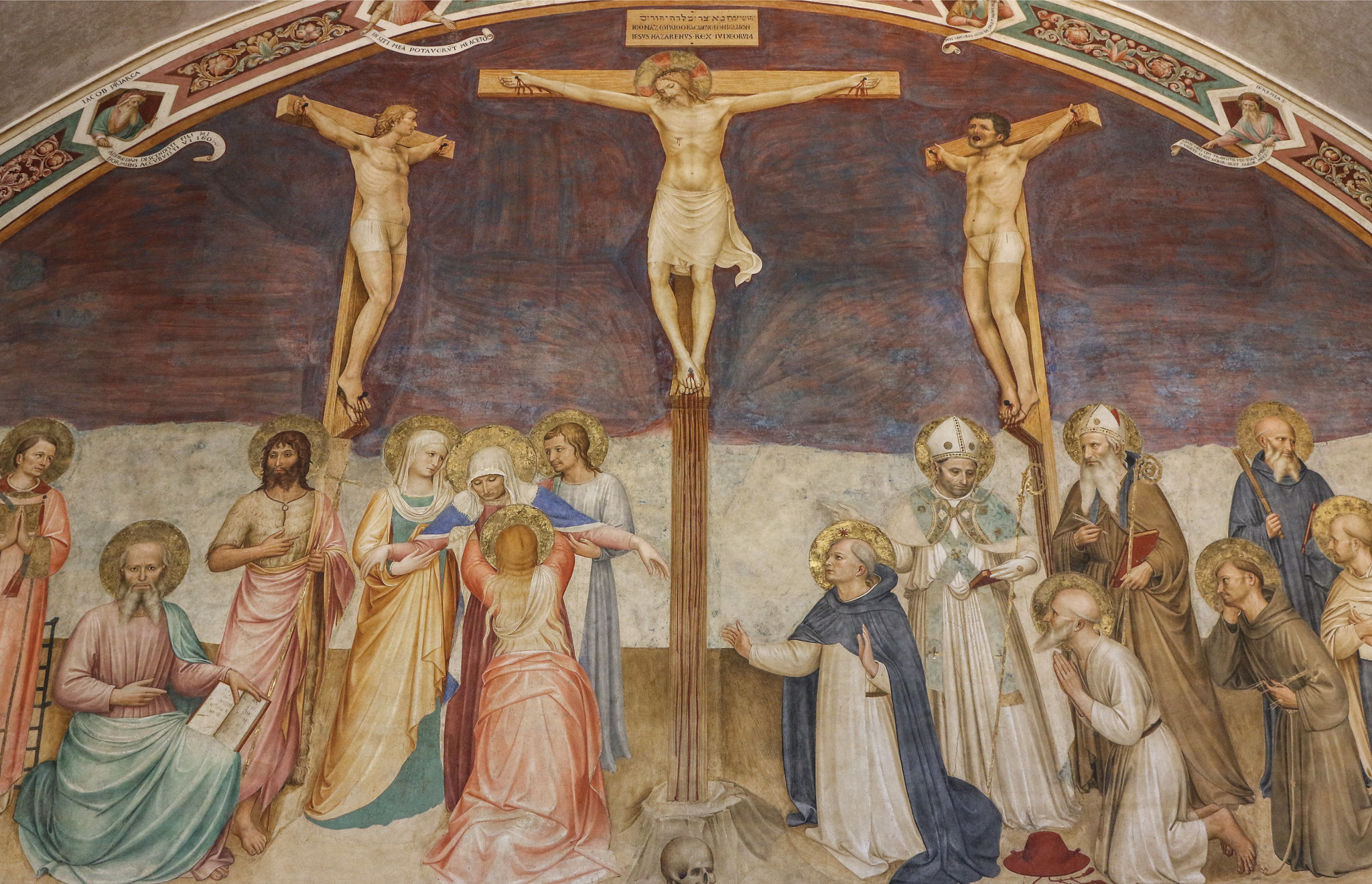
Venerable Fulton Sheen, in The Seven Last Words, reflects on one of the greatest examples of a changed heart: the thief who spoke to Jesus as they died together. This man, sinful though he was, realized at that most pivotal moment who Jesus was and begged for redemption. “He sees a Cross and adores a throne; he sees a condemned Man, and invokes a King: ‘Lord, remember me when Thou shalt come into Thy Kingdom.’ Our Blessed Lord was owned at last! Amidst the clamor of the raving crowd and the dismal universal hiss of sin, in all that delirium of man’s revolt against God, no voice was lifted in praise and recognition except the voice of a man condemned.”
Sheen goes on to say, “It was the thief’s last prayer, perhaps also his first. He knocked once, sought once, asked once, dared everything and found everything.” For we all know how Jesus responded to this prayer: “‘Amen, I say to you, today, you will be with me in Paradise’” (Lk 23:43).
As we continue to prepare for Easter, let us remember the woman caught in adultery and the thief who died with Jesus. They were not perfect, and neither are we. Jesus – the embodiment of mercy – showed us the way and died for our sins. Let us show mercy and put our own sins to death as well, as we too strive to change our hearts.
We do not endeavour to transform alone, for “the One without sin” is there for each and every one of us. As Fulton Sheen exclaimed, “Oh, what greater assurance is there in all the world of the mercy of God? Lost sheep, prodigal sons, broken Magdalens, penitent Peters, forgiven thieves!”







