


In recent years I’ve written several columns on Elon Musk’s SpaceX venture, Starlink.
Let’s face it, Elon Musk can’t stay out of the news for more than a day or two, whether it’s about Tesla, SpaceX, Twitter, Starlink, his tunnel-boring business, or his assertion that the biggest threat facing the planet today is under-population within a generation or two.
Controversies aside, many are fascinated with Starlink, even if the satellite-based internet delivery service makes no sense in an urban environment. That said, Musk told his Starlink employees recently that the company has signed up almost half a million customers across the globe, in 32 countries, and, famously, has deployed some 15,000 terminals across Ukraine.
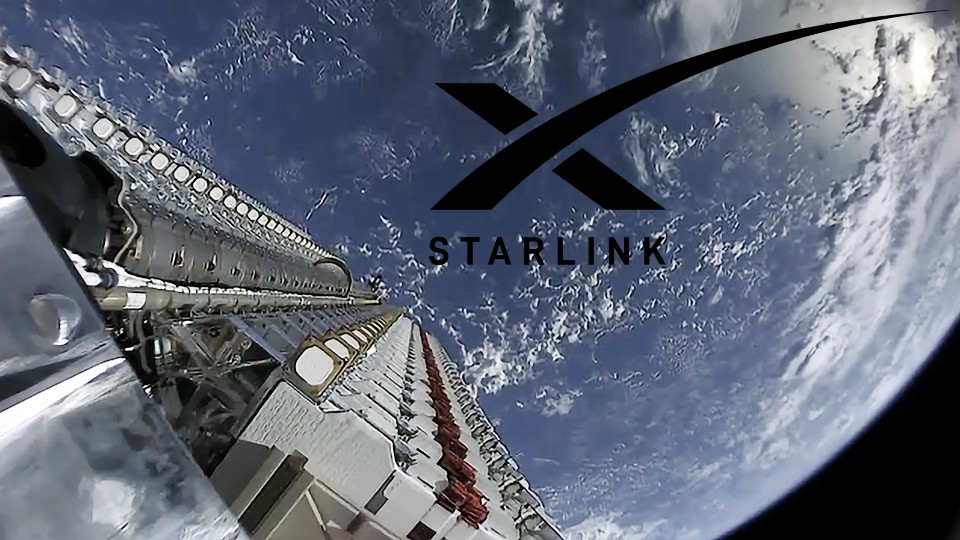
What many people really want to see, even if only once, is a so-called Starlink train, a batch of 40 to 60 satellites from a single launch. Recently I was fortunate to see a spectacular Starlink train of satellites. I’ve seen them before, although not in a complete form. I saw the very first Starlinks back in May 2019 and wrote about seeing them at that time.
It was a cluster of nine, the train having already begun to separate by the time the group of satellites was visible here in the Vancouver area. Furthermore, it was near midnight so the duration of visibility was short. Starlink satellites are only visible when illuminated by sunlight, from a sun below the horizon.
A second sighting a few days later was in twilight, and this time the Starlinks were only visible briefly, giving off individual reflection flashes as they passed a certain point in the sky.
Fast forward to August of this year. Specifically Friday, August 19. I knew that a Starlink launch had occurred earlier that day. I decided to check out various sites for Starlink positional information. Most helpful is findstarlink.com, where Starlink clusters are tracked and information on visibility is provided, based on the user supplying nothing more than a country and a town.
Yes, there it was, cluster G4-27, the technical name for the group launched that day, a cluster of 43 satellites. And it promised a bright pass of the cluster, beginning at 9:43 p.m. That gave me barely 15 minutes to get to a very small neighbourhood park with no lights – my very own dark park. Ahead of that, though, I quickly put out a tweet for others, suggesting a possibility to see a Starlink train. I also got on the air, as a ham radio operator, and put out a local call for others who might want to try to catch this sight.
Indeed, at the appointed time, there it was, a magical line of satellites, 43 of them, looking somewhat like a strip of LED lights. Visually stunning and mesmerizing. From my vantage point, the train came up over the lights of Vancouver, traveling west to east, crossing nearly directly overhead and then disappearing about 40 degrees past the vertical as the satellites left the sun’s illumination. The train was about the apparent size of an outstretched hand
I managed to grab a few photos of the train and immediately posted them to Twitter. By Saturday morning that tweet had drawn around 11,000 views and people began asking about another viewing opportunity. Indeed, it seemed likely that a Saturday evening pass would be almost as good. Unfortunately at my location the clouds rolled in a few minutes ahead of the scheduled time, but others elsewhere in Metro Vancouver, and indeed across Canada, were more fortunate.
Yes, that Friday-Saturday evening combination gave many Canadians their first sighting of a Starlink train. Those completely unaware could be forgiven for thinking this was an alien invasion of sorts. Later that day, perhaps based on the various tweets I put out, I was interviewed by CHEK TV News on Vancouver Island about Starlink, where the train was particularly widely seen.
Starlink launches are now occurring with great regularity, around four a month. In order to see a particular launch train a number of factors have to line up. Ideally, the satellites pass near to overhead, a particular pass must coincide with a time where sunlight can reach them even though it is dark down below, the pass must be within hours or a few days of launch, and of course it must be relatively clear.
Why only a few hours or days after launch? Because the Starlinks begin to separate right after launch, they begin a move to higher orbits, and eventually they deploy sunshades designed to reduce their apparent brightness, an attempt to mollify concerns raised by professional astronomers.
With the launch of this particular Starlink train, the total complement of satellites crossed the 3,000 mark. Having initial permits in hand for around 4,000 and subsequent approval for an additional 7,000, and eventually a goal of some 42,000, there will be opportunities for more Starlink satellite train viewings for years to come.
Follow me on Facebook (facebook.com/PeterVogelCA), or on Twitter (@PeterVogel)







