

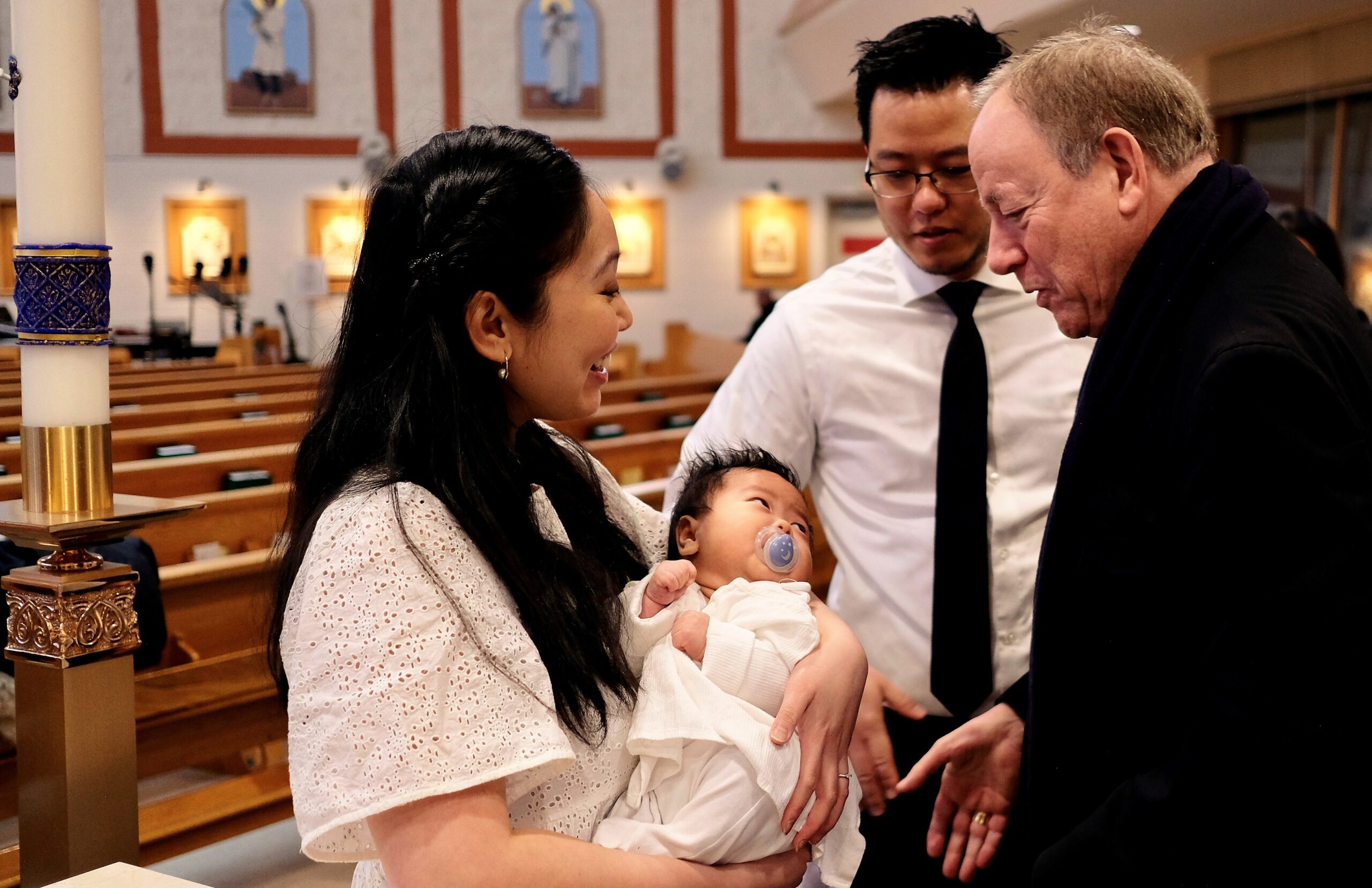

As part of his series of parish visits, Archbishop Miller visited and celebrated Mass with Catholics at St. Monica’s in Richmond. Here is an excerpt of his homily on Feb. 25.
Dear Father Robert, Deacon Wilbur, and dear brothers and sisters in Christ of St. Monica’s Parish:
I am with you this morning to conclude my parish visit here which began on Friday afternoon. It is the 28th such visit I’ve made – and each one is unique and blessed. So it has been here at St. Monica’s.
Let me begin by thanking Father Robert Wong, your dear pastor. In addition to his gentle and effective shepherding of your parish family, he has greatly enhanced the beauty of this church. It was inspiring for me to spend this time with him and to witness the vitality and holiness of the parishioners here. I was able to meet with a wide range of people engaged in the life and ministries of your parish community. For me, these days have been both inspiring and encouraging.
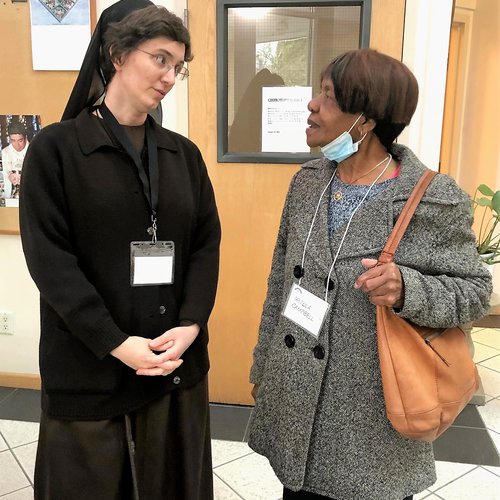
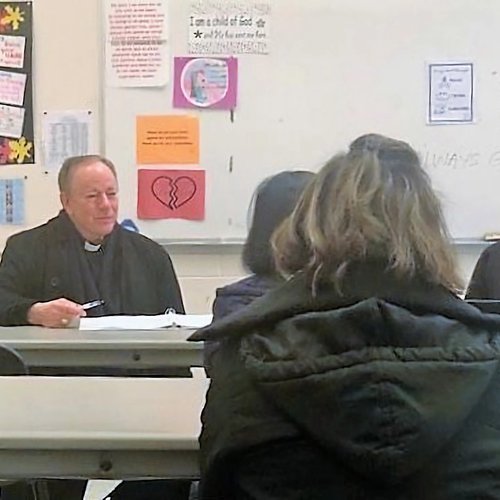
In fact, I was able to meet and talk with most – but not all – of your parish committees and groups. We introduced ourselves, discussed your contributions to building up the parish and, from time to time, together noted some challenges yet to be faced and opportunities to be seized.
Among the groups and parishioners that I met with were the Pastoral Council, the Finance bereavement, Stewardship, Development and Peace, Project Advance team, the Catholic Women’s League, the Knight of Columbus, CFC ministries, St. Monica Youth, the lectors, extraordinary ministers of Holy Communion, Bereavement ministry, Interfaith ministry, Legion of Mary, sacristans, ushers, counters, altar servers, PREP teachers, RCIA team, choir members – and many other dedicated volunteers.
Among all these blessings, and there are so many, I can’t omit a shout-out to Couples for Christ, which was the first parish where this grace-filled movement took root in our Archdiocese. It is evident that CFC continues to be active and is integral to the parish life of St. Monica’s.
Father Robert will receive a written report, which will summarize the fruits of the visit and offer a few recommendations.
To all those who organized these days, I wish to extend my profound gratitude. It is a demanding task to set a schedule, provide the preliminary information and get people together at a fixed time and place. And so to Joseph Mendoza, and to all those who took the time from their very busy schedules to come and meet me, I thank you most sincerely.
Such an array of ministries tells me that you are engaged in living the Gospel. As in every parish, it is necessary to become even more mission-minded; that is concerned with proclaiming the good news to others. Every parishioner is called to be both a disciple and a missionary: a disciple who cultivates a true and living friendship with Jesus; and a missionary who shares this personal experience with others.
I encourage everyone who has made this parish their place of worship to become engaged in its life, if you are not yet involved. Everyone has something to offer in the many ministries, activities, associations, and organizations available at St. Monica’s. If you have remained a little on the sidelines, give serious thought to finding some activity where the Lord can use your gifts and talents for his service and the service of your brothers and sisters.
Welcoming new members to your organizations and planning on succession to your ministry is a challenge. Those who are dedicated and involved in parish life should nonetheless ask themselves: who will take my place in my ministry in five or ten years? Inviting others personally to share in your ministry, especially those who are younger, and being willing to accommodate new ideas is the mark of a parish family that is flourishing.
Now to a reflection on today’s Gospel where we read that Jesus went into the desert to prepare himself for his mission. He had no need of conversion, but, insofar as he is a man like us in all things but sin (cf. Heb 4:15), he had to pass through this time of trial, both for himself, so as to obey the will of his Father, and for us, to give us the grace to overcome temptation. As the Letter to the Hebrews says, “Because he himself has suffered and been tempted, he is able to help those who are tempted” (2:18). Quite simply, Jesus knows our temptations “from the inside” and not as a spectator “from the outside.”
The Gospel tells us that someone was behind Jesus’ temptations: the devil. Satan tried to take Jesus away from carrying out the mission he had received from his Father.
As a master of deceit, the devil tempts him by suggesting how it would be easier for him to carry out his mission. Wouldn’t he accomplish his mission faster and more efficiently, the tempter proposes to Jesus, if he had economic well-being, indicated by the ability to turn stones into bread? Or if he performed a spectacular miracle, like casting himself down from the Temple Mount and being saved by angels? Or if he took the shortcut of worldly power, which could be his if he worshipped Satan? In every temptation, it’s as if the devil were saying to Jesus, “If you are Son of God, take advantage of it!”
This is the clever way that Satan also tempts us. He dangles before us something that supposedly would be good for us, something enjoyable or pleasurable, even though that something goes against God’s commands. In fact, the devil, who is cunning, always uses deception tries to persuade us that we can do evil to obtain some good. Think, for example, of euthanasia. The devil says that killing is okay in this case because, after all, we’re doing it for a good reason and out of compassion: to relieve someone of their suffering.
How does Jesus win his victory over temptation? With the Word of God. In responding to Satan, he doesn’t enter into debate. He doesn’t dialogue with Satan, as Eve did with the serpent in Paradise. “The devil’s poisonous arrows are ‘blocked’ by Jesus with the shield of God’s Word (Mt 4:4,10), which expresses the will of the Father.”
So, brothers and sisters, never enter into dialogue with the devil: he is craftier than we are and will always win. Instead, like Jesus, cling to the Word of God, and at most answer with it. If you do this, you won’t go wrong. Only the power of God’s Word can overcome Satan.
Therefore, dear parishioners, I urge you to familiarize yourselves with what Jesus taught and how he lived. During this Lent, I suggest that you find the time, the space and the silence to take the Bible in hand, especially the Gospel, so as to come to know Jesus and the plan for your life he has in mind.
In this way you will be well equipped not to give in to the temptations that assail you. “Indeed, if we had God’s Word always in our heart, no temptation could separate us from God, and no obstacle could divert us from the path of good; we would know how to defeat the daily temptations of the evil that is within us and outside us.”
Every year, at the beginning of Lent, the Gospel recounts Jesus’ temptations in the desert. In this way the Church reminds us that our life as Christians, walking in the footsteps of the Lord, is a battle against evil. Moreover, we must not be naive. We must be aware of the presence of Satan, the astute enemy who seeks our eternal ruin. Lent is a providential time to equip ourselves to do battle against him and to pray for the grace to ensure our victory over him.
Now, as we continue this Eucharist, remember that the reception of Holy Communion at Mass is the greatest means the Lord has given us to combat the inevitable temptations that come our way.
+ J. Michael Miller, CSB
Archbishop of Vancouver







