
I opened my daily newspaper looking for coverage of one of the biggest stories of the year, perhaps the decade – the USMCA trade agreement.
I looked in vain. On the morning after the U.S. approved the deal and the House of Commons voted to start debate on it, there wasn’t a single word about it in the newspaper, not even in the five pages devoted to business and finance.
On the other hand, there were stories about daffodils blossoming in Vancouver, ocean acidification affecting Dungeness crabs, and Punxsutawney Phil and Groundhog Day. There were several pages of fashion, food, and entertainment, including horoscopes, comics, and puzzles. And of course, the six pages a day dedicated to sports.
I don’t have a problem with any of those news choices – well, except the horoscopes. But it goes to show that news selection is a reflection of journalistic decisions and biases of editors and publishers. A newspaper that decides the largest trade deal in history isn’t worth a mention while allotting six pages to sports is showing you its priorities.
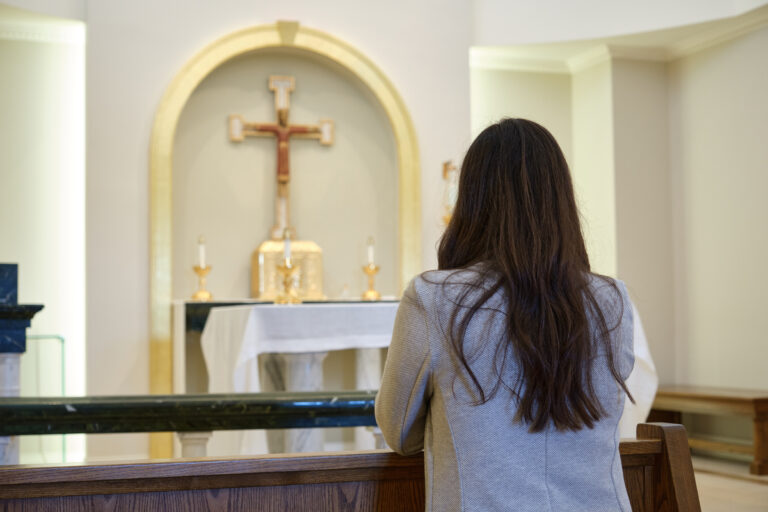
Mainstream media long ago stopped treating religion and faith as a priority, and it’s been even longer since faith issues were covered well.
Mainstream journalism would have you believe their lack of interest in religion simply reflects dwindling religious faith in Western countries. But that’s not the case. They lost interest long ago, and Canadian society remains much more religious that journalism acknowledges.
- The majority of Canadian adults profess belief in God or a higher power, according to Angus Reid.
- More than half of Canadians say religion is at least somewhat important in their lives, according to Pew Research Center.
- Nearly 30 per cent of Canadians say faith is very important to them, a higher percentage than in the UK, France and most other Western European countries.
- A majority of Canadians describe themselves as Christian (29 per cent say they’re Catholic), and 37 per cent of Canadians would like to see a more important role for religion in Canadian life. (In-depth coverage of religion and faith by media would certainly help.)
This substantial segment of Canadians is so ignored by a blinkered media that refuses to acknowledge them that in one Canadian city the faith communities had to pay the local newspaper to get some coverage.
A recent story by the Catholic Register’s Michael Swan reports faith communities in Winnipeg were persuaded by the Winnipeg Free Press to kick in $32,000 to pay for freelance journalists to cover religion in the city.
Fourteen of Winnipeg’s most prominent faith groups — including the Archdiocese of St. Boniface and the Archdiocese of Winnipeg — are now paying for local news with a religious angle, something religion reporters used to do, until they were replaced by general assignment reporters who eventually stopped covering religion altogether.
University of Denver journalism professor Lynn Schofield told The Register, “Religious organizations have an interest in what’s going on in the public life of our societies, the fabric of what we do on a day-to-day basis. Based on that, it makes a lot of sense for religious organizations to also see themselves as part of what’s going on,” she said.
She’s right, religious organizations do have an interest in what’s going on. So do people of faith. And they’d like to see themselves reflected in media that ignore them instead.
It’s sad that people who are such an integral part of Canadian society have to agree to a financial shakedown to see themselves in the news. Imagine if the Vancouver Canucks – whose attendance is dropping – had to bankroll their own media coverage. Yet I’ll bet the number of people in the Lower Mainland whose faith is important to them is far greater than those who read about the Canucks in the newspaper.
During Catholic Press Month, we’re celebrating the importance of Catholic journalism, which still adheres to truth at a time when secular journalism and the world at large no longer recognize it.
In his message for World Communications Day this year, Pope Francis reminds us of the importance of storytelling. “So as not to lose our bearings, we need to make our own the truth contained in good stories,” he wrote, specifically calling for “stories that build up, not tear down; stories that help us rediscover our roots and the strength needed to move forward together.”
The B.C. Catholic will continue to tell stories that build up and help us rediscover our roots and the strength to move forward together. We tell stories that touch people’s hearts and draw them closer to Christ and his Church.
You can support The B.C. Catholic by generously donating to the Catholic Press Collection that provides subscriptions to parishioners; by following our social media; and by telling people about us and sharing our stories.
We want to follow the Pope’s lead and “welcome and create beautiful, true and good stories,” while rejecting the “deepfake” of false and evil stories. Thank you for your help in making it happen.
pschratz@rcav.org
@paulschratz