


3rd Sunday of Advent, Year A
First Reading: Is 35:1-6a, 10
Second Reading: Jas 5:7-10
Gospel Reading: Mt 11:2-11
The Mass this Sunday begins with a command: “Rejoice in the Lord always; again I say, rejoice!” The Latin word for “rejoice” gives this Sunday its name, “Gaudete” Sunday.
In the First Reading, Isaiah tells us to rejoice because God is near. He will make the blind see, the deaf hear, the lame walk, and the dumb sing.
In the Gospel Reading, Jesus claims to be the one Isaiah was talking about. However, to his list of miraculous accomplishments, he adds that he will bring good news to the poor – as if that is just as difficult – and he finishes with, “Blessed is anyone who takes no offence at me,” as if he expects his news to offend us.
Perhaps that is why Isaiah said, “Here is your God. He will come with vengeance, with terrible recompense. He will come and save you.” Perhaps that is why St. James, after telling us to wait patiently for Christ, adds, “Strengthen your hearts, for the coming of the Lord is near.”
Do we really want to be saved from our sins? Would we, perhaps, prefer not to hear the good news of salvation when we realize that it means rejecting sin? Do we shut our eyes tightly and stuff our fingers into our ears when we hear John the Baptist telling us to repent in order to prepare the way for Christ?
Indeed, as far as the secular world is concerned, the answer seems to be yes. The world wants to “rejoice,” but not “in the Lord.” Just look at the way it has gutted Christmas, retaining the glitter and the tinsel but rejecting the repentance and the good news, trying to replace the very name “Christmas” with “Winter Festival” or “the holiday season.”
We Christians must not fall into the same error. In the days remaining before Christmas, we must pray, in the words of the Opening Prayer, that we may “experience the joy of salvation and celebrate that feast with love and thanksgiving.” In the words of St. John the Baptist, we must “prepare the way of the Lord.”
What can we do?
First, we can make a good confession before Christmas. Of course, confession is not enough; it must be accompanied by repentance, sorrow for our sins, and a firm resolution to change.
Second, we can simplify our Christmas preparations so that when the day comes we will not be too tired to greet Christ at Mass, where he truly comes among us sacramentally. We can plan to make the Mass the centre of our celebration, instead of “getting it over with” the evening before.
Third, we can use our Christmas cards to remind others of the reason for the celebration, by picturing Christ, his mother, and St. Joseph, instead of just holly, snow, and Christmas trees.
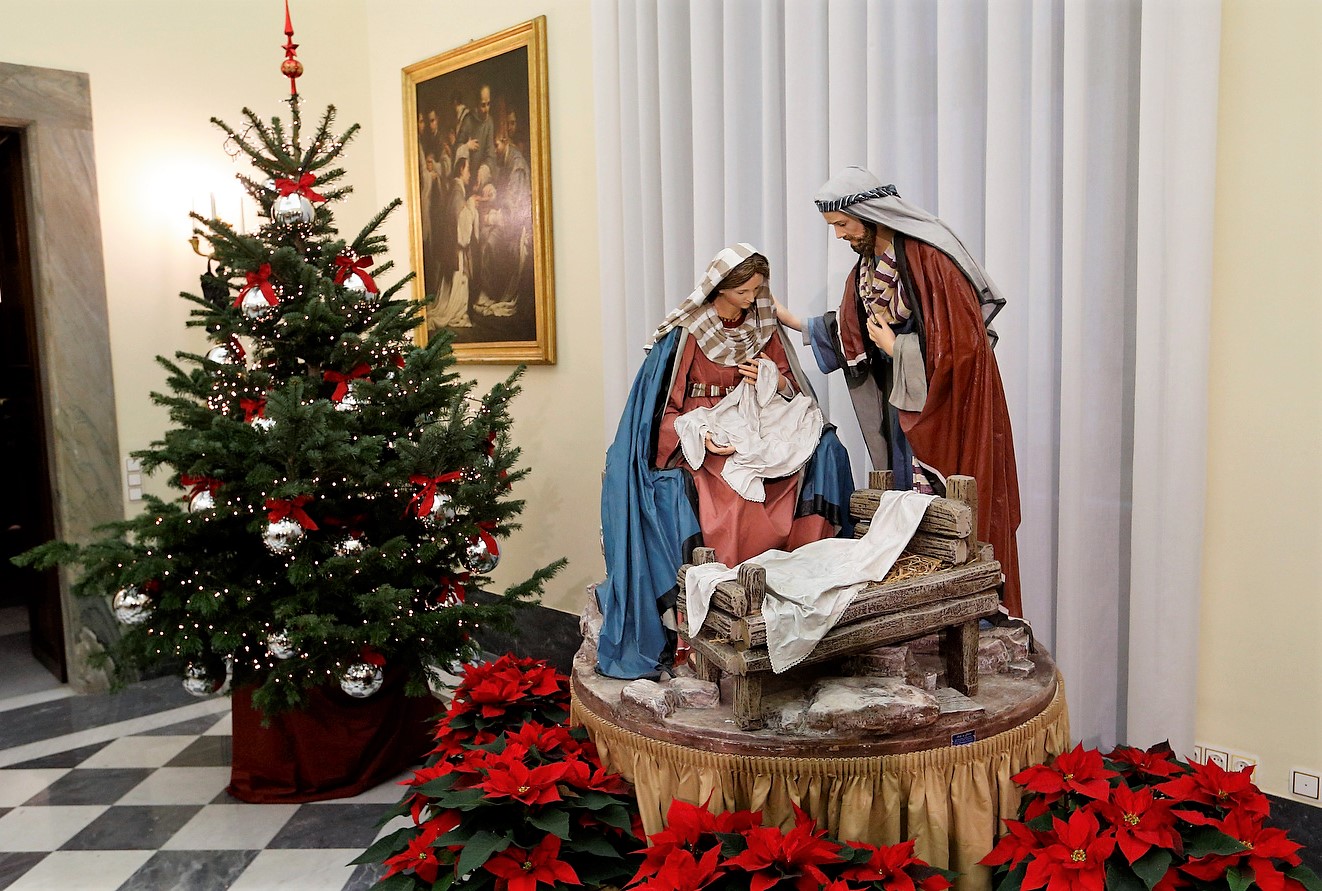
Fourth, we can make a Christmas Nativity scene the centre of our decorations. Why not make the lighted Christmas tree a backdrop to the scene, as many churches do? Why not decorate it with angels and a star, instead of meaningless baubles?
Fifth, we can try to make Christmas Day the beginning of our celebration, as the Church does, instead of the end, as the world does. We can try to keep Advent as the time of preparation for the Baby’s birth.
Sixth, we can sing the old “religious” Christmas carols, which focus on what really happened at Christmas, instead of the Hollywood songs, which focus nostalgically on the celebration but ignore the reason for it. We can explain to children who Santa Claus really is: St. Nicholas, whose story is just as fascinating as the Disney myths.
This Sunday, let us pray, in the words of the Prayer after Communion, “God of mercy, may this Eucharist bring us Your divine help, free us from our sins, and prepare us for the birthday of our Saviour, Who is Lord for ever and ever.”







