


Sitting beneath my main television set beside equipment needed from the TV and internet service provider is a small collection of additional devices. Some of these devices see regular use. Among them is a Google Chromecast, a second generation of that technology for connecting external devices to the television display. Seeing more frequent use is a Roku device, an Ultra, which handles streaming from various platforms (for example, Netflix, Prime, YouTube).
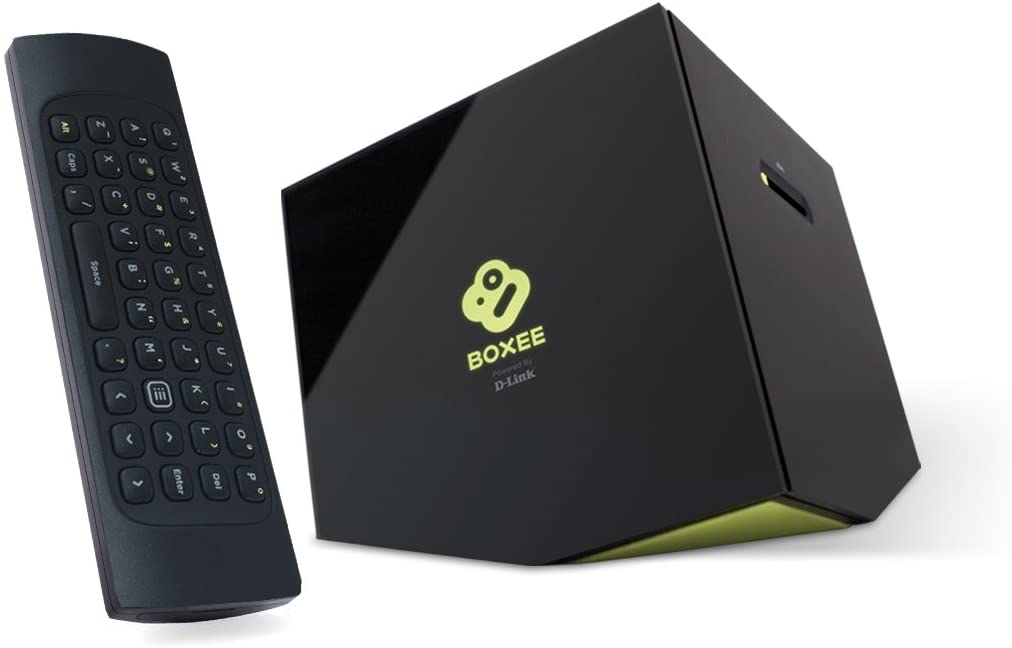
Beyond those, though, is an odd-shaped device that is now more of a curiosity than something that actually still serving a useful purpose. It is a Boxee Box, a device well ahead of its time when I acquired it more than a decade ago, in early 2011, for around $200.
I wonder if anyone reading this remembers the Boxee Box? While quirky for its shape, basically a cube with a pyramid cut from two corners, Boxee Box was one of the first widely distributed devices designed to bring internet television and other streaming media to home sets. And yet by the end of 2012 it was effectively gone.
Here’s a marketing line from the manufacturer at the time. “We get it – you want Internet freedom on your TV, but you want it to be the stuff you actually want to watch in HD and you want to enjoy it from the comfort of your couch. We’re all over it –introducing the Boxee Box by D-Link: click, follow, watch – you are now in full command of your TV for the first time. No rules, no contracts.”
Although Boxee Box was marketed by well-known modem and router manufacturer D-Link, Boxee, the underlying software, came from an Israeli company. Boxee Box, the actual device, was essentially a joint venture between the two companies.
Boxee itself had roots in the free open source media software XBMC, which later became the foundation of the Kodi platform. In addition to the unique shape of the Boxee Box, the device came with an equally unique remote control, basic buttons on one side and a full Qwerty keyboard on the other. Distinct from TV remote controls of the day, all infrared, the Boxee Box remote was radio frequency (RF) based and could be used in any orientation (a definite requirement for the use of the keyboard). One problem: you couldn’t have more than one unit in the house, as the RF remote for one would affect any others within range.
While revolutionary, and marketed widely in more than 30 countries, Boxee Box was not long for this world. Boxee was eventually acquired and shut down by Samsung, possibly because the Korean company had notions for streaming platforms of its own, but also possibly because of legal hassles concerning some of the software in the Box device.
Mike Agerbo, host of the Get Connected technology radio program on 980 CKNW, was an early adopter of the Boxee Box. He offers some insights from those years that he used the device.
“Boxee Box was light years ahead of any media streaming devices at its time. Born from their excellent software, originally designed to work on PCs, Macs and jailbroken AppleTVs, it was a streamer’s dream. I loved the design of the Box itself, the remote (with the amazing keyboard on the back), and of course the onscreen interface. What eventually killed it was that it was born from solving downloaders’ biggest problem – how to display their pirated content in easy-to-use menus with self-populating art with movie and television show descriptions. Besides paying for the Box itself, there were no great secondary revenue sources for the company. Bleeding money, they eventually sold to Samsung, which never really took advantage of the lead they had (in the Boxee platform).”
Shawn Handley, a Vancouver-area tech aficionado and another early adopter of Boxee Box, actually owned three of them.
“I loved the idea behind the Boxee Box. An all-in-one streaming device that made your TV smart with a very low power draw. It could have been an always-on device, and your power bill would not have blinked an eye.
“Eventually, after the support for the device fell out, there was a community who kept it going. Even though there was no more official support for the Boxee Box, D-Link kept the authentication servers rocking and rolling, allowing the use of the device for things like Netflix and Offline streaming of home server files. But like everything discontinued, all support collapsed, and the servers were taken offline. Some of the community claimed they could support their own servers and keep the Box running but with my 3, I had no luck, no matter what firmware I was on.”
Although the Boxee Box days are over, it was once the solution to eliminating a computer being hooked up to your TV. Boxee Box paved the way for other companies to do something similar, through platforms such as Chromecast and Roku, and eventually smart TVs.
Follow me on Facebook (facebook.com/PeterVogelCA), on Twitter (@PeterVogel), or on Instagram (@plvogel)







