


13th Sunday of Ordinary Time, Year A
First Reading: 2 Kgs 4:8-12a, 14-17
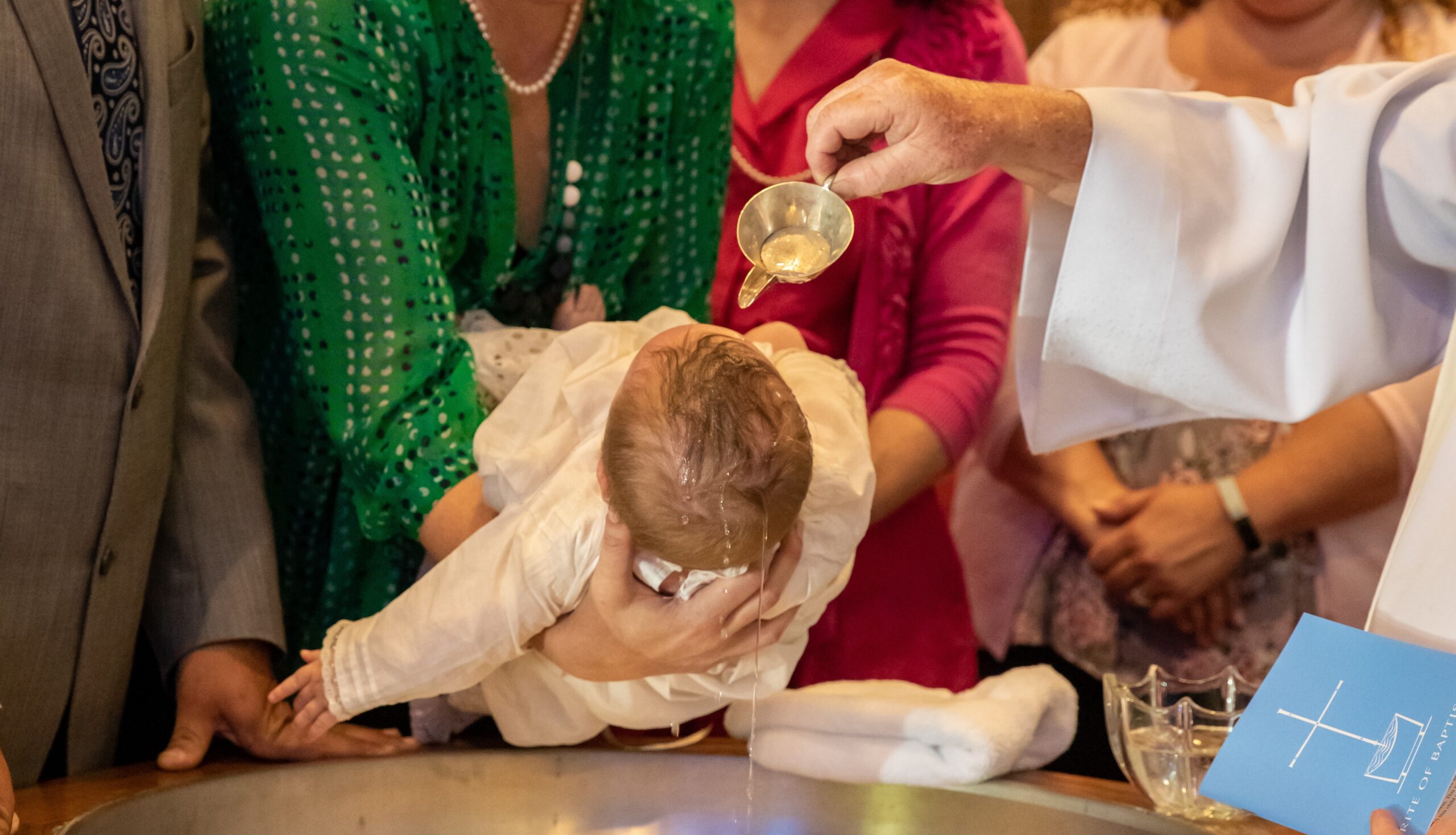
Second Reading: Rom 6:3-4, 8-11
Gospel Reading: Mt 10:37-42
This Sunday’s First Reading recounts how Elisha rewarded a woman by promising her a son.
How many people, in our society, would call this a “reward”? We Catholics do not condone abortion, and we plan our families naturally instead of through artificial contraception, but we belong to a society that embraces what Pope St. John Paul II called a “culture of death.”
“The Gospel of life is at the heart of Jesus’ message,” he said in his 1995 encyclical Evangelium Vitae (the “Gospel of Life”). “With dauntless fidelity,” we must preach it as “good news” to “every age and culture.”
That is what the angel said at the birth of Christ. He noted: “I bring you good news of a great joy which will come to all the people; for to you is born this day in the city of David a Saviour, who is Christ the Lord.”
When Jesus said, “I came that they may have life, and have it abundantly,” he was “referring to that new and eternal life” which consists in communion with the Father, to which we are called as members of Christ’s mystical body by the power of the Holy Spirit, the Pope stressed.
However, he said, it is in that supernatural life that every aspect of human life achieves “its full significance.” We are “called to a fullness of life” that far exceeds the dimensions of our earthly existence, “because it consists in sharing the very life of God.”
Even here and now, he said, our “supernatural vocation reveals the greatness and the inestimable value of human life.” Human life is “the fundamental condition, the initial stage, and an integral part of the entire unified process of human existence,” which will “reach its full realization in eternity.”
“If we have died with Christ, we believe that we will also live with him,” St. Paul says. Do we believe it? Do we remember it when we face a birth or, still more, a death?
Life on earth is not the “ultimate,” but rather the “penultimate,” reality, the Pope said. It lasts 70 years, “or 80, for those who are strong,” we say in the Psalm. Modern medicine has extended those times, but as we approach death, the difference between 80 and 90 or 100 seems trivial.
Death puts an end to “the time of grace and mercy God offers” us “to decide our ultimate destiny,” the Catechism of the Catholic Church says. If we have confined ourselves to this world, death ends everything. However, for those who die in Christ, “life is changed, not ended,” the Church says in her funeral Mass. “When the body of our earthly dwelling lies in death, we gain an everlasting dwelling place in Heaven.”
Our attention, therefore, even in this world, should be on heaven. In fact, Christ warns, “Those who find their life” (in this world) “will lose it, and those who lose their life for my sake will find it.”
We must love Christ more than father or mother, son or daughter, taking up our crosses and following him. Only thus will we find the more important life, the life that lasts forever. Those who “find their life,” such as it is, in this world, will lose both.
It is not just the Church’s rule, but the rule of life itself, that we must give up lesser goods for the sake of greater goods. We do it continually: we give up food to stay healthy, give up leisure to acquire education, give up other men and women for the sake of a good marriage.
The greatest good is Christ. It makes sense to give up everything else for his sake. In the long run, he is the only good; but, paradoxically, he brings with him all other goods.
Seek yourself, and you will find nothing. Seek Christ, and you will find him, and with him, everything else.







