

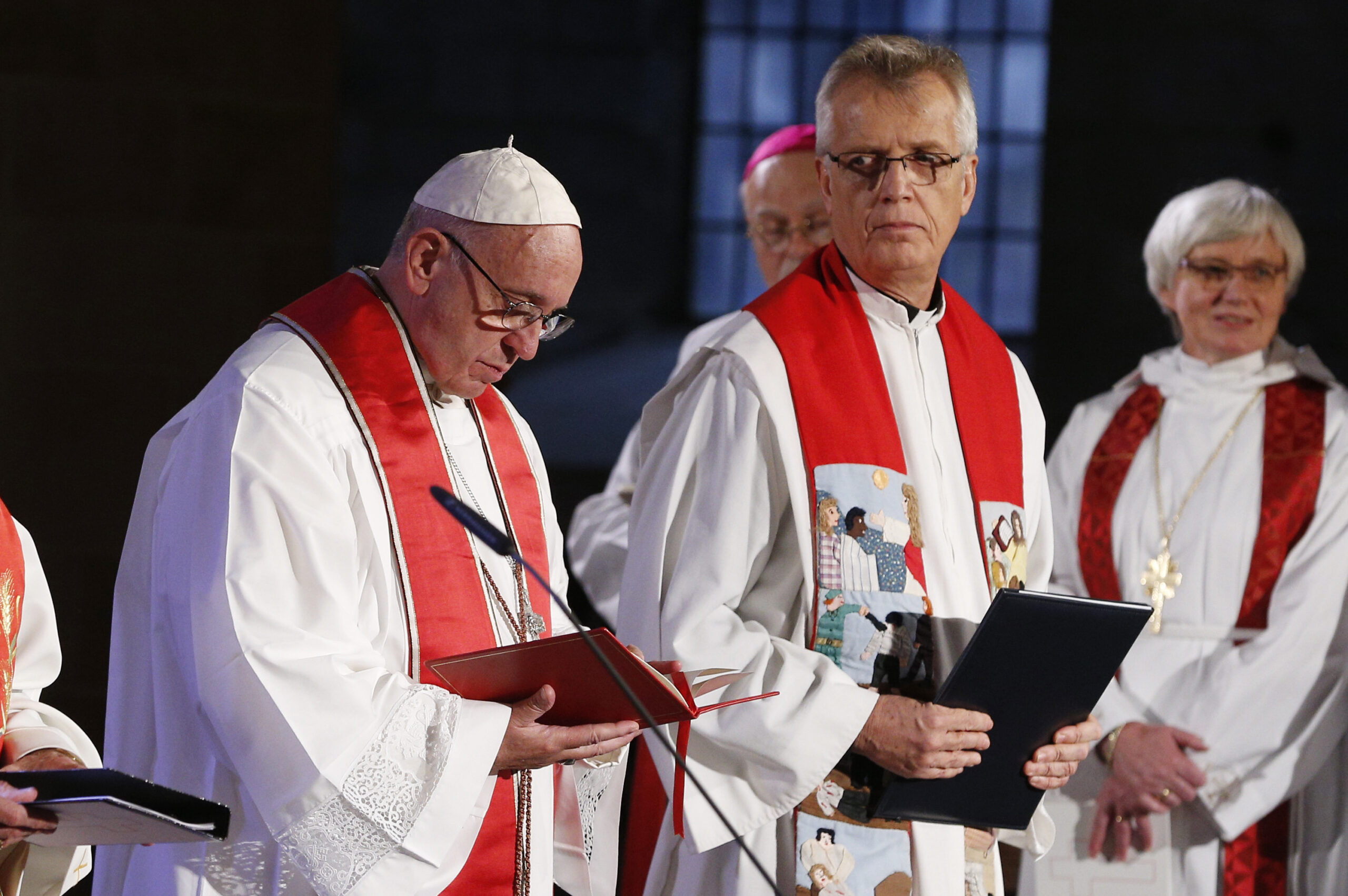

Both the headline and the content of the Oct. 14 online article “Reformation disputes largely gone, but many don’t realize it” are misleading.
Sadly, “Reformation disputes largely gone” is far from the truth. It is truly wonderful for Catholics and Protestants to dialogue and recognize commonalities in belief, even to put it in writing. The joy found in ecumenical circles is a clear example of Christian love.
However, all is not unity.
Crucial differences still exist between Catholics and Lutherans and, indeed, all Protestants – important differences of eternal significance.
The Joint Declaration on the Doctrine of Justification spoke specifically of just one of many disputed doctrines of the Reformation. The document also focused on those aspects of justification that we do agree on, but did not cover the many fundamental areas of doctrine on which we don’t.
There is much work yet to be done to bring about the unity that Jesus spoke of in John 17: “that they may be one even as we are one, I in them and you in me, that they may become perfectly one, so that the world may know that you have sent me.” Jesus prays for “perfect” unity. This can’t happen with partial truths.
As the Vatican II document Decree on Ecumenism states, “Nothing is so foreign to the spirit of ecumenism as a false irenicism, in which the purity of Catholic doctrine suffers loss and its genuine and certain meaning is clouded.”
The article erroneously gives the impression that all is well and unified with Catholics and Lutherans. It’s heartbreaking to say that it is not so. The strides being made in ecumenical dialogue are promising, but we must keep praying for that perfect unity between all Christians.
Myrna Osborne
Creston







