

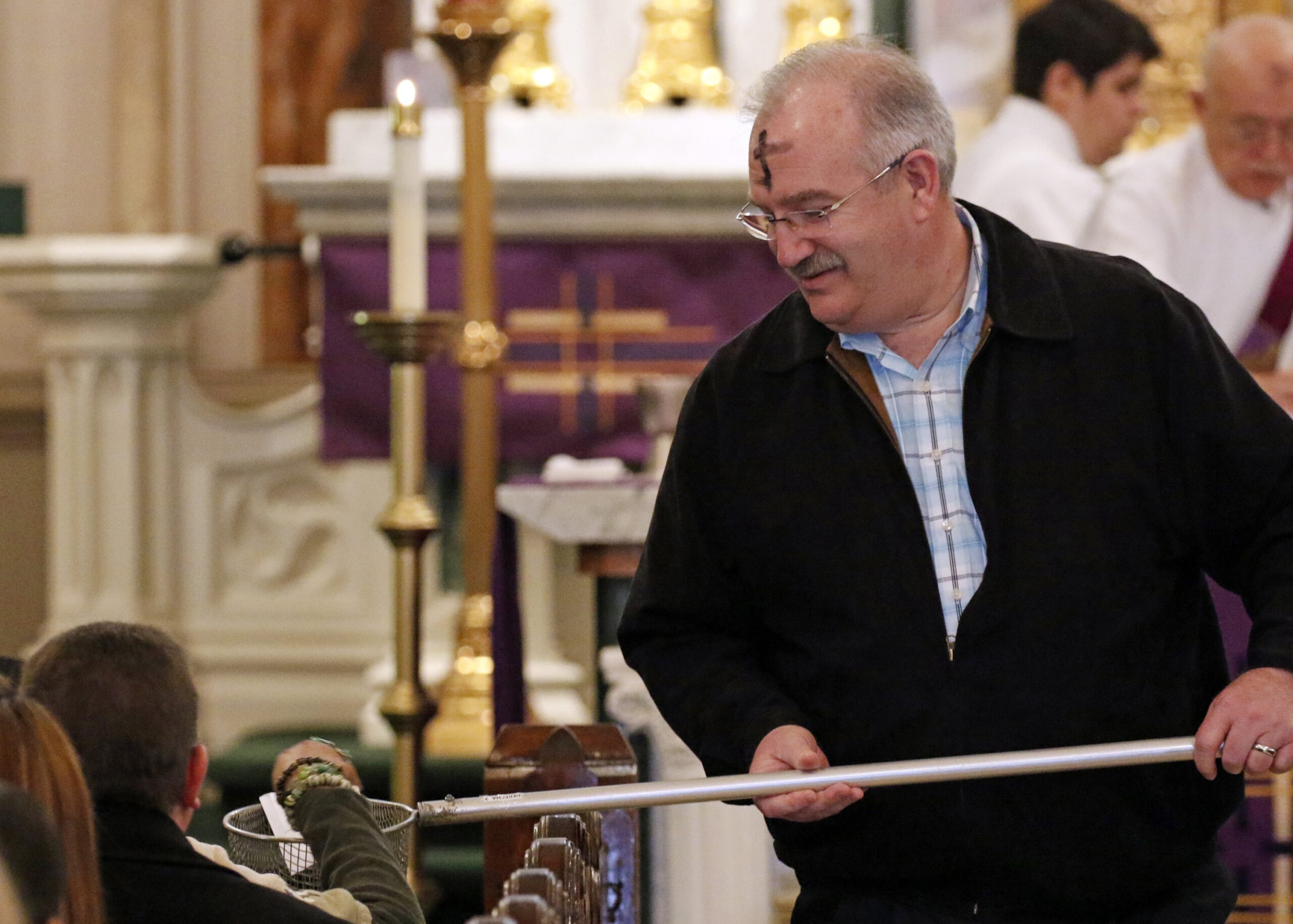

Chapter 16 is the final chapter of the First Letter to the Corinthians. St. Paul urged the Corinthians to charity through almsgiving and expressed his own charity towards them.
Biblical scholar and theologian Father George Montague explained, “This final chapter is really a long postscript. The teaching portion of the letter climaxed with the preceding chapter. This short chapter deals with certain housekeeping details like the collection for the poor in Jerusalem, Paul’s travel plans and those of his collaborators, a final exhortation and greeting.”
Those kind of details, Father Montague said, “bring us down from the lofty teaching on the resurrection to the details of everyday life – a reminder that behind the letter is the story of a lot of personal interaction.”
St. John Chrysostom commented: “Having finished his discourse on Christian doctrine and ready to engage a topic more related to Christian ethics, he leaves everything else aside and goes to the chief good, the topic of almsgiving. After that he brings the letter to a close. Nowhere else does he do this.”
Instead, in the other epistles, St. Paul concludes with discussions of mercy, moderation, gentleness, patience, and the other virtues.
“Why, then, does he instruct them here only in this one aspect of ethics, almsgiving? Because most of what he said before was already concerned with Christian behaviour: chastising the fornicator, correcting those going to pagan courts, frightening drunkards and gluttons, condemning the factious, the contentious, and the power-hungry, passing a crushing verdict upon those who approached the holy mysteries unworthily, and discoursing about love,” he writes.
Because the saints in Jerusalem were in great need, he mentions only almsgiving here.”
St. Paul exhorted the Corinthians: “Let all that you do be done in love” (1 Cor 16:14).
And St. Augustine commented: “The teachers of the Church, the apostles, did all these things: they said what was to be done, they offered rebuke if it was not done, and they prayed that it might be done. The apostle gave instruction when he said: Let all that you do be done in love. He rebuked when he said: To have lawsuits at all with one another is sin for you. Why not rather suffer wrong? Why not rather be defrauded? But you yourselves wrong and defraud, and that even your own brethren. Do you not know that the unrighteous will not inherit the kingdom of God? (1 Cor 6:7–9).”
He continues, “Let us also hear him praying: May the Lord make you increase and abound in love to one another and to all men (1 Thes 3:12). He instructs them that they should have love; he rebukes them for not having it; and he prays that love may abound. Friend, in Paul’s instruction learn what you ought to have; in his rebuke learn that you are at fault in not having it; in his prayer learn from what source you may receive what you desire to have.”
St. Paul concluded the Letter with these words: “If anyone has no love for the Lord, let him be accursed. Our Lord, come! The grace of the Lord Jesus be with you. My love be with you all in Christ Jesus. Amen” (1 Cor 16:22–24).
St. John Chrysostom commented: “With this one word accursed he makes them all afraid – those who were making their members the members of a prostitute (1 Cor 6:15), those who offended their brothers by eating food offered to idols (1 Cor 8:13), those who named themselves after human beings (1 Cor 1:12), and those who did not believe in the resurrection (1 Cor 15:12).”
St. Paul “not only frightens them, but he also shows them the way of virtue and the source of vice. When our love for the Lord is strong, it blots out and repels all forms of sin. Likewise, when love grows weak, it makes these same sins sprout up… . My love be with you all, as if he were saying, ‘I am with you all.’”
In this way, “Paul shows that what he has written does not come from anger or wrath but from concern. After chastising them so strongly, he has not turned away from them but loves and embraces them though they are absent, throwing his arms about them through these epistles.”
Anyone who wants to correct others has to do this, St. John Chrysostom writes. “One who acts only in anger gives vent to his own strong feelings. One who corrects someone who has gone astray and then demonstrates the way of love makes clear that even what he said by way of rebuke was said out of love. Let us admonish each other in this way.”
Your voice matters! Join the conversation by submitting a Letter to the Editor here.
一切事都應以愛而行
格林多前書第16章是這封書信的最後一章。聖保祿透過恩施勸勉格林多人行愛德,並表達宗徒對他們的愛。Montague神父解釋說:「這最後一章其實是一篇冗長的後記。這封信的教育部分在前一章已達到高潮,而這短短的一章則涉及一些實務細節,例如為耶路撒冷窮人的募捐、保祿及其合作者的行期、最後的勸勉與問候。這些細節將我們從復活的崇高教導帶回日常生活的現實 – 提醒我們,在這封書信的背後,是一個很多人互動的故事。」
金口聖若望評論道:「在結束基督信仰教義的講論,準備轉向與基督徒倫理更相關的主題時,他撇開其他一切,直接談論首要的恩施德行,然後才結束這封書信。他在其他書信中並未如此,而是通常以慈悲、節制、溫和、忍耐,以及其他各種德行作總結。那麼,為何此處他只教導這一項倫理德目,即恩施呢?因為他在先前已經大篇幅談及基督徒的行為準則:責備亂倫者、糾正訴諸異教法庭者、警戒貪酒與貪食者、譴責分黨結派、爭權奪利者,並對那些不配領受至聖奧蹟的人作出嚴厲判決,最後更詳論愛德。由於耶路撒冷的聖人極為貧困,他此處特別提及恩施。」
聖保祿勸勉格林多人說:「你們的一切事,都應以愛而行。」(格前16:14)聖奧斯定評論道:「教會的教師 – 宗徒們,正是這樣行事的:他們指示應該做什麼,若未能做到則予以責備,並為此祈禱。當宗徒教導時會這樣說:凡你們所行的,應該以愛而行。當他在責備時說:你們彼此有訴訟的事,就各方面講,已是你們的缺點了;你們為什麼不寧願受點屈?為什麼不寧願吃點虧﹖你們反而使人受屈,使人吃虧,況且這還是施於弟兄!你們豈不知道,不義的人不得承繼天主的國嗎?(格前6:7-9)當他在祈禱說:願主使你們彼此間的愛情,和對眾人的愛情增長滿溢。(得前3:12)他教導人應該懷有愛德,責備人當人沒有愛德,他祈禱使愛德增長。朋友啊,在保祿的教導中,你當學習自己應當有什麼;在他的責備中,認識自己缺乏什麼;在他的祈禱中,明白你所渴望的美善該從何處獲得。」
聖保祿以這些話結束了他的書信:「若有人不愛主,該受詛咒!吾主,來罷!願主耶穌的恩寵與你們同在!願我的愛在基督耶穌內與你們眾人同在!」(格前16:22-24)金口聖若望評論道:「僅此被詛咒的一句,便使眾人懼怕 – 我豈可拿基督的肢體作為娼妓的肢體?(格前6:15)、倘若食物使我的弟兄跌倒,(格前8:13)、那些自稱歸屬於人的門徒(格前1:12),怎麼你們中還有人說:死人復活是沒有的事呢?(格前15:12)。他不僅使他們戰慄,也指示他們德行之路與罪惡之源。當我們對主的愛強烈時,能抹去並驅散一切罪惡;相反,當愛冷淡時,這些罪惡便會滋生…。『願我的愛在基督耶穌內與你們眾人同在』,彷彿他在說:『我與你們同在。』藉此,保祿表明,他所寫的一切並非出於憤怒或忿恨,而是出於關懷。儘管他曾嚴厲斥責,他並沒有因此而疏遠他們,反而仍然愛他們、懷抱他們。雖身在遠方,卻透過書信向他們伸出臂膀擁抱。凡是要矯正他人者,皆當如此而行。只憑憤怒行事的人,不過是發洩自己的情緒;而那矯正迷途者並指引愛德之道的人,則表明即使他的責備之言,也是出於愛德。讓我們彼此如此勸勉吧!」
Your voice matters! Join the conversation by submitting a Letter to the Editor here.







