


Numerous reporters who cut their writing teeth in the 1970s and ‘80s say they were inspired to enter journalism by the investigative reporting of Washington Post reporters Bob Woodward and Carl Bernstein, whose stories about the Watergate break-in led to the resignation of U.S. President Richard Nixon in 1974.
The 1976 film about the scandal, All the President’s Men with Robert Redford and Dustin Hoffman, presumably encouraged a second wave of crusading correspondents.
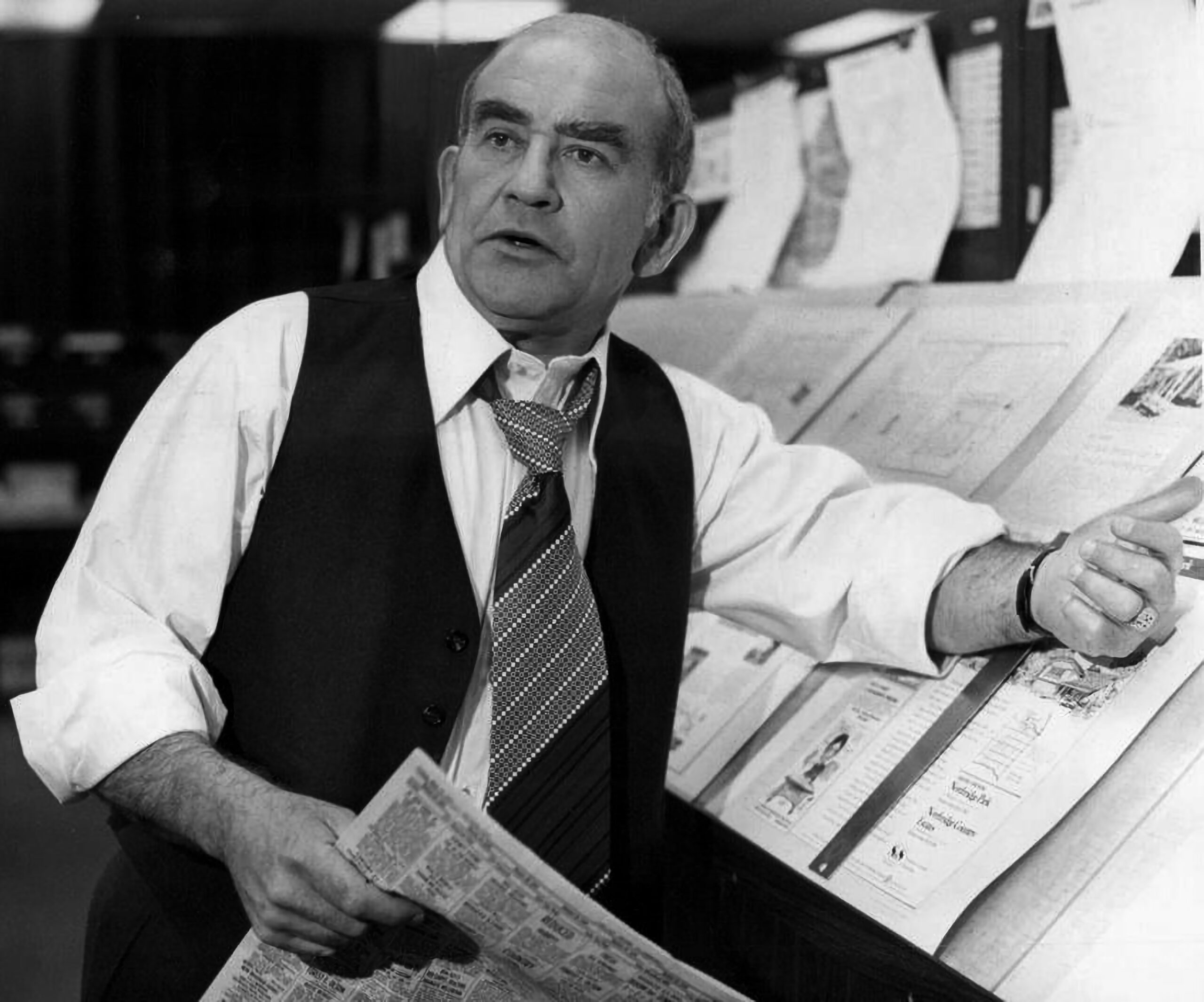
But I’ve never heard of a reporter who said a fictional journalist inspired them to go into journalism. Except me. So when Ed Asner, who played newspaper editor Lou Grant in the show of the same name, died recently, I wondered how many other journalists he helped usher into the news business.
Lou Grant ran from 1977 to 1982, depicting adventures in journalism at the fictional Los Angeles Tribune. The weekly drama made a huge impression on this hapless university student whose academic career was in need of salvaging. Along came Lou Grant — the show and title character — to rescue me from scholastic oblivion in computer science and drop me into a journalism program where I graduated with a dean’s award.
The dean’s award is not meant to brag but to illustrate what is possible when someone finds their true calling. That conversion experience taught a valuable lesson about being open to rethinking one’s life and listening to the Holy Spirit, who sometimes speaks through TV shows and university roommates.
My road to Emmaus took place in our university dorm, where watching Lou Grant was a weekly routine. We’d tune in to watch the gruff editor and his band of newsroom eccentrics as they attended press conferences, conducted in-depth political investigations, and went undercover to research feature stories. Along the way they confronted politicians, deadlines, and each other while negotiating questions of journalistic ethics.
I was already a passionate newspaper reader, and then Lou Grant offered a window into a metropolitan newspaper newsroom, capturing the drama and the comedy, the deadline tension, the irreverence, the collegial bonds among staffers, and the zeal for the underdog that used to be journalists’ stock in trade.
It was absorbing entertainment, but it remained merely a TV show until one week when my roommate, having academic challenges of his own, suddenly said mid-episode, “Paul, let’s go into journalism.”
His next words sealed the deal. Conjuring up images of black and white “stop the press” newspaper movies, he said, “We’ll wear wide-brimmed fedoras with press cards in the band!”
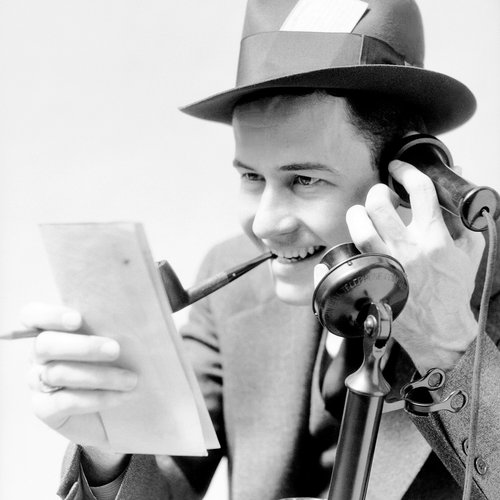
That’s all I needed to hear.
By fall I had traded in programming language for newspaper writing. While my roommate decided fedoras with press cards weren’t for him, I never looked back as I became immersed in broadcast and print journalism studies.
On reflection I can’t fathom what I was doing in computer science in the first place. Transcripts adorned with Ds and Fs in math and science, but As and Bs in English, should have been a clue.
I also never imagined the world that journalism would open up. It provided a career filled with writing opportunities, starting as a copy boy compiling articles about weekend entertainment and summer tourist attractions, then moving on to news, feature, and opinion writing.
Over the decades, my fellow scribes and I were forced to keep pace with the craft in the face of constant technological developments. Newsrooms shifted from manual typewriters, carbon paper, and IBM Selectrics, to rudimentary word processors called VDTs and CRTs (video display and cathode ray terminals). Wirephoto machines and punch tape were replaced by PCs, Macs, and the internet. Gone were the days of editing copy and laying out pages using blue pencils, grease pencils, line gauges, and hot wax as we pivoted to digital typesetting, or, as it was called back in the day, “pagination.”
Along the way I learned photography from the ground floor up — literally. One newspaper darkroom was in a dank root cellar that also served as the office washroom. In winter I developed film beside a toilet that had a layer of ice on the water. Now visualize my captivation when in 1999 I saw a digital camera for the first time. It belonged to a Canadian Press photographer, and I knew I was looking at technology that would change photography forever.
Journalism also led to adventures in places I would never have visited, from Atlanta to Zagreb.
Above all, journalism helped me overcome my natural timidness about meeting new people as I learned the best way to get to know someone is to ask them questions.
I reflect often on the old days of journalism. Nothing like it exists anymore – the drive to get the story quickly but also get it right, with accuracy, honesty, and all sides of the story presented fairly so readers could make up their own minds about a topic.
And I owe it all to Ed Asner’s alter ego, who motivated my entry to journalism the way Wayne Gretzky inspired generations of children to take up hockey.
Sadly, my esteem for Asner the actor never reached the level of admiration I had for his TV character. As a prominent Hollywood spokesman for abortion rights, Asner’s career was always somewhat tainted in my eyes.
Nevertheless, he achieved the impressive feat of bringing to life a fictional character who inspired at least one educational laggard’s life for the better. And for that I’m grateful.
Rest in peace, Ed Asner.
Twitter: @paulschratz







