

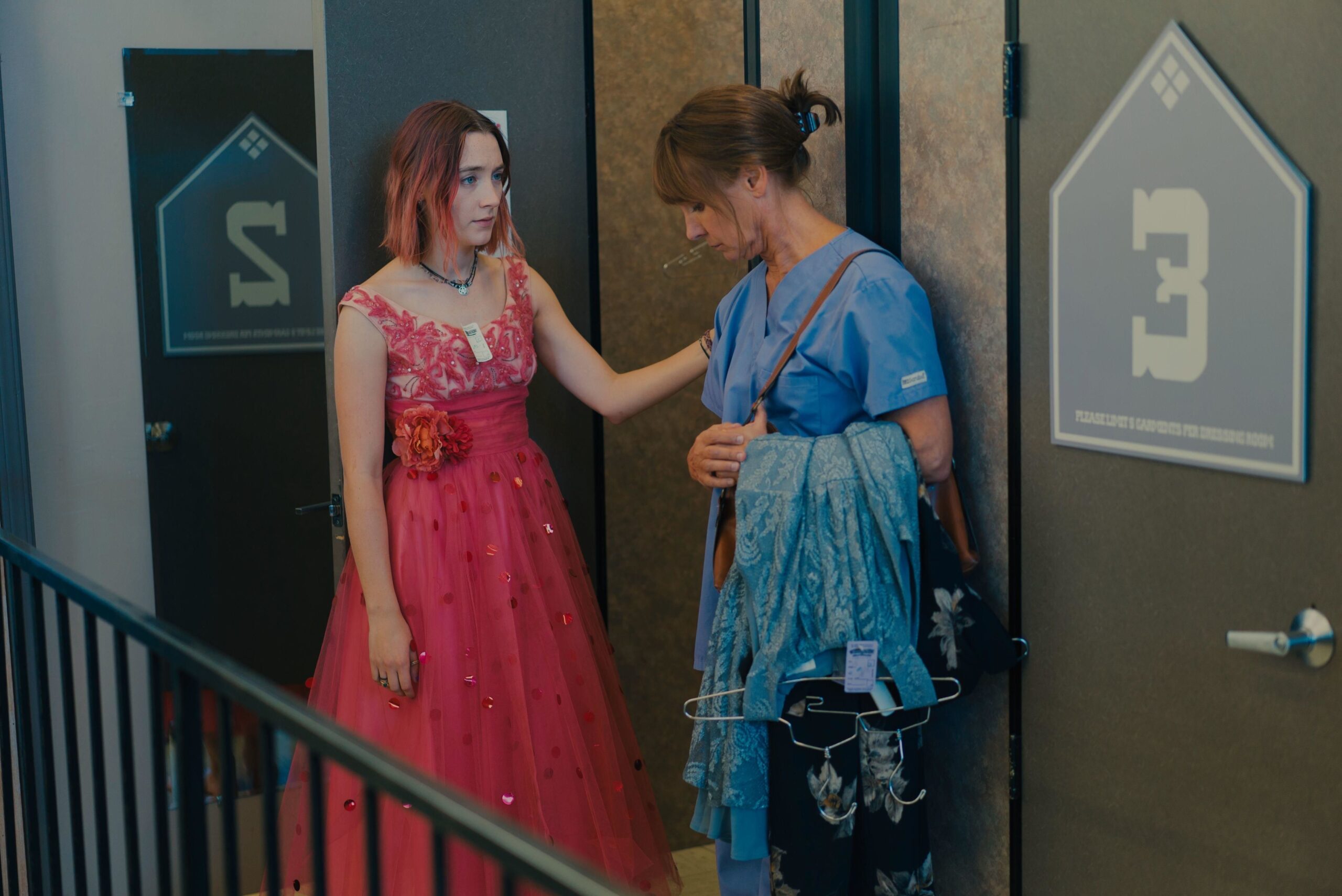

LADY BIRD – In cinemas throughout the Lower Mainland.
Every so often a movie comes along which holds up a mirror to the audience, reminding them of much they have experienced. Seldom is it done so brilliantly as in Greta Gerwig’s Lady Bird.
For any adult and certainly any parent who has ever had to deal with
a rebellious teenager, the film certainly treads familiar ground, but does so
in a way which is both realistic and life affirming, as well as thoroughly
entertaining. Potential viewers should be warned: the film is not
without scenes involving sex and drugs which some may find offensive. Given today’s teenage culture, sadly, this is to be expected.
Central to the story is Christine McPherson, who has, in one of her many acts of rebellion, has decided to change her name to Lady Bird. This is not the only way in which she rebels. Though her parents, struggling hard economically, sacrifice in order to send their daughter to a Catholic school, the daughter is far from happy about it and determinedly sets out to reject the moral norms with which she has been raised.
With romantic dreams as to what other worlds may be
like, she is also insistent she will apply to one of the Ivy League
schools since the East Coast has so much more to offer than the conventional
world of Sacramento in which she lives. Thus is set up a portrait of a family enduring much that many families
have experienced. Much of the conflict occurs between Lady Bird and her loving,
frustrated, sacrificing mother—often driven to anger as she attempts to
cope with her difficult daughter.
The daughter also finds life difficult as she rebels against the demands of a Catholic school run by nuns who are far more understanding than she has any right to expect. Incidentally, oh, how good it is to see a Catholic institute portrayed in a positive light! She also encounters the usual teenage turmoil as she tries to find friendship, seeks to create for herself a false persona, and falls prey to many of the temptations of youth with which we have become so aware. Viewers will doubtless find her as annoying, as engaging, as wrong-headed and as understandably uncertain as any teenager they have ever met.
The result is a film which is often humorous, occasionally downright funny, frequently moving, and always based in reality.
For the rest, whether watching the frequent arguments and equally frequent moments of bonding between mother and daughter, the more affectionate relationship of a patiently understanding father and his difficult child, the bickering between siblings, or even the wildly comical moment in which a priest has to take over the school’s production of The Tempest and approaches it as the football coach that he is, the audience will find that the film is entertaining and a bitter-sweet reminder of the difficulties that arise from teenage angst.
Lady Bird has the merit of being a wonderfully made film. While it is the sure hand of director Gerwig that determines much of the success of the film, the screen writing is equally up to the task. Then, too, the performances throughout the film are superb.
Clearly Saorise Ronan in the title role – no small achievement as anyone who saw her in Brooklyn will appreciate, and Laurie Metcalfe as her much put-upon mother – steal much of the limelight. However, the rest of the cast lend unwaveringly superb support. Without straining for effect, the film also marvellously captures the world of suburban Sacramento of twenty years ago. In short, this is a film with which it is almost impossible to find fault.







