


3rd Sunday of Lent, Year A
First Reading: Ex 17:3–7
Second Reading: Rom 5:1–2, 5–8
Gospel Reading: Jn 4:5–42
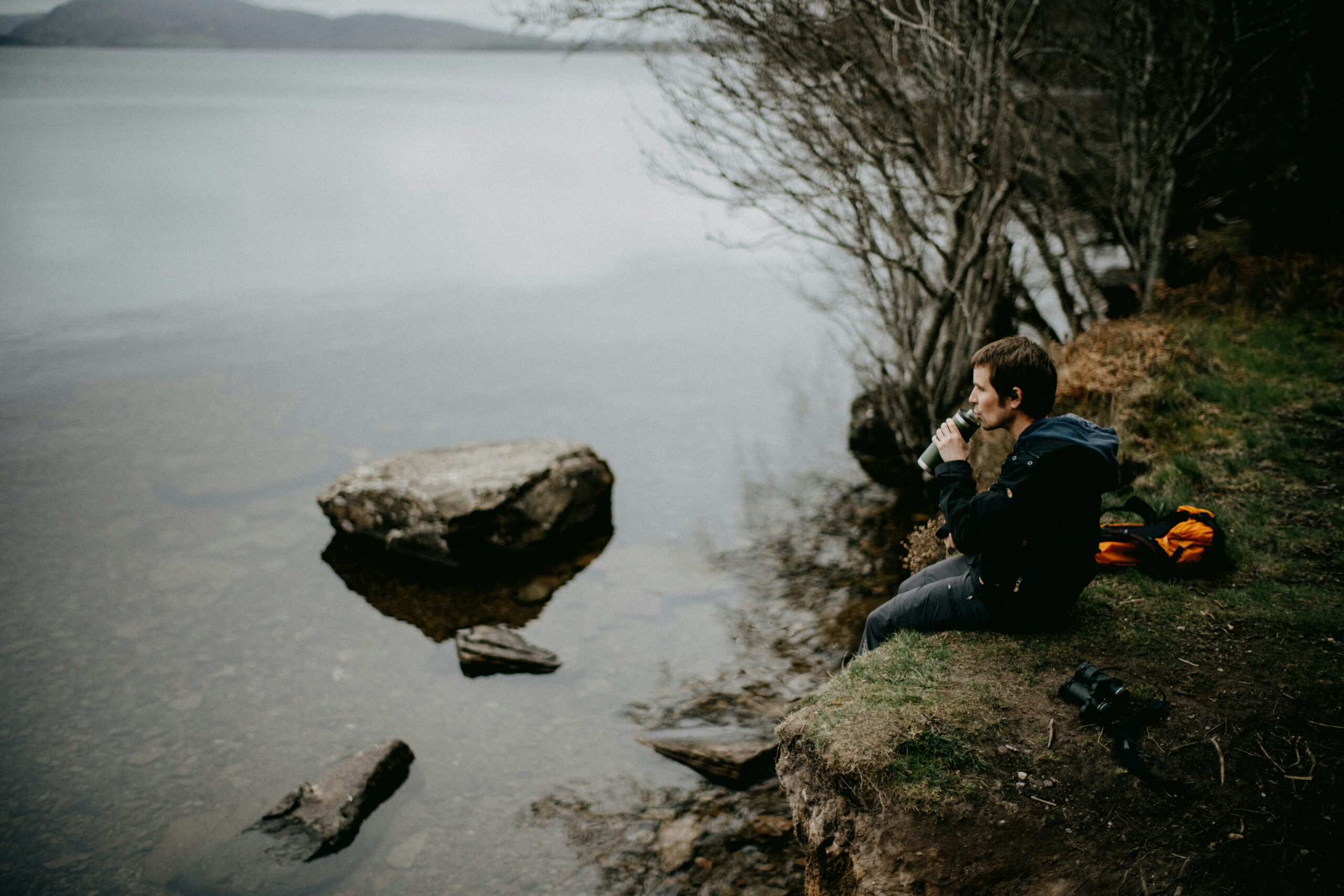
This Sunday, we hear how the Israelites complained about the lack of water after they had left Egypt. “Why did you bring us out of Egypt, to kill us and our children and our livestock with thirst?” they asked Moses. On another occasion, they complained about the food.
At such moments, it seems, they would have sold their freedom for water or food.
We do the same when we sin. God wants to give us himself and everything we could possibly desire; but we, at least in the moment of temptation, would relinquish it for a fleeting pleasure of sex, food, or drink.
The problem is that we know the immediate pleasure, while we cannot even imagine the happiness God has prepared for those who love him. All we know, says the Catechism of the Catholic Church, is that heaven is the ultimate fulfilment of the deepest human longings, the state of supreme, definitive happiness.
Is heaven what we really want? For each of us, says C.S. Lewis, there is something we desire. We are always watching and listening for it, but we do not know what it is. All we get are hints, tantalizing glimpses, promises never quite fulfilled, echoes that die away.
The older we become, the more we realize that we cannot find what we are looking for on earth. Although we try to “postpone death for as long as possible,” we admit that endless life on earth would be “more like a curse than a gift,” Pope Benedict XVI said in Spe Salvi (“Saved By Hope”).
“What do we really want?” he asks. “In some way we want life itself, true life, untouched even by death; yet at the same time we do not know the thing toward which we feel driven.”
The observances of Lent, the time of penitence, help us answer that question: “What do we really want?”
True penitence is not merely external, but involves “our whole being, body and soul,” said Pope Paul VI in his Paenitemini, on fast and abstinence.
During Lent, we mortify our flesh because of “the fragility” of our fallen nature, in which “flesh and spirit have contrasting desires,” he said. We are “almost chained” by our senses; the purpose of mortification is our “liberation.” Through “corporal fasting,” the “wound inflicted on the dignity of our nature by intemperance is cured by the medicine of a salutary abstinence.”
When we fast from food, drink, or any other pleasure, we free our hearts to turn to God, turning away from ordinary water and asking God for the “living water” which Jesus offered the Samaritan woman in the Gospel reading. We give up the good things of this world, which we know, in order to focus on the better things of the next world, which we hope for.
“This hope does not disappoint us,” St. Paul says in the Second Reading, “because God’s love has been poured into our hearts through the Holy Spirit that has been given to us.”
In fact, Pope Benedict said, God’s kingdom is present “wherever he is loved and wherever his love reaches us. His love alone gives us the possibility of soberly persevering day by day, without ceasing to be spurred on by hope, in a world which by its very nature is imperfect.”
God’s love is our guarantee of the existence of what we only vaguely sense and which, nevertheless, in our deepest self, we await: a life that is “truly” life, he said.
By “offering up” the minor daily hardships that continually strike at us like irritating jabs, we give them meaning, the Pope said; we “insert these little annoyances into Christ’s great compassion so that they somehow become part of the treasury of compassion so greatly needed by the human race.”
Indeed, the Catechism confirms that the best penance is “the patient acceptance of the cross we must bear.”
Father Hawkswell is again teaching The Catholic Faith in Plain English with new insights, in print and YouTube form at beholdvancouver.org/catholic-faith-course. He is also teaching the course in person on Sundays (2–4 p.m. at the John Paul II Pastoral Centre, 4885 Saint John Paul II Way, 33rd Avenue and Willow Street, Vancouver) and Mondays (10 a.m.–noon in St. Anthony’s Church Hall, 2347 Inglewood Avenue, West Vancouver). The title of next week’s talk is The Last Seven Commandments.
Your voice matters! Join the conversation by submitting a Letter to the Editor here.







