


I write this column primarily to try to explain the truths of the Catholic faith in a clear and convincing way, both to encourage and strengthen people in their faith, and hopefully, to help give them confidence to share it with others. But my hope is that it will also help foster Christian unity, which is so important to evangelizing the world around us. Recall that Jesus said that it will be by the “perfect” unity of his followers that the world will come to know that the Father sent him (Jn 17:17-23).
But who is it that should be sharing the Catholic faith with others? St. John Paul II wrote, “This … mission … cannot be left to a group of ‘specialists’ but must involve … all the members of the People of God.” So this responsibility falls to every Catholic!
But a logical question follows: how should we share our faith, especially when it comes to our Protestant brothers and sisters? Sometimes, what we have to say is not as important as how and why we say it!
First, we must examine our intentions for sharing the faith and make sure they are pure. Foremost, we must share our faith out of love for others. St Thomas Aquinas defined love simply as desiring the good for another. If you take this to its logical end, the greatest good for another is heaven!
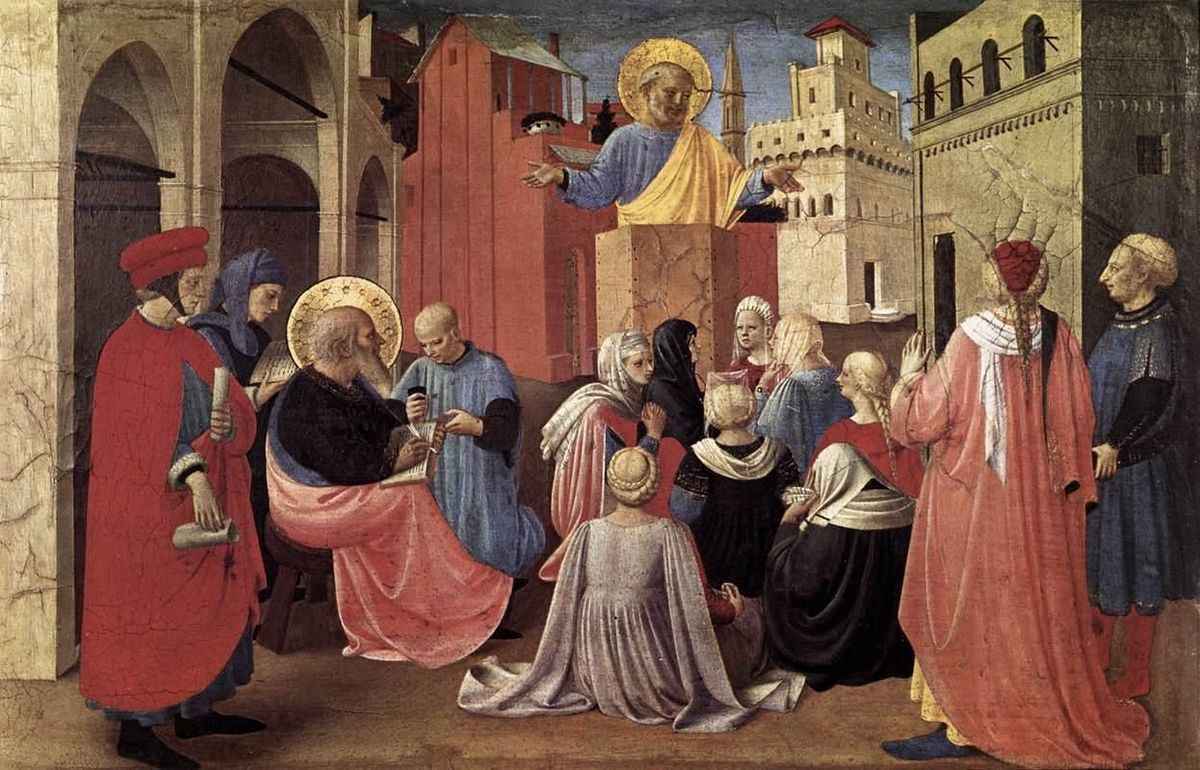
Our first Pope sets the stage perfectly: “Always be prepared to make a defence (apologia) to anyone who calls you to account for the hope that is in you, yet do it with gentleness and reverence (1 Pt 3:15-16).
Sharing the faith must always be done with gentleness and reverence. The quote attributed to St. Francis of Assisi captures the spirit of St. Peter’s words beautifully: “evangelize always, use words if necessary.”
Our Christian example of love, even to those who treat us unkindly, will be our most powerful testimony. So we must be careful to detach ourselves from any form of pridefulness when we share the faith. These are God’s truths, not ours. Our call is simply to share these truths with others – to explain them, and charitably defend them if necessary.
Prayer is essential. It is the Holy Spirit that must work through us in all of this. Apart from him, we can do nothing (Jn 15:5). And how much more will the heavenly Father give the Holy Spirit to those who ask. So ask! Pray! More than anything, an evangelist must be a person of love and prayer. Knowledge, though very important, is secondary.
Let me illustrate with two examples, one good, one not so. Both happened at World Youth Day in Toronto on the same day, but with very different results.
The first involved a debate over whether Peter was the head of the Christian Church or not. One man insisted that it was not Peter, but James who led the Church, and took me to Acts 15 to try and prove it. “I’ve got him!” I thought jubilantly, as I nodded my head vigorously. “Yes, let’s go there!”
My “opponent” took me to where St. James stands up at the first recorded Church council and gives four recommendations, claiming that in doing so, James was acting as the head of the Church. But I quickly pounced on his error. Flipping to Acts 15:7-12, I read aloud: “‘We believe that we are saved through the grace of the Lord Jesus, in the same way as they.’ The whole assembly fell silent…”
“Why was the council called?” I demanded. “What was the doctrinal question?” Before he could answer, I literally shouted: “The doctrinal question was, how are the Gentiles saved! Who gave the authoritative answer?! It was Peter! Not James! James addresses some secondary matters. Peter answers the question! And when he does, the whole council falls ‘silent’!”
The man tried to counter, but I kept interrupting him, repeatedly asking: “But who answers the main doctrinal question the council was called to address? It’s Peter!” I cringe just thinking about it.
Fast forward to “Big Joe” – a house-sized 6’7” African American. As thousands of young adults poured out of the Papal Mass, Joe’s crew of six guys handed out extremely anti-Catholic tracts to all they could.
My heart sank as I saw several young adults poring over the pamphlets in animated conversation. “What should I do?,” I prayed desperately. An inspiration came immediately. I walked over to Joe and greeted him cordially.
“Joe, you believe that when a person dies, they cease to exist, and then God basically thinks them back into existence at the final judgment. Is that right?” “Yes,” he confirmed. “Well, in 1 Peter 3:19-20, it says that when Jesus died, he ‘went to preach to the spirits in prison, who had once been disobedient.’ Who are these people Joe?” I gently asked. “They are people who have died, and Jesus descends to proclaim the Gospel to them. They haven’t ceased to exist at death as you thought.”
I paused a moment as he thought this over. “Joe, Jesus said that it would be better to have a millstone tied around your neck and thrown into the sea than to lead one of these little ones astray. You’re wrong on this point, and you are wrong on several other things in this tract as well. Please don’t hand these out to these young people,” I pleaded. “You’re endangering their souls – and your soul too.”
Joe stared at me for a moment, unsure of how to respond. “Do you have any idea who I am?” he erupted, shaking a massive finger threateningly, inches from my nose. “No, Joe, a … a … a big black guy …” I stammered, with a good natured grin. Then, with a weak smile, he bear hugged me, packed up his guys and left. I sat there stunned.
We must realize that most people who question Catholic teachings misunderstand them. Often, they sincerely believe Catholics to be in serious error and are actually working from a position of charity – they are concerned for our immortal souls! This is profound common ground: fellow Christians who sincerely love us! If we can keep this perspective, it should radically change our attitude when sharing our faith.
All the knowledge, eloquent arguments, and Scripture quoted from memory may simply fall on deaf ears if our intentions are wrong. Remember, Jesus said that even gentiles can be kind to those that are kind to them! How is a Christian to be different? “Love one another.” “Pray for those who persecute you.” If we do this first, our faith-sharing efforts will bear fruit.
A longer version of this column appears online at bccatholic.ca.







