

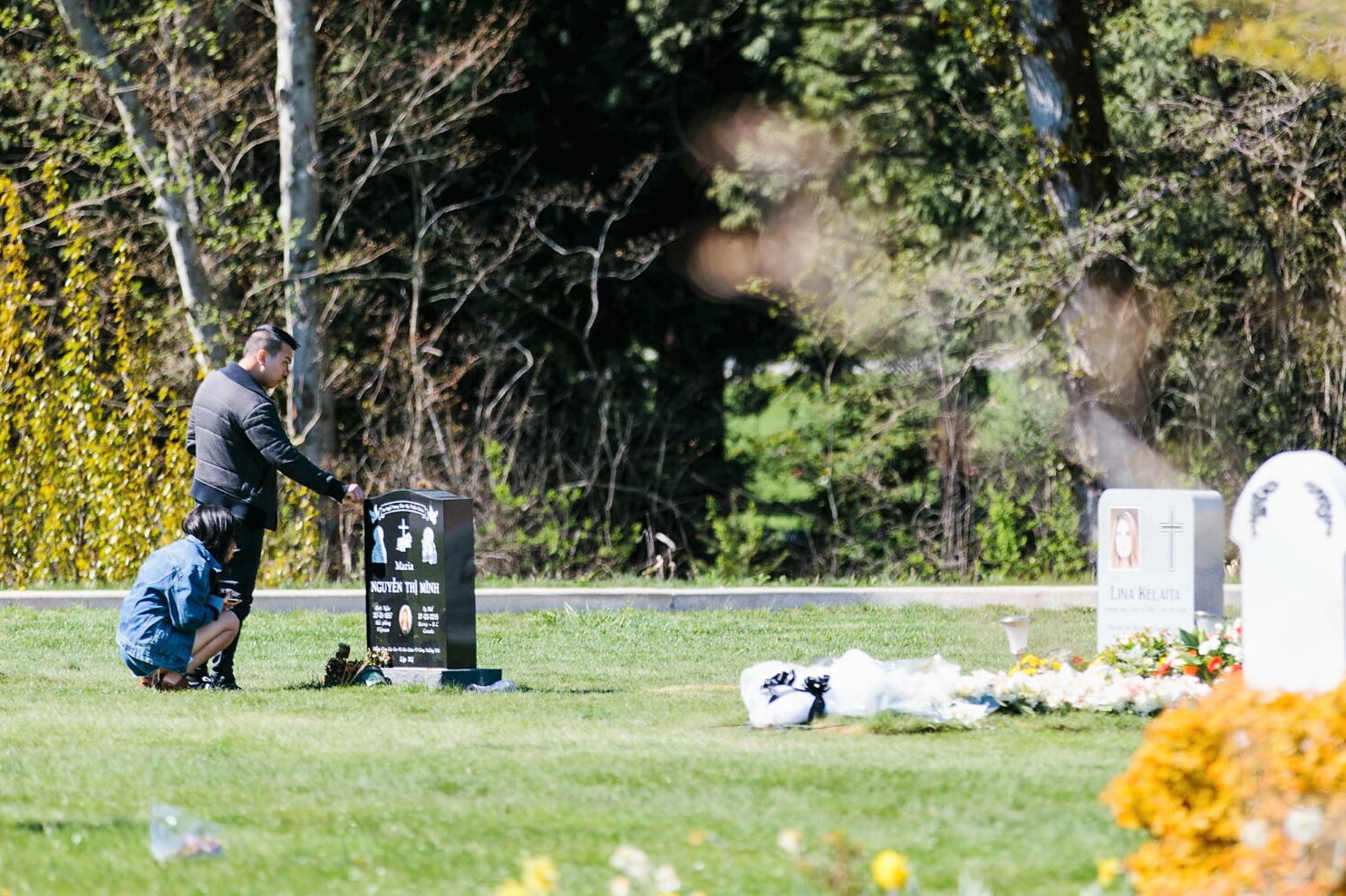

Grief is an interesting journey, to say the least. I have experienced it before, through grandparents, relatives, and friends; however, the recent death of my dad has hit me differently.
In some ways, the time surrounding Dad’s death has been filled with much more peace than other deaths of loved ones. When I was younger and inexperienced, I saw death as final. Even though I had been taught about heaven and life everlasting, my faith was immature, and my mind could only process what was tangibly missing. The deaths of my grandparents in particular affected me greatly. Over time, I have adjusted to the holes they have left in our family and now recognize the roles they play in my own heart and family life.
In cases of sudden death, shock is accompanied by disbelief and anger. Dad had been sick, so everyone – including Dad – knew his remaining time in this world was limited. Because of this, we were able to spend time with him and with each other. We could offer Masses, arrange for a priest to visit the house, and try to prepare ourselves for the inevitable.
Nothing, however – not even a terminal diagnosis or a warning – can fully prepare us for such a tremendous loss. Dad was ill and we find comfort in knowing that his suffering is over; yet it is still incredibly hard to believe that it all actually happened. Everything about Dad’s death feels surreal.
Knowing my dad always placed his trust in God is a consolation. I know that my own faith has sustained me, as well. I feel Dad around me; I know he is with us whenever we think of him, even when we aren’t aware that he is there. I believe in life after death, and knowing that Dad died with a picture of Jesus and his Sacred Heart on the wall beside his bed gives me great comfort.
However, I have been changed.
In the weeks following the funeral, I found myself tempted to shut down emotionally. Feelings were just too hard. My beliefs supported me, but I also noticed that I was hesitant to communicate with people outside of our family. In moments of weakness, I found myself asking, “Why bother getting close to people when they’re only going to die?”
Fortunately, I have been blessed with wonderful people who have helped me continue to live when I was very tempted to withdraw from everything. People have invited me to lunch. They have sent me texts, cards, and even funny Instagram reels. They have continued to reach out, even when I have been quiet.
Reading has helped as well, especially spiritual material such as the writings of C.S. Lewis. In Mere Christianity, Lewis states, “Hope is one of the Theological virtues. This means that a continual looking forward to the eternal world is not (as some modern people think) a form of escapism or wishful thinking, but one of the things a Christian in meant to do.” Desiring eternal life is rooted in the virtue of hope and is what I am “meant to do,” even though it sometimes feels – or looks – like “escapism.”
Lewis likewise goes on to say that the Apostles “left their mark on Earth, precisely because their minds were occupied with heaven.” He states that many modern people go to the other extreme and become so preoccupied with their earthly desires that they lose sight of heaven as a lifelong goal, thinking of it only in times of despair and loss when they long to reunite with deceased loved ones.
While I must focus on the ultimate goal of eternal life which will fulfill longings I cannot possibly identify in this life, I know I cannot escape this life. I must embrace it and continue to engage with others – becoming vulnerable and loving people even though I risk losing them, not only because my dad would want me to, but because God has created me with a purpose.
Like the Apostles, I must live my earthly life fully, by aiming for heaven and hopefully pointing others in that direction as well. For as Lewis stated, “Aim at heaven and you will get earth ‘thrown in’: aim at earth and you will get neither.”
We welcome letters to the editor about articles in The B.C. Catholic.







