
As we approach Holy Week, Catholics around the world will celebrate the annual Chrism Mass followed by the Mass of the Lord’s Supper on Holy Thursday — two liturgical celebrations that celebrate the priesthood.
The ideal time for celebrating the Chrism Mass is the morning of Holy Thursday, which is the day we recall that Christ instituted the Mass and the sacrament of holy orders. However, due to the geographical challenges present in some dioceses, the Chrism Mass is often celebrated on an earlier day in Holy Week.
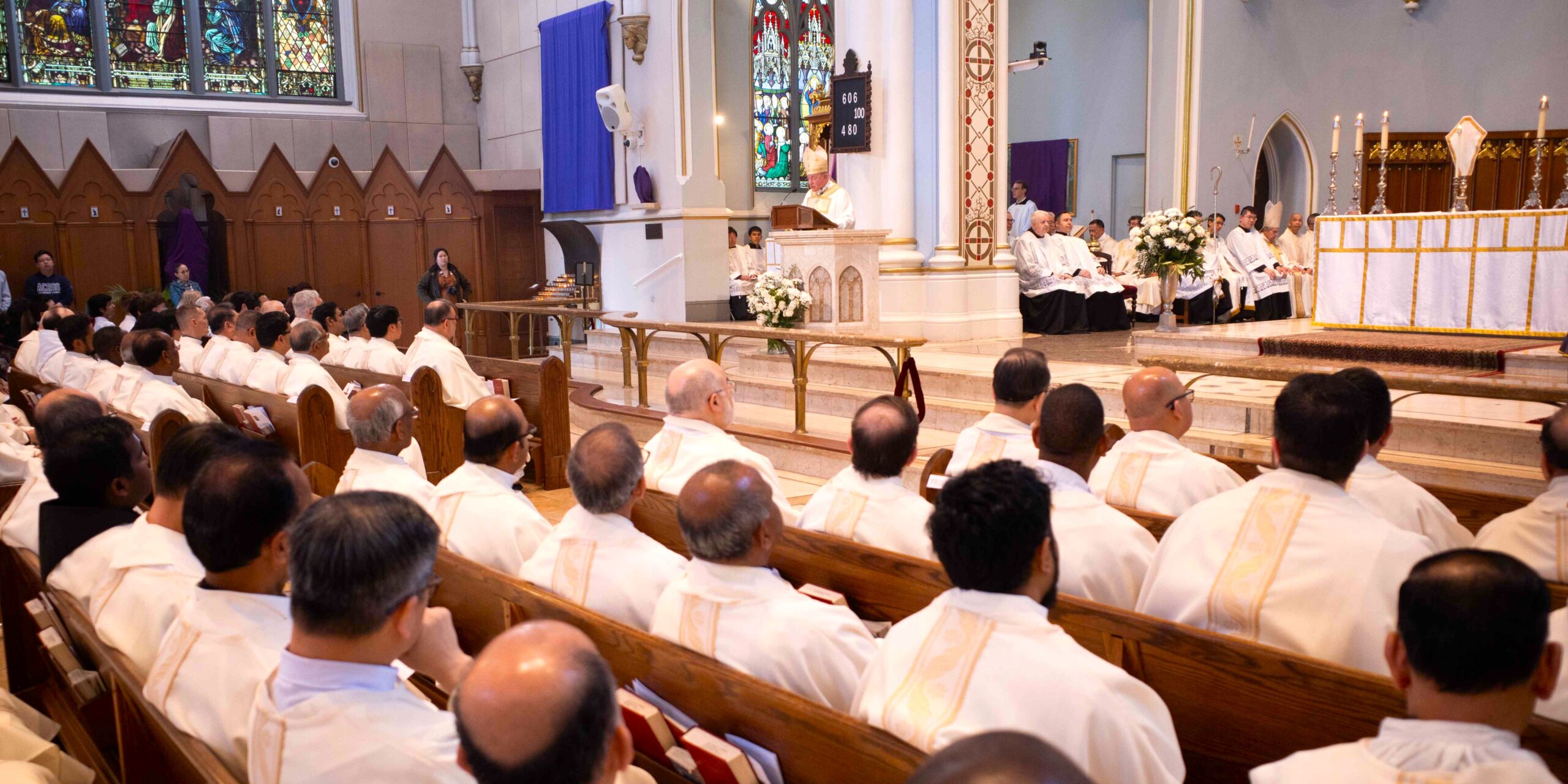
Tracing its roots to the third century, the Chrism Mass has a twofold purpose. First, the bishop blesses the oils to be used sacramentally throughout the diocese in the coming year. Second, all the priests of the diocese renew their priestly vows in front of their shepherd, the bishop.
If you’ve never been to a Chrism Mass, there is a special atmosphere seeing the priests of a diocese all gathered in one place under the pastoral headship of their bishop. This coming together emphasizes not only the power but also the brotherhood of the priesthood.
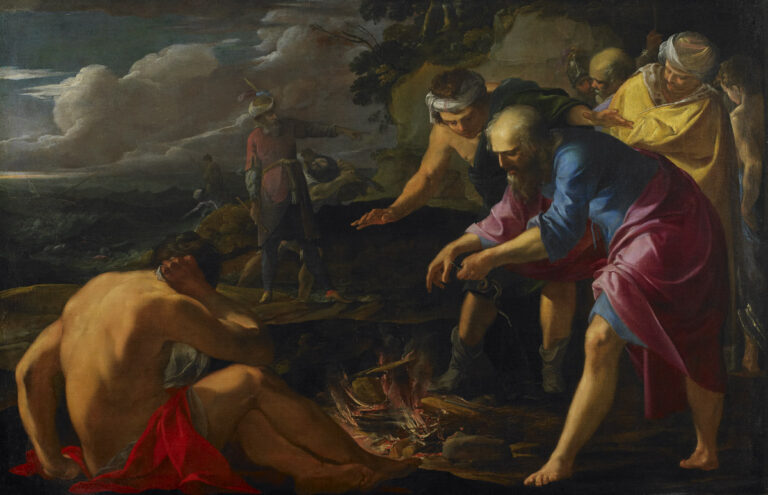
The blessing and distribution of oils goes hand in hand with the priesthood. The concept of using oil to anoint is ancient. On the third Sunday of Lent we heard about the Lord’s selection of young David to be the future king and how the Prophet Samuel “with the horn of oil in hand, anointed David in the presence of his brothers; and from that day on, the spirit of the Lord rushed upon David” (1 Sam 16:13a).
Now, centuries later, the Church gives the oil of anointing pride of place in the liturgy. God is still choosing to anoint his people. Despite a decrease in priestly vocations in some areas of the world (though there are places in the world experiencing an increase) God is most definitely still calling men to be anointed to the ordained priesthood. When a priest is brought to the Lord in the presence of his brothers — like he is at the Chrism Mass — he is reminded that he is anointed in a physical way just like David. He is set apart for the Lord’s purpose.
We need this reminder once a year about how special the priesthood is. In our current world, in which the vows of chastity and obedience (and poverty by some) are taken by a priest, his life becomes a bold statement. Not only does he stand in stark contrast to what the world today tells us is important, but our Church cannot survive without this priesthood, instituted by Christ himself.
This brings us to the Mass of the Lord’s Supper on Holy Thursday. This Mass recalls the first Mass, celebrated by Christ himself at the Last Supper, but also the dawn of the Catholic priesthood. This is why this Mass includes the washing of the feet. Just as Jesus washed the feet of the Apostles, so will all the priests after him be at the service of the Church. A priest is a servant in imitation of Christ.
“You call me ‘teacher’ and ‘master’, and rightly so, for indeed I am. If I, therefore, the master and teacher, have washed your feet, you ought to wash one another’s feet,” Jesus told the Apostles in John 13:13-15. “I have given you a model to follow, so that as I have done for you, you should also do.”
These priests who celebrate Mass and hear confessions for us day after day should not be taken for granted. We need to remember that they are standing in the place of Christ every time they administer the sacraments to us. Perhaps, most of all, we need to remember to pray for our priests, that their servant hearts will be protected from evil and that they will always have the strength and courage to be Christ’s humble servants.
St. John Vianney, who was known as a holy, servant priest often spending hours in the confessional in rural 19th-century France, described the importance of the priesthood emphatically in his “Catechism of the Priesthood.”
He wrote, “When people wish to destroy religion, they begin by attacking the priest, because where there is no longer any priest there is no sacrifice, and where there is no longer any sacrifice there is no religion.”
Our participation in these two special Holy Week liturgies should remind us of the sanctity of the priesthood. These are teaching moments for us to explain to children the significance of the priesthood, its origins, its essential nature to the expression of our faith.
Lazzuri writes from her home in Nova Scotia, where she lives with her husband, three of her six children, and her mom. She can be reached at clarelazzuri@gmail.com.
Your voice matters! Join the conversation by submitting a Letter to the Editor here.