

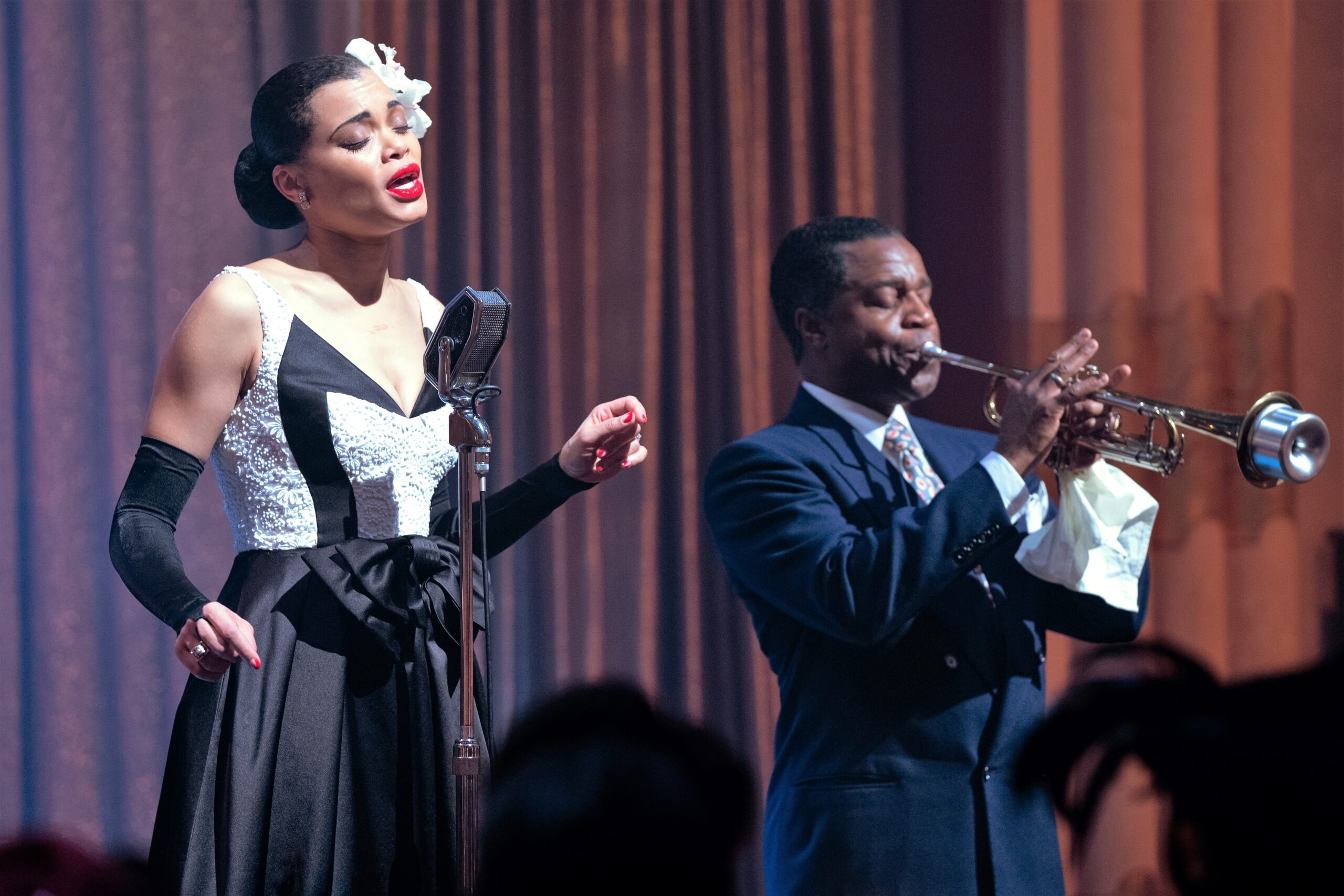

There is something intriguing about the concept of talent. Not only do we applaud people who are talented, but many also attempt to explain what contributed to a person being talented – hence the constant stream of biographies, written and cinematic, which attempt to explain a person’s life and the factors that may have made that person so talented. An example of a person currently being subjected to such scrutiny is Billie Holiday.
The brilliant blues singer was one who rightly has been included in the constellation of such other black singing stars as Ma Rainey, Bessie Smith, and Ella Fitzgerald. Indeed, many filmgoers will remember the 1972 production Lady Sings the Blues. That film was rightfully applauded in that it was what was then, and to a large extent sadly still is, that rare thing: a film of considerable merit about black people intended for mainstream consumption.
In that particular case, it showed the story of Holiday’s life to be essentially a love story with tragic overtones – a considerable rewriting of history. It was a romanticized and largely sanitized account of Billie Holiday’s story. In the last few months, a new film based on her life has been released: The United States vs. Billie Holiday (available as a Telus download). As with Lady Sings the Blues, with its excellent starring performance by Diana Ross, the film also has at its centre an equally brilliant portrayal by Sandra Day. While some may welcome this film as a reminder of one of the greatest popular singers of all time, particularly as it is being touted as likely to receive a number of awards, it is questionable as to whether this film will be the entertainment they are seeking.
Part of the challenge is that Billie Holiday’s life was hardly one of moral rectitude. That she was a drug addict who, famously, spent a year in jail for being in possession of narcotics is well known, but her entire life was a sad reflection of the lives of many underprivileged black women of her generation. Raped when a child, she was forced to become a prostitute at thirteen, addicted to drugs in her teens (first marijuana, later on cocaine), and dying at the age of 44 in hospital, once again charged with narcotic possession. And yet, throughout it all, there was that voice.
The United States vs. Billie Holiday does give emphasis to Holiday’s singing career, though giving only cursory attention to her rise to stardom, from singing in speakeasies and seedy bars in Harlem to popularity on radio and records in the ’30s. However, the main narrative focus of the film is J. Edgar Hoover’s determination to use the FBI to attack her, essentially because she was black. Presumably this theme is intended to resonate with today’s concerns about racism, though it is set against an entirely fictional determination by Hoover to stop Holiday from singing the anti-lynching song Strange Fruit. Since the recording of that heart-wrenching ballad had been widely released in 1939, before the film’s timeline opens, the purported motivation in the film is nonsensical.
However, in many respects the film does attempt to present a realistic account of the singer’s life. And here is the problem: the film includes several very explicit sex scenes, focuses throughout on the singer’s drug addiction and her masochism, is liberally strewn with objectionable language, and generally shows Billie Holiday’s life as one of sordidness, despite the glamour of her public image. It may be that the intention is to win sympathy for her as a victim and remind the viewer of the challenges that tragically today still face too many persons of colour; it may be that the intention is to explain the brilliant way in which Billie Holiday’s singing reflects a tragically sorrowful view of life.
Unfortunately, since the narrative is so muddled and confusing that it is difficult to know who is who and exactly what is going on and when, such a prurient, extended, and unrelievedly bleak depiction of her life simply distracts from the achievement that was her singing.
Coincidentally, there is another film in current release simply called Billie (again available as a Telus download). It is a documentary about Lynda Kuehl’s attempt to write a biography of Billie Holiday. To prepare for this, she interviewed a number of people who knew the singer well, having worked with her or followed her career closely. The film now makes public many of those recorded interviews, and one can learn from them many of those aspects of her life as are depicted in such graphic (indeed, gratuitous) detail in The United States vs. Billie Holiday.
The documentary has the virtue that it presents many other insights into her life, as well as providing a far better, balanced account of her career from nightclub singing to jukebox stardom to fame as a cabaret, radio, and film performer to the triumphant Carnegie Hall concert (made possible only when rampant racism in Washington, D.C., made her appearance in any other large venue impossible) to her tour of Europe, and finally to her untimely death.
It is also a relevant comment on attempting to present an analytical portrait of the brilliant singer that Kuehl never managed to write the biography for which she did so much preparation. In the end, she seems to have realized how impossible it is to report Holiday fairly or to encapsulate the reasons for the singer’s talent. We can know the facts of her life without being dragged through sensationalized depictions of its most negative aspects; we can draw whatever conclusions we may feel fitting as to how that life provides insight into Billie Holiday’s talent.
But in the end, perhaps the best way we can appreciate her achievement and her talent is simply to accept it and listen once again to those marvellous recordings. They speak for themselves. Maybe it’s best to leave it at that.







