


14th Sunday of Ordinary Time, Year A
First Reading: Zec 9:9-10
Second Reading: Rom 8:9, 11-13
Gospel Reading: Mt 11:25-30
“Lo, your king comes to you; triumphant and victorious is he, humble and riding on a donkey, on a colt, the foal of a donkey!”
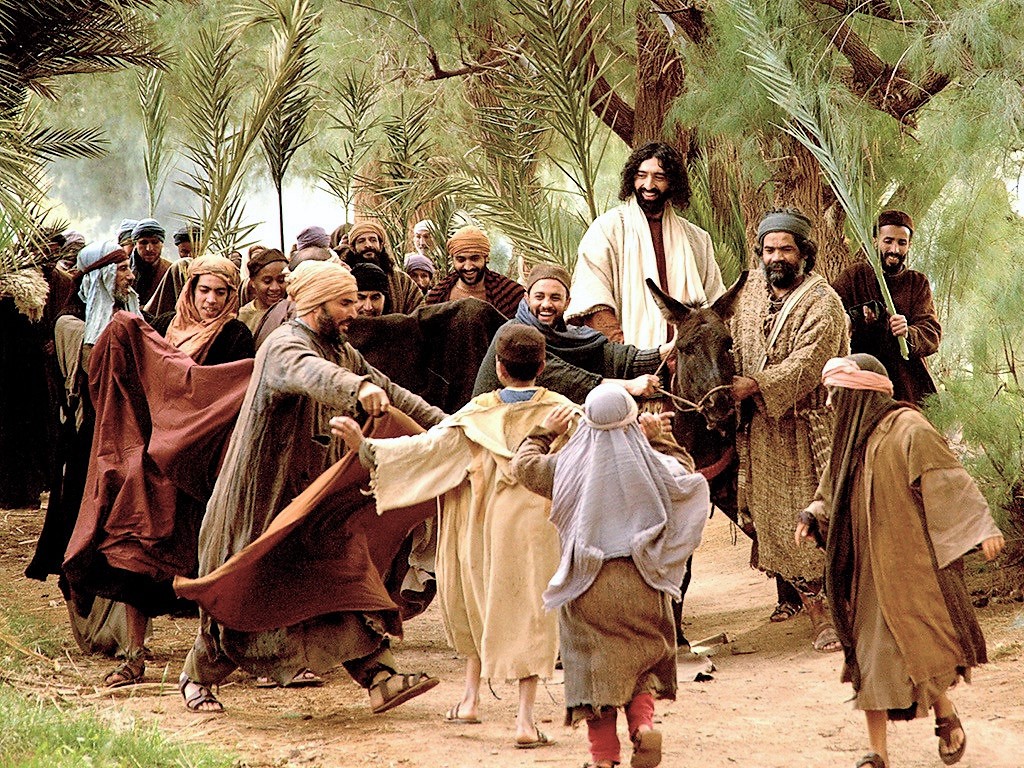
Normally triumphant kings, especially those victorious in war, would ride in horse-drawn chariots. All through the Old Testament, Israel was tempted to rely on horses, symbols of worldly power, instead of on God.
However, this king rejects worldly power. Not only will he “cut off the chariot from Ephraim and the war horse from Jerusalem,” even “the warrior’s bow shall be cut off.”
This king rides a donkey, “the mount of the poor, the counter-image of the chariot that he rejects,” said Pope Benedict XVI in his book Jesus of Nazareth. This is “a king whose rule does not depend on political and military might; his inmost being is humility and meekness before God and men. Unlike the great kings of the world, he is the king of peace.”
Jesus identified himself with this king when he entered Jerusalem riding a donkey on Palm Sunday. Four days later, he said to his apostles, “Peace is my farewell to you; my peace is my gift to you.” However, he added, “I do not give it to you as the world gives peace.”
The world seeks peace through violence: the stockpiling of nuclear arms to maintain a balance of power, or the invasion of neighbouring countries. However, Jesus found peace “by renouncing violence and accepting suffering.”
He offers us the same peace. “Come to me, all you who are weary and are carrying heavy burdens, and I will give you rest,” he says. “Take my yoke upon you, and learn from me; for I am meek and humble in heart, and you will find rest for your souls.”
Jesus was referring not to a yoke that he lays on our shoulders, but to the yoke he himself bears: the yoke of meek and humble “filial obedience” to the Father. Only thus will we find peace: rest for our souls.
His yoke is easy, he said, and his burden light.
It is a burden, for meek and humble obedience to God does not come easily to us. Like Adam and Eve, we want to be independent of God, even to the point of determining right and wrong for ourselves. Accordingly, Jesus gave us a dramatic warning: “Whoever wishes to be my follower must deny his very self, take up his cross each day, and follow in my steps.”
However, the burden is light, for meek and humble obedience to God accords with our original nature. It is what we were made for; therein lies our lasting peace.
In the third beatitude, Jesus said that “the meek shall inherit the land.” Here, the promise “is clearly about something far greater than the mere idea of possessing a piece of land or a national territory in the sense that every people is entitled to do,” the Pope said.
For example, when God freed the Israelites from Egypt, he promised them land “as a space of obedience, a realm of openness to God,” which they were to free “from the abominations of idolatry.”
As King of Peace, Jesus “shall command peace to the nations,” not just to Israel. “His dominion shall be from sea to sea.”
Behind this expression is the Old Testament image of “a flat earth surrounded on all sides by the waters,” the Pope said. Thus it “gives us an inkling of the world-spanning extent of his dominion.” His peace will embrace all nations, overcoming boundaries and renewing the earth.
“The Lord is near,” St. Paul wrote to the people of Philippi. “Dismiss all anxiety from your minds. Present your needs to God in every form of prayer and in petitions full of gratitude.
“Then God’s own peace, which is beyond all understanding, will stand guard over your hearts and minds, in Christ Jesus.”
Father Hawkswell has now finished teaching The Catholic Faith in Plain English. However, the course will remain available, in both print and YouTube form, at beholdvancouver.org/catholic-faith-course, until next September. At that time, he will teach it again, with new insights, both online and in person, on Sundays from 2 to 4 p.m. at the John Paul II Pastoral Centre (4885 Saint John Paul II Way, 33rd Avenue and Willow Street, Vancouver) and on Mondays from 10 a.m. to noon in St. Anthony’s Church Hall, 2347 Inglewood Avenue, West Vancouver.







