

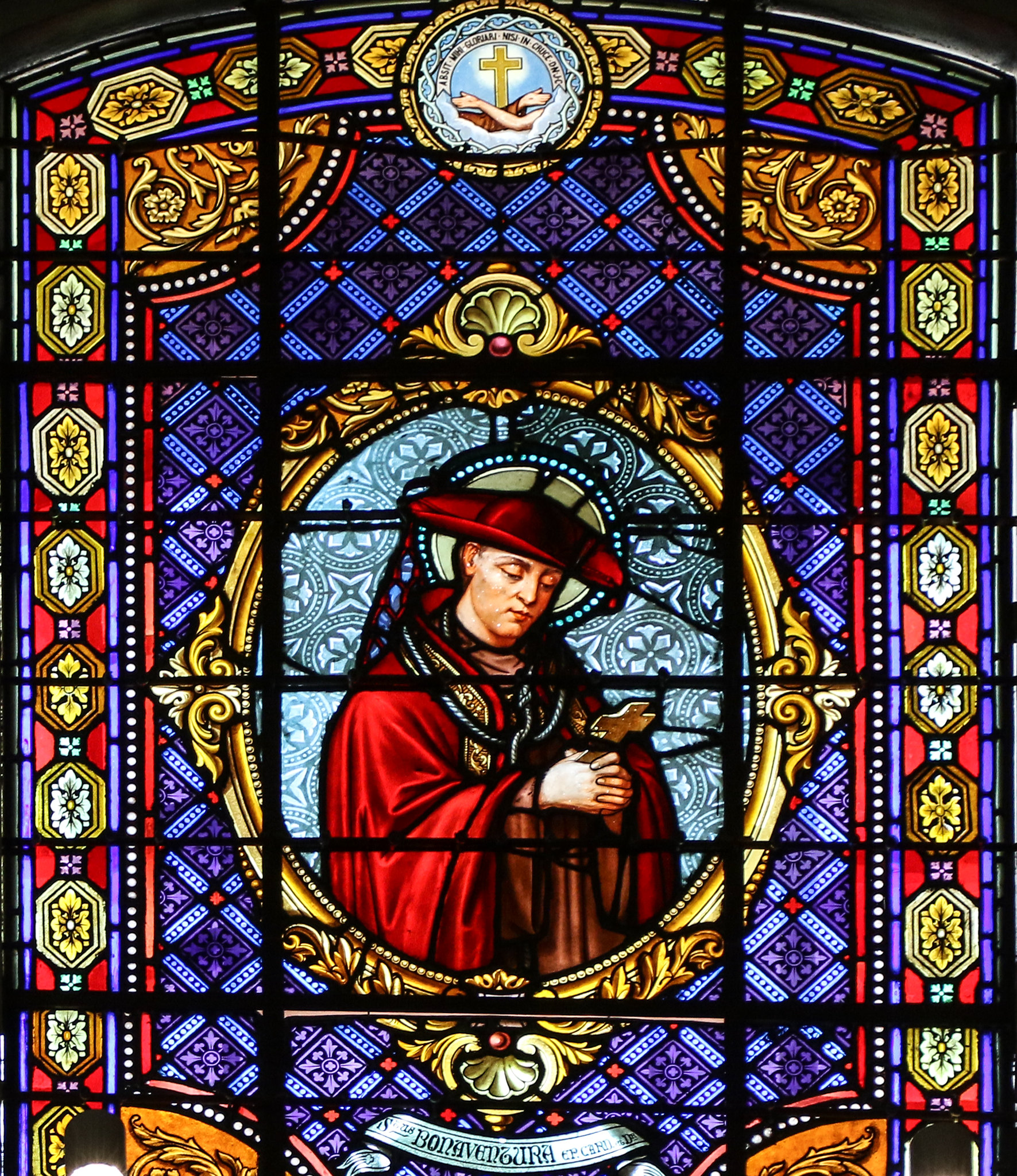

In the 13th century, erroneous views on salvation history threatened to tear the Franciscan Order apart.
Benedict XVI described the crisis: “In St. Bonaventure’s day a trend among the Friars Minor known as the ‘Spirituals’ held that St. Francis had ushered in a totally new phase in history and that the ‘eternal Gospel,’ of which Revelation speaks, had come to replace the New Testament. This group declared that the Church had now fulfilled her role in history. They said that she had been replaced by a charismatic community of free men guided from within by the Spirit, namely the ‘Spiritual Franciscans.’
“This group’s ideas were based on the writings of a Cistercian Abbot, Joachim of Fiore, who died in 1202. In his works he affirmed a Trinitarian rhythm in history. He considered the Old Testament as the age of the Father, followed by the time of the Son, the time of the Church. The third age was to be awaited, that of the Holy Spirit. The whole of history was thus interpreted as a history of progress: from the severity of the Old Testament to the relative freedom of the time of the Son, in the Church, to the full freedom of the Sons of God in the period of the Holy Spirit. This, finally, was also to be the period of peace among mankind, of the reconciliation of peoples and of religions. Joachim of Fiore had awakened the hope that the new age would stem from a new form of monasticism.”
As Minister General of the Order, Bonaventure studied the erroneous teachings of Joachim of Fiore and responded by setting down a correct view of the theology of history.
Benedict XVI summed up Bonaventure’s view in the following points:
“1. St. Bonaventure rejected the idea of the Trinitarian rhythm of history. God is one for all history and is not tritheistic. Hence history is one, even if it is a journey and, according to St. Bonaventure, a journey of progress.”
“2. Jesus Christ is God’s last word. In him God said all, giving and expressing himself. More than himself, God cannot express or give. The Holy Spirit is the Spirit of the Father and of the Son.”
“3. This does not mean that the Church is stationary, fixed in the past, or that there can be no newness within her … ‘Christ’s works do not go backwards; they do not fail but progress’.”
Benedict XVI pointed out some erroneous views in modern times: “Today too there are views that see the entire history of the Church in the second millennium as a gradual decline. Some see this decline as having already begun immediately after the New Testament. In fact, ‘Christ’s works do not go backwards but forwards.’
“What would the Church be without the new spirituality of the Cistercians, the Franciscans and the Dominicans, the spirituality of St. Teresa of Avila and St. John of the Cross and so forth? … And while this idea of decline is repeated, another idea, this ‘spiritualistic utopianism’ is also reiterated. Indeed, we know that after the Second Vatican Council some were convinced that everything was new, that there was a different Church, that the pre-Conciliar Church was finished and that we had another, totally ‘other’ Church an anarchic utopianism! And thanks be to God the wise helmsmen of the Barque of St. Peter, Pope Paul VI, and Pope John Paul II, on the one hand defended the newness of the Council, and on the other, defended the oneness and continuity of the Church, which is always a Church of sinners and always a place of grace.”
Benedict XVI described the style of leadership of Bonaventure: “For St. Bonaventure governing was not merely action but above all was thinking and praying. At the root of his government we always find prayer and thought; all his decisions are the result of reflection, of thought illumined by prayer.”
Share your thoughts by sending us a letter to the editor.
文德用祈禱和反思來治理
在13世紀,對救贖歷史的錯誤觀點威脅著方濟各會的分裂。本篤十六世描述了這場危機:『在聖文德時代,方濟會會士中被稱為「靈性」的趨勢認為,聖方濟各開創了一個全新的歷史階段,啟示錄所說的「永恆福音」已經取代了新約。這個團體宣稱,教會現在已經履行了她在歷史上的角色。他們說,她已經被一個由聖神從內部引導的自由人的神恩團體所取代,即『靈性的方濟各會』。這個羣組的想法是基於苦修道院院長菲奧雷的若亞敬的著作,他於 1202 年去世。在他的作品中,他肯定了歷史上三位的韻律。他認為舊約是聖父的時代,其次是聖子的時代,教會的時代。第三個時代是要等待的,即聖神的時代。因此,整個歷史被解釋為歷史的進程:從舊約的嚴厲到聖子時代、教會的相對自由,再到聖神時期天主孩子的完全自由。最後,這也是人類之間和平、各國人民和宗教和解的時期。菲奧雷的約阿敬喚醒了新時代將源於新形式的修道院主義的希望。』
作為方濟會的總會長,文德研究了菲奧雷的若亞敬的錯誤教義,並以確立了正確的歷史神學觀點作為回應。
本篤十六世總結了文德的觀點如下:
- 『聖文德拒絕了歷史的三位的韻律。天主在全部歷史地中都是一個,不是三個。 因此,歷史是一體的,即使它是一段旅程,而且按照聖文德的說法,是一段進步的旅程。』
- 『耶穌基督是天主最後的一句話,天主在祂身上說了一切,給予並表達了自己。 在祂以外,天主不能表達或給予。聖神是聖父和聖子的神。』
- 『這並不意味著教會是靜止的,固定在過去,或者她裡面沒有新事物……「基督的工作不會倒退,它們不敗的進步。」』
本篤十六世指出了近代的一些錯誤觀點:『今天也有觀點認為,教會在第二個千年的整個歷史是逐漸衰落的。有些人認為這種衰落在新約之後就已經開始了。事實上,「基督的工作不是倒退的,而是前進的」。如果沒有西多修會、方濟各會和道明會員的新神修,阿維拉的大德蘭和十字聖若望的神修等等,教會會是什麼樣子?…在重複這種衰落的想法的同時,另一種想法,這種「靈性的烏托邦主義」也被重申。事實上,我們知道,在梵蒂岡第二次大公會議之後,有些人確信一切都是新的,有一個不同的教會,大公會議前的教會已經結束,我們有另一個完全是「另一個」教會,不受規管的烏托邦主義!感謝天主,聖伯多祿帆船明智的舵手,教宗保祿六世和教宗約望保祿二世,一方面捍衛了大公會議的新穎性,另一方面捍衛了教會的統一性和連續性,教會始終是罪人的教會,永遠是恩寵的地方。
本篤十六世描述了文德的領導風格:『因為聖文德的治理不僅僅是行動,而且最重要的是思考和祈禱。在他管治的根源上,我們總是找到祈禱和思想;他所有的決定都是反思的結果,是禱告照亮的思想的結果。』







