

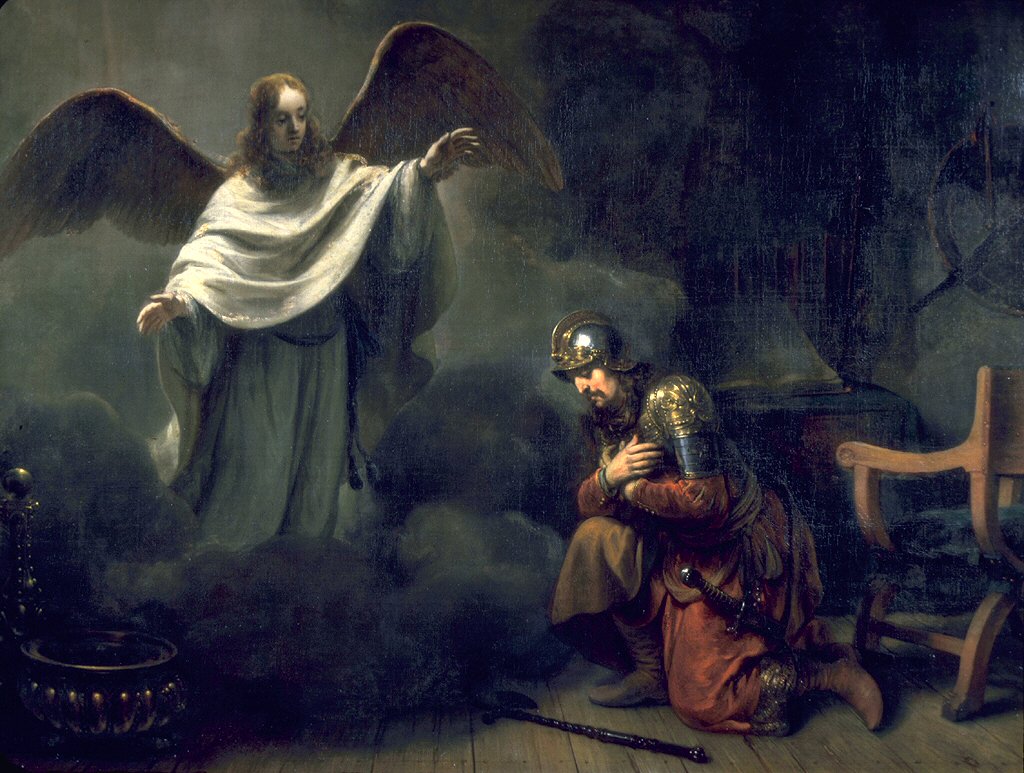

The conversion of Cornelius in Acts 10 is the story of how God dismantles human boundaries. Cornelius is a Roman officer, uncircumcised and outside the covenant, who prays at the Jewish hour of sacrifice, gives alms generously to the poor, and fears God with his entire household.
St. John Chrysostom comments: “It is more wonderful when a person in a position of wealth and power chooses the way of prayer and almsgiving over the way of comfort and pride.” Here is a man with soldiers and a household to manage, yet he makes room for God. His devotion is real, and God sees it.
Yet Cornelius’s piety, however sincere, remains incomplete. He knows the Creator but does not yet know the Redeemer. His genuine orientation toward truth made him receptive to the fuller gift God wished to give. God does not overlook souls like Cornelius. He sends them a Peter.
Meanwhile, on a rooftop in Joppa, God is educating his chief apostle. The vision of the great sheet lowered from heaven — filled with every kind of animal, clean and unclean together — and the command to “kill and eat” challenges his deepest assumptions. The distinction between clean and unclean structured the daily life, table fellowship, and social belonging of the chosen people.
The Fathers see the sheet as the world, and the animals are the nations. The heavenly command is not primarily about food but about people — “What God has made clean, do not call common” — repeated three times, which Gregory of Nyssa reads as a revelation of the Trinity: Father, Son, and Holy Spirit are each the God who purifies. Purification from sin is Trinitarian in its source, and baptism — which Peter will administer before the chapter closes — is administered in the name of the three Persons of the Holy Trinity.
When Peter arrives at Cornelius’s house, Cornelius prostrates himself in homage; Peter raises him up with the words, “Stand up; I too am a man.” God does not work through angels alone. As St. Augustine observes, it would have been possible for God to accomplish everything through heavenly messengers, “but the condition of our race would have been much more degraded if God had not chosen to make use of people as the ministers of his word to other people.”
The angel could tell Cornelius that his prayers were heard, but the angel could not give him baptism, absolution, or the Eucharist. For that, God sends Peter. The priesthood is written into the structure of divine mercy: God wills that man have one of his own kind come to his aid.
Peter declares, “In truth I understand that God shows no partiality. In every nation, whoever fears him and acts uprightly is acceptable to him.” Those who seek God sincerely, who live by the light they have received, are not beyond his sight or his love. He is already at work in them, drawing them toward the fullness they do not yet possess.
The gift of tongues breaks out among the Gentiles before Peter has finished speaking, and the Jewish Christians present are astonished. Peter’s response is swift and decisive: “Can anyone withhold the water for baptizing these people, who have received the Holy Spirit even as we have?”
St. John Paul II says, “This formal resolution of Peter’s, obviously illumined by the Spirit, took on decisive importance for the Church’s development by eliminating the obstacles stemming from the
observance of the Jewish law.” The Spirit’s descent does not replace baptism; it vindicates it and compels it.
According to ancient tradition, Cornelius later became a bishop and missionary, preaching Christ among the Gentiles. Though the details of his later life are uncertain, he is honoured as a saint and remembered as one of the first Gentile converts whose baptism marked a turning point in the spread of Christianity throughout the world.
Acts 10 invites us to examine the invisible lines we draw — between the deserving and the undeserving, the inside and the outside, the familiar and the foreign. The same Spirit who preceded Peter into the house of Cornelius continues to move ahead of us, preparing hearts we have not yet reached. Our task is to follow — without hesitation.
Your voice matters! Join the conversation by submitting a Letter to the Editor here.
天主推倒阻隔的牆壁
宗徒大事錄第10章中,科爾乃略的皈依,是天主如何推倒人為界限的故事。科爾乃略是一位羅馬軍官,未受割損、在盟約之外,卻在猶太人獻祭時辰祈禱,慷慨施捨窮人,並與全家虔誠而敬畏天主。
金口聖若望評論說:「當一位身居富貴與權勢的人,選擇祈禱與施捨之道,而非安逸與驕傲之路,這更令人驚歎。」他身邊有士兵、有家務要管理,卻仍為天主留出空間。他的虔誠是真實的,而天主看見了。
然而,科爾乃略的虔敬雖然真誠,仍是不完全的。他認識造物主,卻尚未認識救贖主。他真誠追求真理,使他能接受天主欲賜予的更豐盛恩寵。天主不會忽略像科爾乃略這樣的靈魂;祂派遣伯多祿到他身邊。
同時,在約培的一座屋頂上,天主正在教導祂的首席宗徒。那幅從天降下好像一塊大布繫着四角的器皿,內含各種潔淨與不潔的動物,以及「宰了,吃吧」的命令,挑戰了伯多祿最深層的觀念。潔與不潔的區分,構成了天主選民日常生活、餐桌共融與社會歸屬的結構。
教父們認為,那張像大布的器皿象徵世界,而其中的動物象徵萬民。天上的命令主要不是關於食物,而是關於人 – 「天主稱為潔淨的,你不可稱為污穢!」 – 這句話重複了三次,尼撒的聖額我略將其解讀為三位一體的啟示:聖父、聖子、聖神都是使人潔淨的天主。罪的潔淨源自三位一體,而伯多祿稍後將施行的洗禮,正是以三位一體之名施行。
當伯多祿抵達科爾乃略家中時,科爾乃略俯伏下拜;伯多祿卻扶起他說:「起來!我自己也是個人。」天主並非只藉天使工作。聖奧斯定指出,天主本可以完全藉天使成就一切,「但若天主不願使用人作為祂向人宣講聖言的工具,我們人類的境況將更加卑微。」
天使可以告訴科爾乃略他的祈禱已被俯聽,但天使不能給他付洗、赦罪或送聖體。為此,天主派遣伯多祿。司鐸職務寫在天主慈悲的結構之內:天主願意讓人由人來扶助。
伯多祿宣告說:「我真正明白了:天主是不看情面的,凡在各民族中,敬畏他而又履行正義的人,都是他所中悅的。」凡真誠尋求天主、按所領受的光明而生活的人,都不在祂的視線與愛之外。祂已在他們心中工作,引領他們走向尚未完全擁有的圓滿。
在伯多祿尚未講完時,聖神已降臨在外邦人身上,使在場的猶太基督徒大為驚訝。伯多祿立刻果斷地說:「這些人既領受了聖神,和我們一樣,誰能阻止他們不受水洗呢?」
聖若望保祿二世說:「伯多祿這項明確的決定,顯然受聖神光照,對教會的發展具有決定性的重要性,因為這項決定消除了源自遵守猶太法律的障礙。」聖神的降臨並未取代洗禮;祂是為洗禮作證,並促使洗禮的施行。
按照古老傳統,科爾乃略後來成為主教與傳教士,在外邦人中傳揚基督。雖然他後半生的細節不甚確定,但他被尊為聖人,被紀念為最早的外邦基督徒之一,他的洗禮成為福音向全世界擴展重要的轉捩點。
宗徒大事錄第10章邀請我們省思那些我們畫下的無形界線 – 在「值得」與「不值得」、「內」與「外」、「熟悉」與「陌生」之間。正如聖神先於伯多祿進入科爾乃略的家,今日仍先於我們而行,預備那些我們尚未接觸的心靈。我們的任務,就是毫不遲疑地跟隨。
Your voice matters! Join the conversation by submitting a Letter to the Editor here.







