


Third Sunday of Easter, Year B
First reading: Acts 3:13-15, 17-19
Second reading: 1 Jn 2:1-5
Gospel reading: Lk 24:35-48
When students do badly on a test, what can the teacher do?
Can he simply give up on them? Can he just increase their marks, pretending that they have done better than they have?
When Adam and Eve failed the test God had set them so that he could make them divine, like himself, what could God do?
He could not give up on them, for God, who is love, and who had created them out of love, is constant and permanent, “a merciful and gracious God, slow to anger and rich in kindness and fidelity, continuing his kindness for a thousand generations, and forgiving wickedness and crime and sin,” as he said himself.
He could not divinize them against their will, because only in freedom of will could they love him. “In a certain sense, one could say that confronted with our human freedom, God decided to make himself impotent,” or “powerless,” said Pope St. John Paul II.
He could not ignore their rebellion, for only in “free submission” to him could a created being be divinized, says the Catechism of the Catholic Church. God, who forgives “wickedness and crime and sin” does not declare “the guilty guiltless,” but punishes “children and grandchildren to the third and fourth generation for their fathers’ wickedness.”
What, then, could God do?
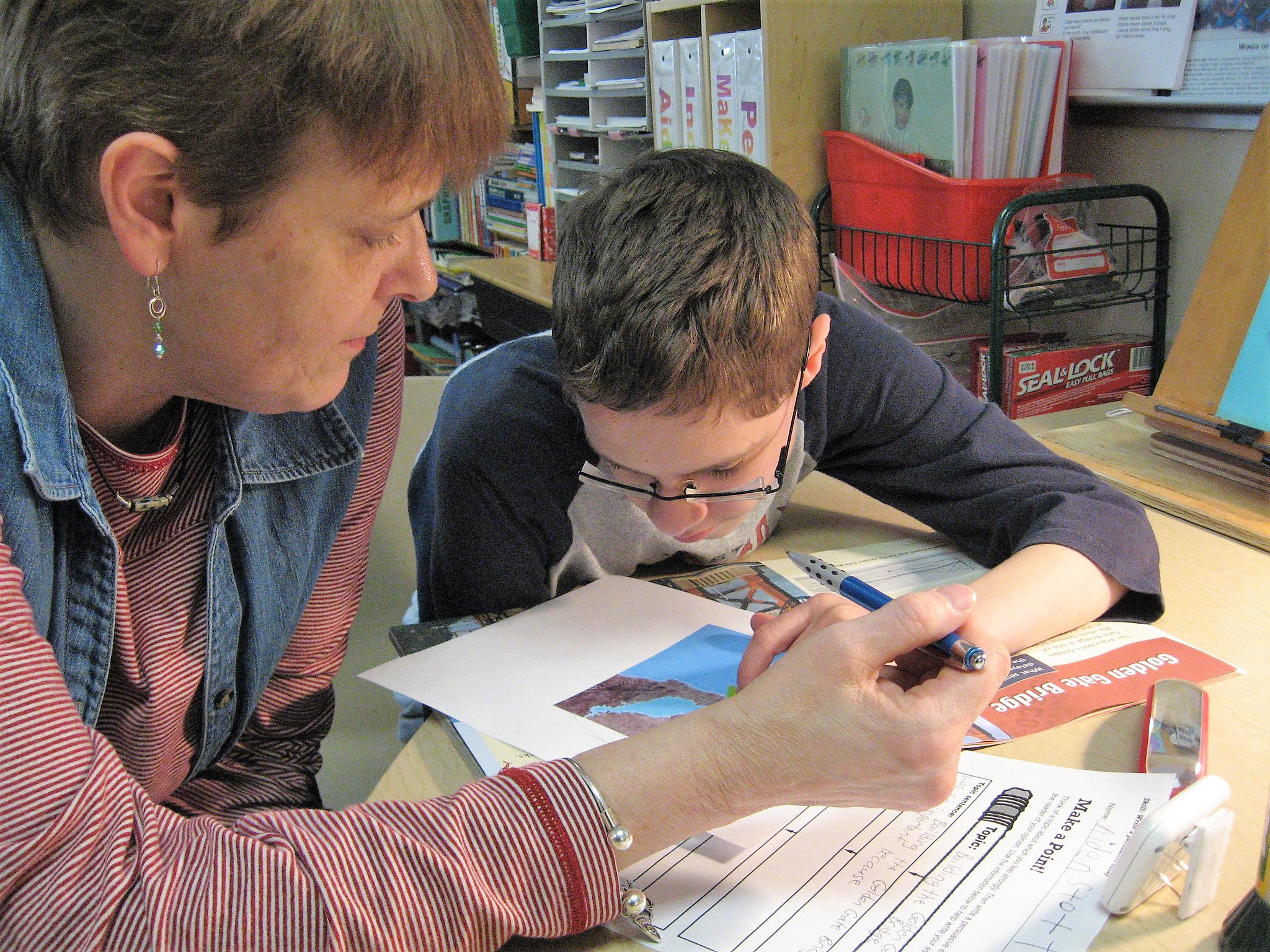
A math teacher I know, confronted with the same problem, allows his students to rewrite their test – not the same test, but another test of comparable difficulty, outside class time. He does it no matter why their marks are low – laziness, lack of preparation, ill health, distraction by other affairs, lack of ability. As long as they are willing to try again, as long as there is any hope of their doing better, he always allows another rewrite, no matter what it costs him.
He does it, he explains, so they can see that he is on their side: he wants them to learn. He wants them to realize that they are not up against him; rather they and he together are up against the unchangeable laws of mathematics.
Knowing that there will be a rewrite takes the pressure off students. It encourages them to keep on trying to learn, for there is always hope. In fact, the teacher says, they learn far more between the test and the rewrite than they do before the test.
His system has disadvantages, he admits. For example, it may encourage procrastination. However, he thinks it a risk worth taking.
In this Sunday’s second reading, St. John seems to agree. “My little children, I am writing these things to you so that you may not sin. But if anyone does sin, we have an advocate with the Father, Jesus Christ the righteous.”
God is severe towards sin. We must obey him. If we do not, then we do not know him. If we claim to know him, but we disobey his commands, we are liars, St. John says.
However, God is merciful towards sinners. If we do disobey him, he will forgive us. Our disobedience could be deliberate. It could be the result of ignorance, like that of those who crucified Christ, described in the first reading. It could be caused by narrow-mindedness, like that of the apostles, described in the Gospel reading. No matter: as long as there is any prospect of success, God always gives us another chance.
Not only does he give us another chance, but he himself assumes the consequences of our failures. “He is the atoning sacrifice for our sins, and not for ours only, but also for the sins of the whole world” –those of our neighbours, which always seem so much worse than our own.
Jesus said he came not to condemn the world, but to save it. Always, he repeats what he told the adulterous woman: “Neither do I condemn you. Go, and sin no more.”
Father Hawkswell is again teaching “The Catholic Faith in Plain English.” All the materials (video and print) are available online free of charge at www.beholdvancouver.org/catholic-faith-course. Session 31, “Love of God and Neighbour,” will be available April 18.







