


The B.C. Catholic’s David Baird reviewed Fatima last year. Now that it’s showing on Netflix, we offer a second look at it.
One advantage of Netflix is that, thanks in part to the isolation imposed by the current epidemic, it has acquired so many subscribers that it can make available films which might otherwise be unable to find an audience, in that they are of limited appeal.
One such film is Fatima, likely to appeal mainly to Catholics, who, though numerous, do not constitute the bulk of the movie-watching audience. Without Netflix, the film would certainly have had a very limited release.
Of course, a film about the miraculous events that took place in Fatima in 1917 is potentially of enormous interest to both Catholics and non-Catholics alike; however, viewers may wish for something more than this release offers.
Framed by a purported interview between a doubting questioner and Lucia (the oldest of the three children who viewed the vision), when the latter was an elderly nun, the film promises to be an assessment of the miracle of Fatima and an exploration of the questions surrounding it. Instead, it settles for being simply a representation of the actual events: in Portugal in 1917, Mary appearing to three children; the children being accused of lying; officials attempting to show that the children are frauds; the culmination in the “miracle of the sun.” To this extent, the film more than lives up to expectations. All of this is shown in skillful cinematic terms. However, no real discussion of any of this takes place, despite its opening set-up.
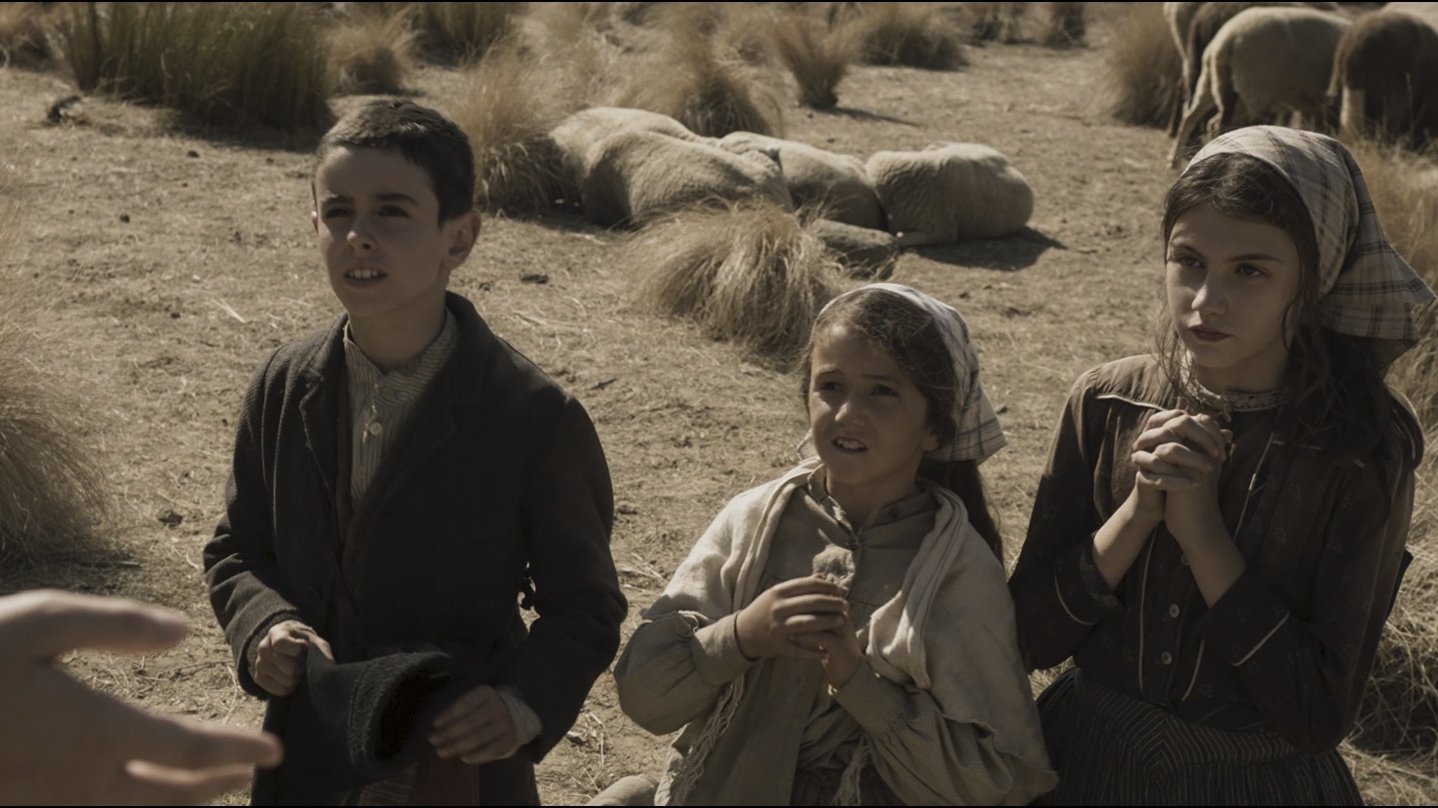
The film, shot in sepia-toned restrained colour, does show the setting and revelations of the miracle. Even here, some may find objection to the occasional lurid “hellfire and damnation” elements of the narrative. However, in simply human terms, the film makes sense of much of what happened. Set against a weakly explained political, anti-religious social background, it concentrates especially on mothers anxious for a miracle as they want to be assured of their sons’ return from the war. It shows the three children, who maintain that they are telling the truth about what they have seen. It shows the parents of the children torn between believing their children and their scornful rejection by the secular world. It shows the gradually spreading belief among others. All of this is satisfactory as an historical account.
However, understandably, the film also faces the challenge of trying to present in convincing fashion something which is supernatural. To anyone who does not already believe, the film’s account simply shows a pretty actress, playing the part of Mary, dressed up in flowing robes. To believers, it may serve as a reminder of a miracle, just as a statue does. It certainly may be helpful for believers to be reminded of these events, but for anyone unfamiliar with them, though presented in a dignified fashion, the film is unlikely to engender belief. What the film fails to do is to attempt to come to terms with the miracle of Fatima or to give it modern relevance. The “framing” gave every opportunity to explore the questions that inevitably arise from Fatima, but the film does not do this.
It is noteworthy that the Church is shown as being negative at the time when, wisely, the Church simply did what makes sense: exercise caution in case of potentially fraudulent claims. No discussion of this takes place. Other obvious questions are ignored. What supporting evidence is there outside of the statements of the children? How much evidence was gathered from the large crowd at the time of the “miracle of the sun”? Was there any photographic evidence as the film suggests there may have been? Were reporters present? What investigation of the events did the Church undertake? What is the position of the Church regarding the claims of miracle, and how did it arrive at this position? Did the events at Fatima have any impact on the political realities of Portugal? Have there been subsequent claims of miracles associated with Fatima? How valid are those claims?
The film ignores the famous so-called “secrets” of Fatima. It doesn’t even bother to show how the famous shrine was constructed and how thousands of believers make the pilgrimage to Fatima every year. As to the more profound theological matters, particularly the reverence in which Mary is held by the Church and concerns surrounding hell and damnation, the film sidesteps them completely, although they would be of great interest to most viewers.
In short, the movie Fatima becomes a lost opportunity to bring the full impact of the story of Fatima to the world at large, particularly at a time when it is in most need of hope and belief. For those who already believe, Fatima will come as a welcome reminder of a sustaining faith in times of darkness and an even more welcome relief from much of what constitutes cinematic fare today. But is this enough? One would like to believe that a film like Fatima could serve as an introduction to a belief that could provide comfort and solace to all of a suffering world, not just to those who already believe, but it is doubtful that it will do so.







