
St. Paul opened Chapter 6 of Second Corinthians with an appeal: “We appeal to you not to receive the grace of God in vain.” (2 Cor 6:1)
St. Caesarius of Arles commented: “What does it mean to receive the grace of God in vain except to be unwilling to perform good works with the help of his grace?”
In the Long Rules, St. Basil wrote, “That man, indeed, is in danger who does not throughout his whole life place before himself the will of God as his goal, so that in health he shows forth the labor of love by his zeal for the works of the Lord and in sickness displays endurance and cheerful patience.”
The first and greatest peril is that “by not doing the will of God, he separates himself from the Lord and cuts himself off from fellowship with his own brothers; secondly, that he ventures, although undeserving, to claim a share in the blessings prepared for those who are worthy.”
In Chapter 6 of Second Corinthians, St. Paul quoted several Old Testament passages (Isaiah 49:8, 52:11; Leviticus 26:12).
Catholic author Stephen Ray commented: “Notice how Paul views Scripture. First, even though Isaiah wrote the passage he just quoted, Paul attributes the authorship to God.”
Second, he said, Paul even considers the words of the Old Testament “as alive, applicable and powerful in the present. The Scripture is not a dead letter; it is not ‘old,’ as is thought by so many today. It is ever new, ever in the present tense, ever alive and as active as a two-edged sword. Third, we see how he uses typology throughout these letters—the veil, the sacrifices, the Red Sea, the rock gushing water, the Passover Lamb, the Last Adam, and much more. The Old Testament is a living, breathing book—ever the living word of God, and as much alive as his word contained in the New Testament.”
To demonstrate the authenticity of his ministry as an Apostle, St. Paul listed his afflictions in verses 4–5, and his virtues in verses 6–7.
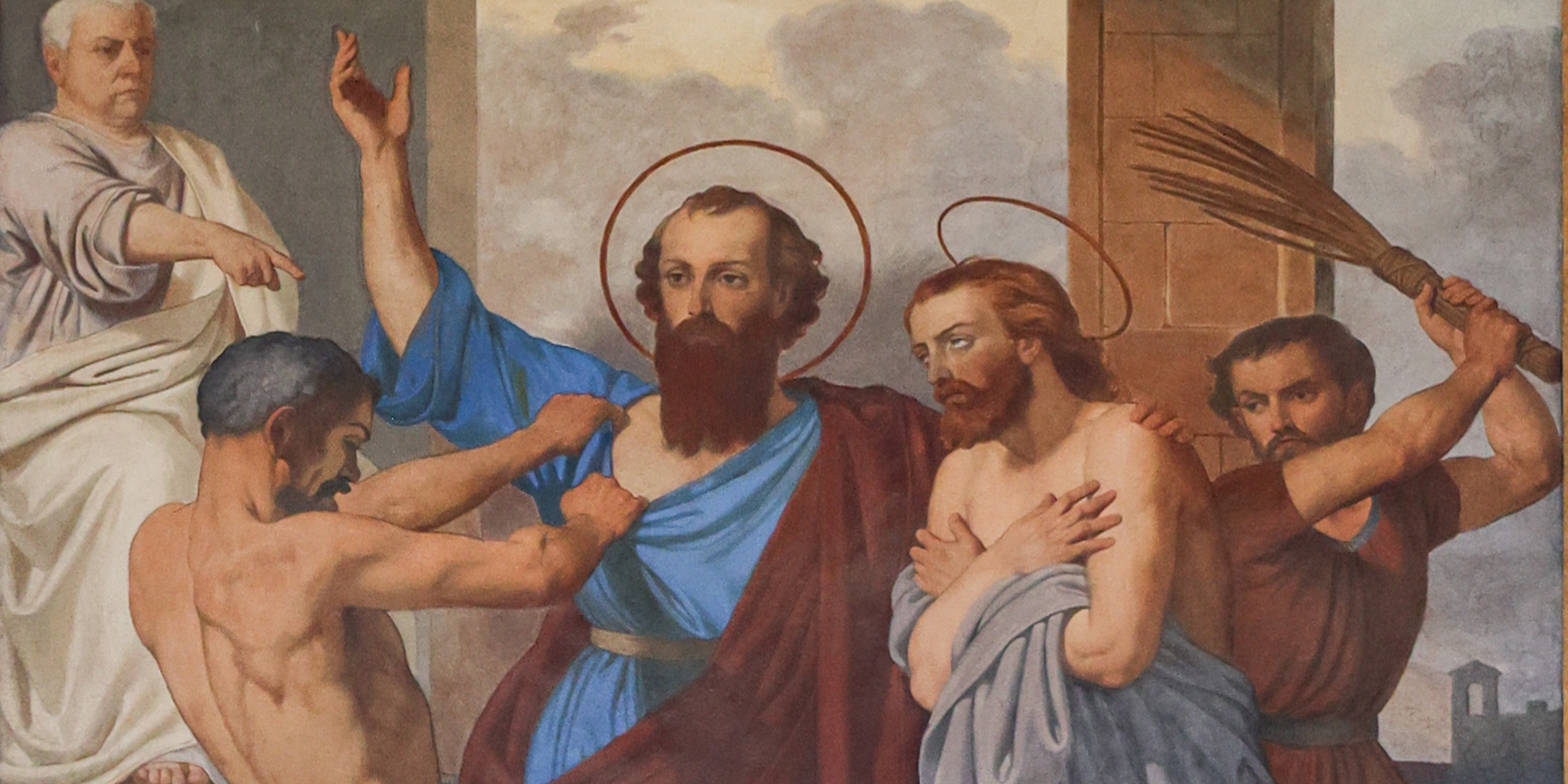
“But as servants of God we commend ourselves in every way: by great endurance, in afflictions, hardships, calamities, beatings, imprisonments, riots, labours, sleepless nights, hunger” (2 Cor 6:4–5).
St. John Chrysostom commented: “Any one of these things is intolerable, but taken together, think what kind of soul is needed to endure them!”
“By purity, knowledge, patience, kindness, the Holy Spirit, genuine love; by truthful speech, and the power of God; with the weapons of righteousness for the right hand and for the left” (2 Cor 6:6–7).
St. John Chrysostom said, “By ‘purity’ Paul means either chastity, or general purity, or lack of corruption or even his free preaching of the gospel. By ‘knowledge’ he means the wisdom given by God, which is the only true knowledge.”
When he mentions the Holy Spirit in this list, “Paul means more than just that he does everything in the power of the Spirit. He is saying here that the Spirit himself has been given to him and that it is because of this indwelling presence that he has received the spiritual gifts. ‘Genuine love’ was the motivating power of all these good things. It is that which made Paul what he was. It was also love which caused the Spirit to abide with him, with whose help he did everything in the right way.”
When he mentions things on the left, he refers to “those things which seem to be painful, because it is these which bring the reward… People outside the church may think we are sorrowful, but in fact we are always rejoicing. We may look poor, but in fact we have enormous riches, both spiritual and physical. As usual, the Christian life is the exact opposite of what it appears to be on the surface.”
Our Lord said, “No one can serve two masters” (Mt 6:24).
St. Paul wrote, “For what partnership has righteousness with lawlessness? Or what fellowship has light with darkness?” (2 Cor 6:14)
St. Isaiah said, “It is well known that it is impossible for someone who does evil to do good. A person doing evil will not repent, for if he truly repented, he would no longer sin. The one who has repented has no time for God in which to do good and no time for the devil in which to sin. He is never at one time a servant of God and another a servant of the devil, but always belongs to one or the other.”
Your voice matters! Join the conversation by submitting a Letter to the Editor here.
忠於恩寵的天主僕人
聖保祿在格林多後書第6章一開始就發出懇切的呼籲:「我們與天主合作的人,也勸你們不要白受天主的恩寵。」(格後6:1)亞爾勒的凱撒略註釋道:「所謂白受天主的恩寵,莫過於不願在祂恩寵的助佑下行善。」聖巴西略在《細談會規》中寫道:「那人確實有危險,若他一生中不以天主的旨意為自己的目標;因為在健康時,他應藉熱心於主的工作來顯示愛的勞苦,在疾病中則顯示忍耐與喜樂的耐心。最大的危機,是因不行天主的旨意而與主隔絕,並與弟兄的共融斷絕;其次,是他雖不配,卻膽敢想分得天主為義人所準備的福分。」
在格林多後書第6章中,聖保祿引用了數段舊約經文(依49:8、52:11;肋26:12)。天主教作家Stephen Ray評論說:「請留意保祿如何看待聖經。第一,雖然這段話是依撒意亞所寫,保祿卻歸其作者為天主。第二,他看聖經 – 即使是舊約的文字 – 在當下仍是活潑、有力、適用的。聖經不是死的文字,不是像今日許多人所認為的『陳舊之物』。聖經是常新,常在現在時態,常是活生生的,像雙刃利劍般發揮功效。第三,我們看到他在書信中大量使用類型預象(typology) – 如面紗、犧牲、紅海、擊打而出水的磐石、逾越羔羊、末後的亞當等等。舊約是一部活著的、有氣息的書 – 永遠是天主活的聖言,與新約中的天主聖言同樣地活潑。」
為證明自己作宗徒的使命真確,聖保祿在第4至5節列舉了自己的磨難,在第6至7節則列舉了自己的德行。「反而處處表現我們自己,有如天主的僕役,就是以持久的堅忍,在艱難、貧乏、困苦之中,在拷打、監禁、暴亂之中,在勞若、不寢、不食之中。」(格後6:4–5)金口聖若望註釋說:「這些事單單一項就難以忍受,而加在一起,你想想,需要怎樣的靈魂才能承擔!」
「清廉,以明智,以容忍,以慈惠,以聖神,以無偽的愛情,以真理的言辭,以天主的德能,以左右兩手中正義的武器。」(格後6:6–7)金口聖若望說:「『清廉』可指貞潔、整體的潔淨、或沒有腐朽,或甚至他自由宣講福音。『明智』是天主所賜的智慧,也是真正的知識。他在這裡意外地提到聖神,表示的不僅是他憑聖神的德能行事,而是聖神親自賜予了他,使他因這內在的臨在而獲得了神恩。『無偽的愛情』是所有這些美德的動力;這正是塑造保祿之所是的愛,也是使聖神與他同在的愛。有了聖神的助佑,他凡事都做得正當 … 左邊的事物指的是看似痛苦的事,正是這些帶來賞報 … 教會外的人可能以為我們充滿悲傷,但實際上我們常懷喜樂;他們以為我們貧窮,其實我們擁有極大財富,無論是屬神的或是物質的。就如這樣,基督徒的生活與表面所見的恰恰相反。」
主說:「沒有人能事奉兩個主人。」(瑪6:24)聖保祿寫道:「正義與不法之間,那能有什麼相通?或者,光明之於黑暗,那能有什麼聯繫?」(格後6:14)聖依撒意亞說過:「惡人無法行善,這是人所共知的。行惡的人不會悔改;因為若真悔改,他就不再犯罪。真正悔改的人既沒有時間為天主行善,也沒有時間為魔鬼犯罪。他從來不會時而是天主的僕人,時而又是魔鬼的僕人,而總是屬於其中之一。」
Your voice matters! Join the conversation by submitting a Letter to the Editor here.