


Patients can benefit from the spiritual care health workers can provide. A Vancouver doctor shares his story
It was early Thursday morning at a Vancouver hospital, and I was asked to see Mr. O*.
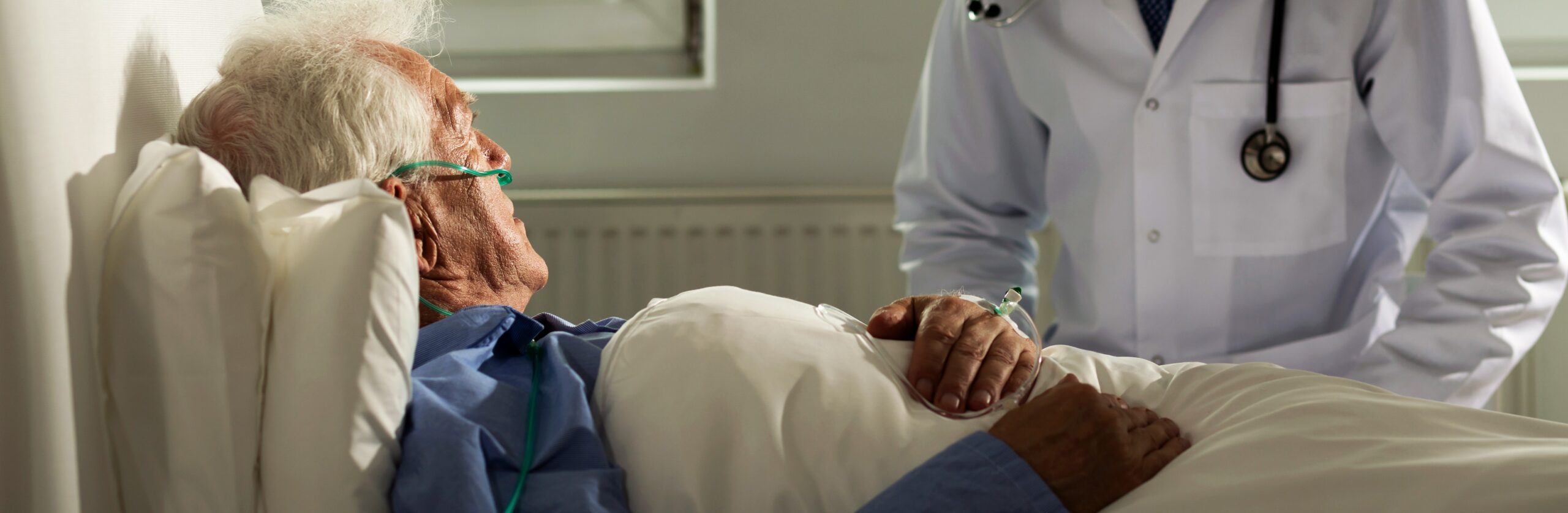
He had just finished his breakfast, and gave me a calm, welcome gaze. He had been admitted to the hospital for a sudden decline in function, leaving a once high-flying lawyer in his 60s now hardly able to walk to the washroom without needing a nurse to help.
He was diagnosed with hemophagocytic lymphohistiocytosis, an autoimmune disease where specialized immune cells that normally protect people from infections instead rage against the body, causing symptoms such as fever, confusion, enlarged spleen, low blood cells, and other chemical abnormalities in the blood.’
It is one of those diseases that fascinates doctors, especially those in internal medicine such as myself, partly because of its rarity and complex pathophysiology, partly because it manifests in surprising ways and is easily missed, and partly because pronouncing it already feels like an accomplishment. Most doctors simply call it HLH.
Often fatal, HLH is treated with strong medications to calm the immune system, but at the price of multiple side effects. Mr. O was on an aggressive regimen of steroids, causing uncontrolled glucose levels in his blood, which in turn requires treatment with insulin. Although he had gone through the worst phase of his disease, the chances of decent recovery remained slim as he drifted in and out of confusion.
I had elected to do a month of endocrinology as part of my residency training, so my job was to track his blood sugars throughout his stay at the hospital and keep them under control. A cursory glance at his sugar levels showed mostly reassuring figures, except for his low morning read.
Reduce his evening insulin dose, I thought. This’ll be a quick “hi and bye.”
“One of the sugar doctors, aren’t you?” he said when he saw me. “Well I enjoyed my hefty dose of mooncakes my brother left me yesterday. No regrets.”
“Your sugars are fine, Mr. O. In fact, your brother can give you more of that good stuff … but only later at night.” I added a mild wink, “and don’t tell anyone I told you that!”
As I was about to leave his room, his face became more focused, and his eyebrows furrowed.
“Hold on, what did you say your name was?”
“You can call me Rafael.”
“Ah, one of the angels. How many years have you been in the business?”
“Zero in the angel business, one in the medicine business.” Sensing his knowledge of theology, I asked him how he knew about angels.
“I used to be Catholic many, many years ago. In fact, I attended of those big Dominican boarding schools up in the U.K. Learned lots, but things seemed to have changed since the seventies, and I found it difficult to stay in the Church – so I quit.” He paused and became more pensive. “What about you? Are you Catholic?”
I answered in the affirmative.
He paused once more, with much gravity in his tone. “Tell me. You’re a doctor, yet you’re in the Church. How do you make sense of that? How did you become Catholic?”
I had a long list of patients to see for the day, and he was only my first one. With his curiosity, however, all the rush and anxiety that typically accompany a resident-physician in his daily hospital rounds disappeared.
I sat by his bedside, and I talked to him briefly about how my conversion (or more accurately, reversion) occurred during my early university years, and how it involved me nearly punching an elderly priest in the face when he slowly approached me in one of the church pews and asked me if I “needed help.” (I was my mom’s unofficial chauffeur at the time, and I was waiting for her to finish her volunteer training in one of the church ministries.)
I had been plotting to jump ship from the barque of Peter for a while – it was scandal time in 2008 after all, and I was not going to be a victim.
By sheer grace I managed to hold off my anger and instead arranged for an appointment to see this priest again. I planned it to be my last hurrah from this sordid institution, and I wanted to at least be able to say I gave it a try before leaving.
Yet this priest introduced me to the works of the ancient Fathers of the Church, who witnessed to the unchanging yet ever-fresh beauty behind the seeming dross that was faith – soon to be the same faith that would keep me engaged in all of my daily work; the same faith that helped me find meaning in suffering, even if most of it didn’t immediately make sense to me, because I knew it would mean facing suffering with and in Love.
He thanked me for the time, and I was granted leave. I closed his curtain and stood outside his door to finish my note and continue my rounds.
“One more check,” I muttered, writing down his sugar levels. “His glucose at eight in the morning was 2.7; 5.3 after orange juice given; at 11:45 a.m. it was 8.7…”
“Rafael, Rafael.”
I drew open his curtain and entered his room again.
“So your faith has helped you,” he said. “I would like to talk about it. Its role in suffering, especially.”
We talked a little more. I asked him to pray for me and reminded him of how special his prayers were to God, especially as he was so sick, and hence so precious in God’s eyes. I asked him if he could offer up his suffering, as they were certain to bring much needed help to the world, including myself.
“When I was about 14, my mom used to be so proud of me when I went to confession … ah, but I stopped…” his voice trailed off.
“I think your mom would still be quite proud of you – and it might do you a lot of favour – if you considered going to confession again.”
“Oh … but she’s been gone a long t—” he stopped and smiled.
I asked him if he would be open to seeing a priest for confession and the anointing of the sick. He agreed.
I left his room once more and went back to my business. “Let’s see, eight more patients on our list, a couple of new patients to see. Need to speed things up …”
“Rafael, Rafael.”
“Do you think God arranged for you to meet me … now? You must be quite privileged to talk to me, a sick old geezer, about faith … Will you ever forget this conversation? – ’cause I won’t. And will I see you again?”
“I’m here this whole weekend, and of course we’ll talk …”
I held his hand once more and before I left his room, said, “Take courage, God has healing in store for you.”
I generally avoid talking about spiritual and religious topics during my clinical work. “Too controversial,” we were told throughout our training. Besides, medical schools dedicate only one afternoon of lectures on spiritual care anyways – so best to leave it to the chaplains. If we do talk about religion, at least among colleagues, it is often relegated to controversial topics involving blood transfusions and conflicts between health-care providers and patients, issues that people typically avoid like the plague.
Yet if doctors are taught to heal the whole person, can we really be so reticent about spiritual matters, especially if patients themselves want to engage in it? Contemporary medicine is still heavily informed by the Cartesian dualism, an approach that separates a person’s mind from the body. Yet I’ve always found the boundary separating these two entities elusive and artificial, and I have long since stopped searching for it.
I finished seeing the rest of my patients that day and was on call, which meant staying in the hospital for the whole night, seeing and managing sick patients from the emergency department and determining if they should be hospitalized or not, as well as managing patients who are already in the ward.

It was a busy night – a fairly typical one – but Mr. O was on my mind. It wasn’t until 4 a.m. that my pager (yes, we still use pagers) was quiet enough for me to go back to Mr. O’s chart and refer him to a priest for later in the day. That was Friday.
I returned to the hospital on Saturday, looking forward to seeing how he’d been.
I checked the glucose levels in his chart. Morning sugars still a bit too low. Fevers. Looks like he’s struggling with an infection, or his HLH is flaring up again.
“Good morning Mr. O. It’s me again, from the diabetes doctors.”
He was eating his breakfast haphazardly, with his mooncake untouched on the food tray. His eyes were fixed on the small laptop before him. He gave me a quick bright-eyed stare and said nothing.
“He’s gotten worse,” said his brother. “Doesn’t even know me anymore. Doesn’t talk much. Last thing he said was about this priest who came to visit him – but that he just shooed him away. ‘Don’t want anything to do with religion.’”
His brother added, “Must’ve been really confused to even mention priests – he never talks about spiritual stuff.”
I have seen many patients with delirium, yet Mr. O’s gaze struck me. It was a gaze whose impending fate I recognized too well. My chest felt heavy and pierced, the eloquence of his silent suffering pushing me out of the room. I excused myself and rushed toward a nearby empty room to escape his presence – and to seek a more consoling silence.
“Where is love in this suffering?” I whispered, holding back tears and crying quietly for a few minutes. “But Your will be done … and that is enough.”
“It won’t work just by you staring and waiting, you know,” a voice from across the room interjected.
“W-what?” I stammered.
A nurse had half-entered the door, looking quite perplexed.
“You’re waiting for that printer to work, right?”
“Ah, right. What was I thinking …”
She pursed her lips and shook her head. It was that unimpressed, punishing look that nurses sometimes exact to residents who don’t know what they’re doing.
On Sunday morning I tried to visit Mr. O again. Another patient had taken his room. He had passed away.
*To protect confidentiality, details have been heavily modified, based on real encounters with multiple patients.
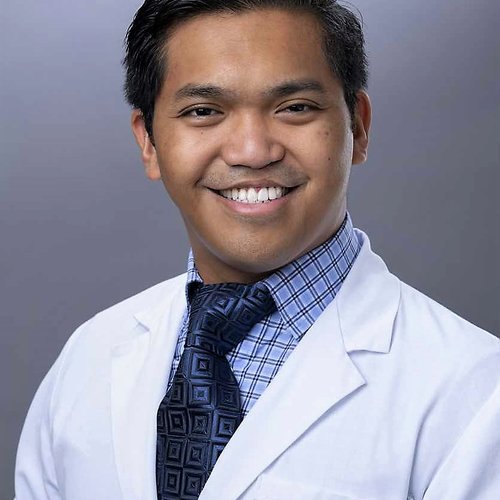
Dr. Rafael Sumalinog is a second-year internal medicine resident in Vancouver. He has been working at a variety of hospitals in Vancouver and more remote regions of B.C.







