

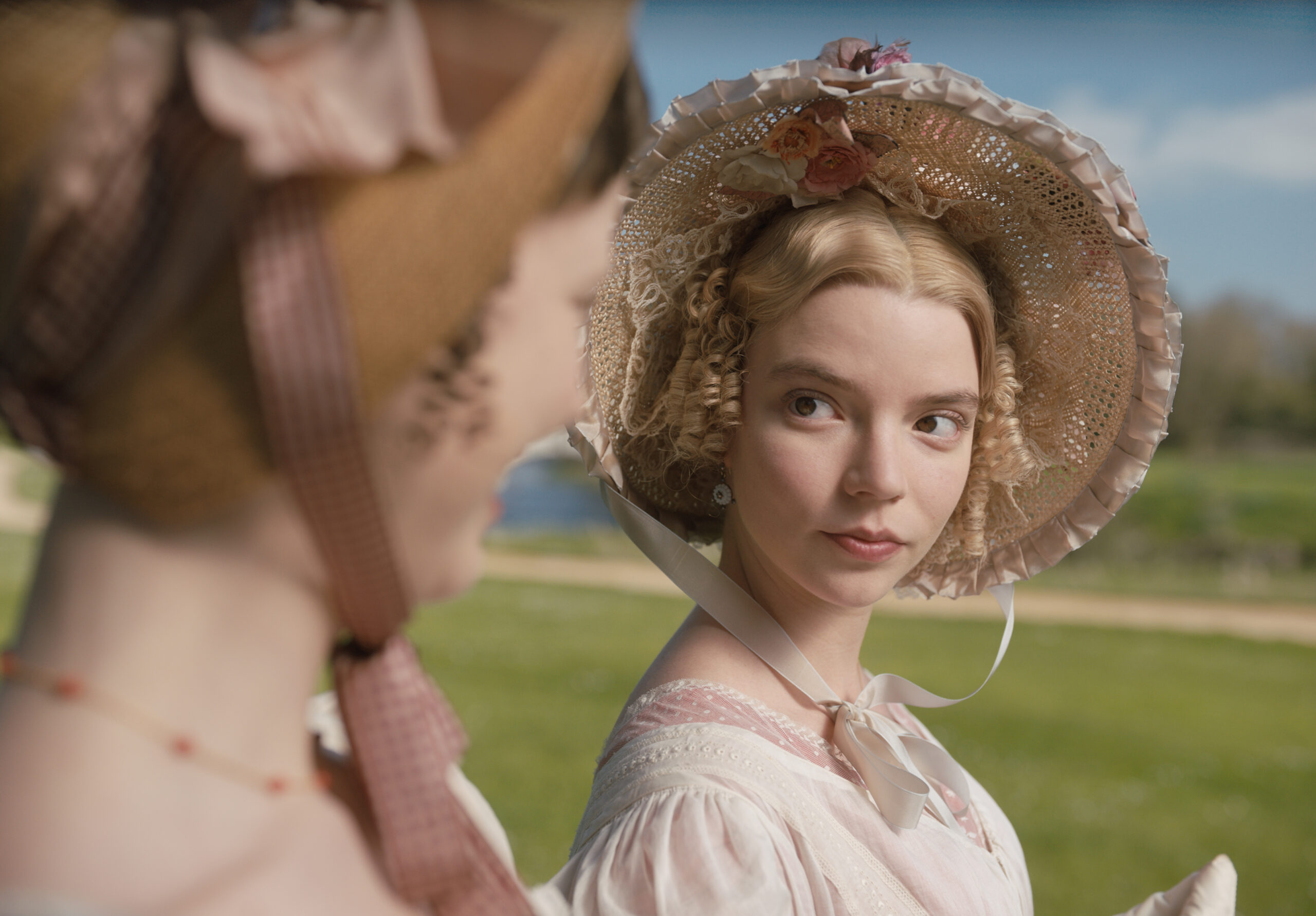

Ever since film and television discovered filmgoers’ apparently insatiable appetite for adaptations of the novels of Jane Austen, a veritable industry has been established devoted to presenting cinematic versions of her books. It should come as no surprise to anyone, therefore, that yet another film based on Emma should be offered for our delight.
Starring Anya Taylor-Joy in the title role of Emma Woodhouse, the film does exactly what is expected of it, remaining faithful to the storyline of the novel.
It recounts the misplaced efforts of Emma to manipulate the lives of others in accordance with her own estimates of what would make them happy, though her self-estimate of her perceptiveness and ability to read character is markedly inaccurate.
Deliberately setting out to act as matchmaker to those in her narrow social circle, she comes perilously close to ruining not only others’ chance of happiness, but even her own.
The result is a comedy of manners which, even on the superficial narrative level, can be entertaining.
In this regard, the latest version is quite satisfying, especially because, once again, the British film industry is able to take advantage of gorgeous settings. The English countryside has never looked more lovely, and the settings are superb, including, among others, Wilton House with its lovely grounds and double-cube room, Chavenage House and Kingston Bagpuize House – which doubtless will be flooded with visitors in the upcoming tourist season.
At the same time, other production values contribute enormously to the success of the film, especially the wonderful costuming.
The actors, especially Ms. Taylor-Joy, acquit themselves well. In short, this is yet another handsome Jane Austen film which will attract and satisfy many.
The question arises, however, whether any film can do justice to the novelist’s work. There is, of course, the depiction of the actual characters. Though they are given many of the words that Austen wrote, they may not satisfy one’s envisioning of them. In the case of the current production, for example, Johnny Flynn, as the insightful George Knightley, seems to be at least 10 years too young for the role and apparently cast for his matinee idol persona.
While Miranda Hart may have captured viewers’ affection in Call the Midwife, she doesn’t quite register the necessary amiable vulnerability of Miss Bates.
Even the superb Bill Nighy as the eccentrically health conscious Mr. Woodhouse seems to too self-assured.
In regard to the casting, I think the two 1996 productions, starring Kate Beckinsale (TV) and Gwyneth Paltrow (cinema), do a better job; but this is a matter of taste and one’s own imagining. What is certain is that none of these productions can do justice to the novel.
It is true that Austen deliberately set about writing a novel in which many would find the central character unlikeable. She is arrogant, obstinate, and interfering. Such qualities are easily and successfully conveyed in all the productions mentioned. This does much to make the film comically entertaining, for though she can be annoying, Emma always retains a certain charm and demands some sympathy.
Indeed, I have always found Elinor in Sense and Sensibility far more annoying than Emma, to the extent that it remains the one Austen novel I have been able to read only twice.
Emma on the other hand never ceases to entertain. The problem is that while all the film versions of Emma sensibly try to remain true to the original characters and draw upon the original dialogue, none of them can adequately convey the wit and insight of Austen’s explanatory narrative. As a result, much of Austen’s gentle satire of the standards and mores of members of the upper middle class and lesser orders of aristocrats is lost.
Indeed, surprisingly, the updated version of the plot of Emma in the 1995 comedy Clueless does a better job of social satire (in its case, aimed at culture of wealthy California teens) than virtually any traditional adaptation of Austen’s works.
However, thanks to the inclusion of a number of scenes involving the so-called “lower orders,” the Kate Beckinsale TV version does a better job of making one aware of the superficiality and artificial lifestyle of the characters. Their principal concerns are marriage, money, rank, and their amusing pursuit of these ends. Even when we are on their side, we often laugh at them as Austen clearly intended us to do.
It is because of her wit and brilliancy of satirical style, as well as her ability to create lively and entertaining characters, that Jane Austen’s fans are legion, many of them – including those who have not read her books – flocking to see film adaptations.
Those who go to see the latest version of Emma will not be disappointed. It is a handsome and impressive production.
One just hopes it will inspire viewers to read the book and be introduced to the full and vastly more rewarding Jane Austen experience contained therein.







