


While theatres are showing a number of films, it has seemed advisable in the light of the current COVID situation to resort yet again, out of an abundance of caution, to streaming options.
Sadly, however, despite promising credits, the result has proved less than satisfactory. Don’t Look Up seems to have been favourably regarded by many, but I found it woefully lacking. Its satirical take on people’s various reactions to climate change is neither entertaining nor effective.
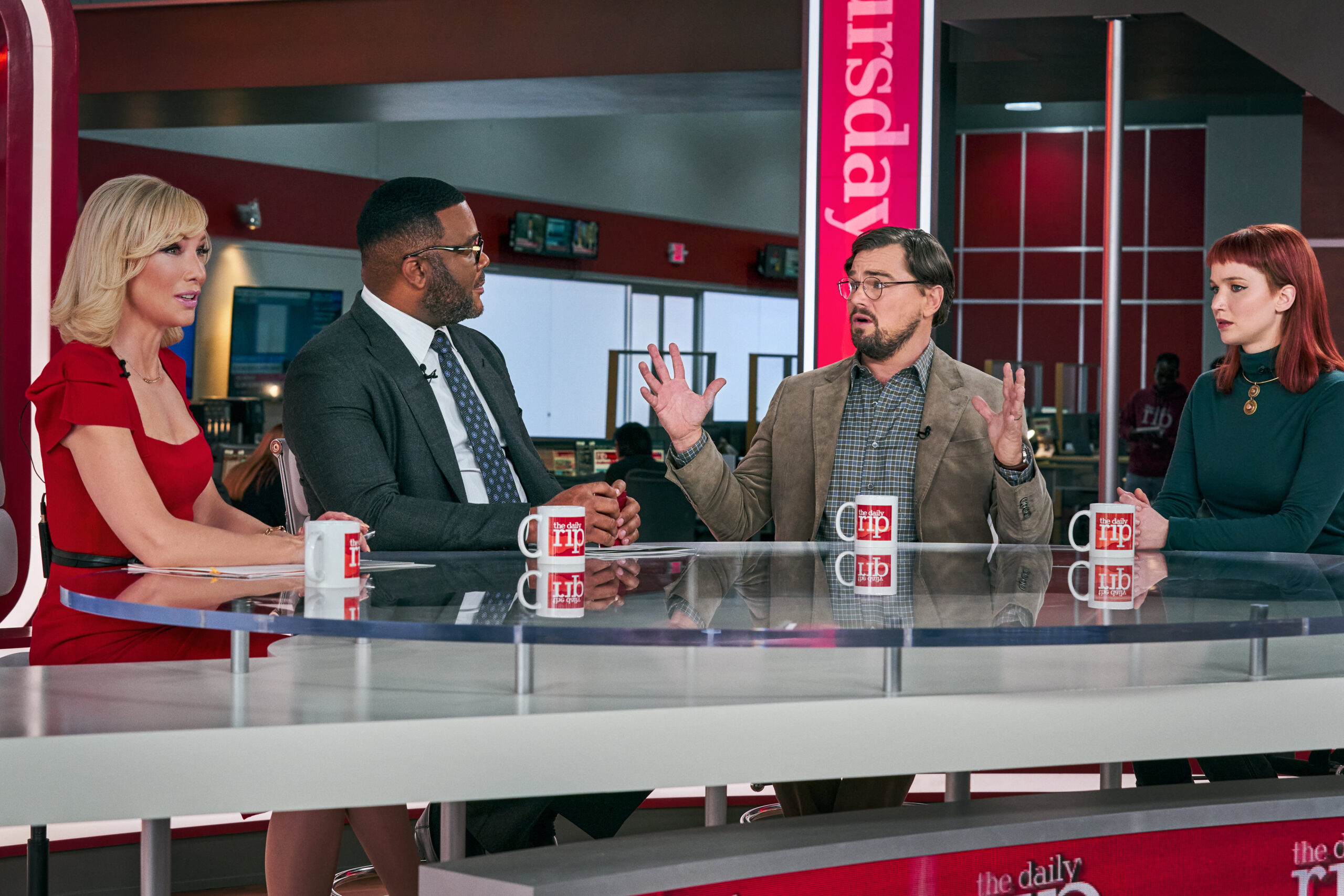
While its targets are very clear and easily identifiable, the film approaches them heavy-handedly, indeed clumsily. If satire is to work well, the cast must act credibly and consistently. One feels embarrassed that such fine performers as Leonardo DiCaprio (as a fumbling scientist), Meryl Streep (as an idiotic, not to mention insane, U.S. president), Cate Blanchett (as a highly intelligent but inconsistently silly television talk show host), and Jennifer Lawrence (as a hapless Ph.D. student) are required to engage in antics which are neither funny nor remotely likely, even though superficially they seem to be based on a possible reality.
One must also be able to see the story line as both logical in its development and reflective of the reality being satirized. As a contrast, one thinks of Dr. Strangelove, which also satirizes imminent world catastrophe, but in a believable, dramatically effective, and comical fashion. Instead, Don’t Look Up promises to be engaging and relevant but ultimately proves stultifyingly ridiculous. The film is an example of a good idea badly handled.
Only slightly better is Being the Ricardos, written by the truly talented Aaron Sorkin. His West Wing is, to my mind, one of the greatest achievements in television history, crowned by the episode “In Excelsis Deo.”
The current film portrays Lucille Ball, that superstar of the Golden Age of Television, beset with a number of problems including an unfaithful husband and doubts about the development of an episode of I Love Lucy, the talented comedienne’s seven-season television series, which pioneered the use of three cameras and adjacent studio sets. But Being the Ricardos seems to be determined merely to show Miss Ball as tyrannical, egotistical, and vindictive. The filming of one episode of the famed series ultimately becomes an awkward artifice by which to portray, very harshly, the private life of the Ricardos.
Whether this has much historical validity, it is hard to say, though one would like to believe otherwise. Indeed, it is remarkable that Nicole Kidman, who performs her part with conviction, makes Lucille Ball thoroughly unsympathetic, while Javier Bardem as Desi Arnaz manages to make the philandering husband likeable. If this was the intention of the film, it hardly makes for great entertainment, or a tribute to those responsible for one of the most loved television series of all time. The film rapidly outwears its welcome and may well simply disappoint and annoy fans of I Love Lucy.
So out of desperation I turned to Harriet, a biopic which I missed when it was released. Even though one may take exception to the film’s determination to turn the life of the great abolitionist Harriet Tubman into an epic in the tradition of Spartacus, this largely fact-based account is salutary and satisfying, thanks to an excellent cast led by Cynthia Erivo in the title role.
Meanwhile, I eagerly anticipate being able once again to go to a movie theatre, especially to see some of the latest award-searching releases.







