

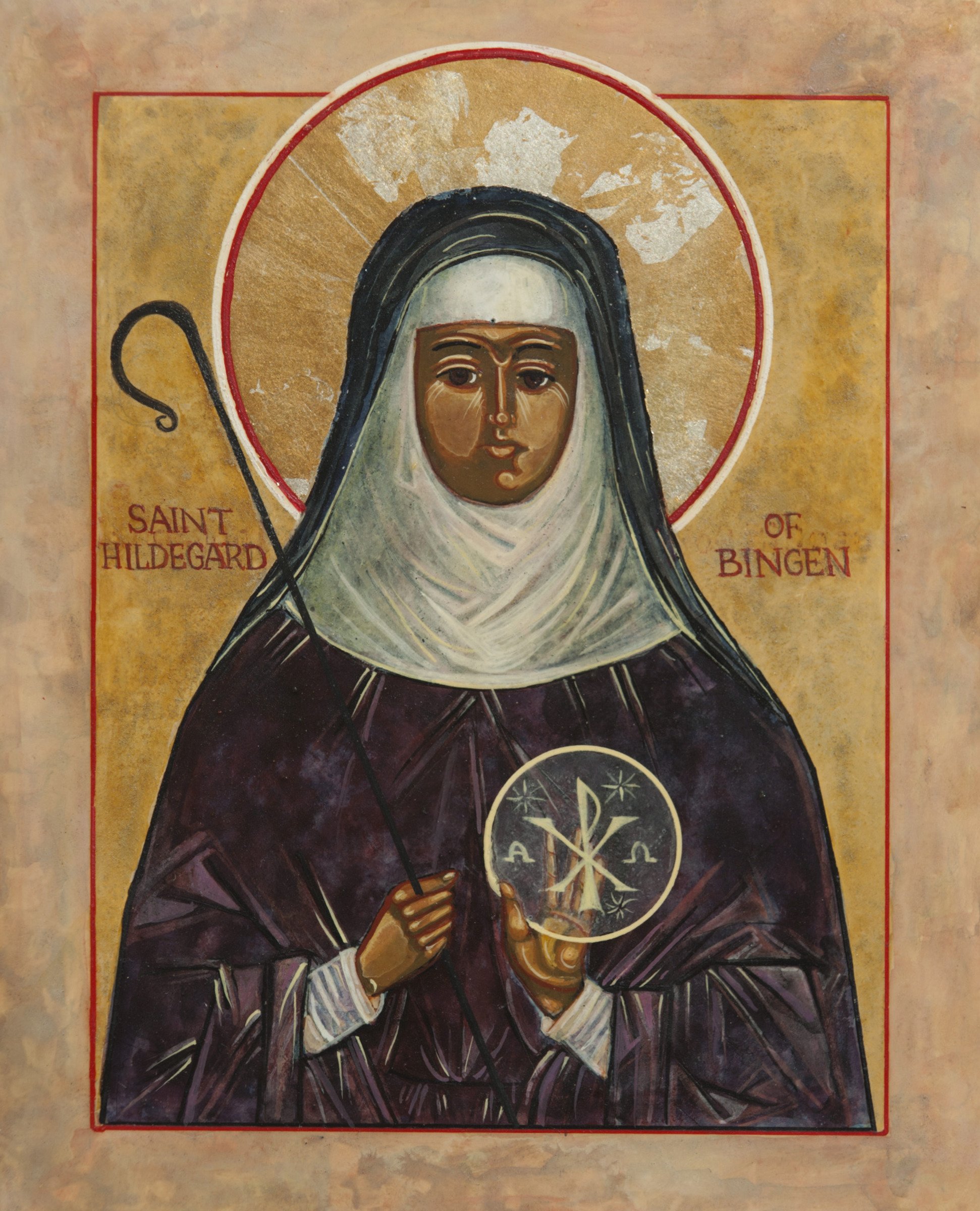

Not long ago, while visiting my osteopath, I inquired about the beautiful music he always has playing in the background in his office. He responded that it was a piece by St. Hildegard. “Do you know her?” he asked. Rather sheepishly, I had to admit that I did not. He told me she was considered a pre-eminent composer and influential woman of the Middle Ages. The first thing I did when I got home was a little research on this woman who, it turns out, is a huge figure in Church history.
St. Hildegard of Bingen, whose feast day is celebrated on Sept. 17, was declared a doctor of the Church by Pope Benedict XVI in 2012. Born in 1098 in Bermersheim, Rhineland-Palatinate, or modern Germany, Hildegard was the 10th child in her family and was thus dedicated at birth to the Church, as was the custom at the time.
According to franciscanmedia.org, as a teenager she was given to the care of an anchoress, or holy woman, who was in charge of her education and spiritual growth. At age 18, Hildegard entered the Benedictine Monastery of Disibodenberg. She had confided to her anchoress of the visions she had received since the age of three and was then encouraged by her confessor to write down her experience. The result was one of her famous books, Scivias (Know the Ways). This book even caught the attention of Pope Eugene, who encouraged her to keep writing. She did keep writing, leaving several books of theological, philosophical, and scientific significance.
St. Hildegard’s contribution, not only to the life of the Church, but to the culture and general deposit of knowledge, was astounding, especially for a woman of her time period. She was sought after for her knowledge of natural remedies, which she documented, and which she always attributed to God’s hand. In an era when medicines were scarce and illnesses were common, Hildegard’s use of God’s bounty to heal others was a timely gift.
She was also not afraid to defend the truth and speak her mind. She spoke out against the emperor, who was supporting the anti-popes of the day, and she publicly condemned the popular Cathar heresy that was then causing division among Catholics.
My favourite story is when she cared for a sick man who was excommunicated. As he neared death, he repented, and she ensured that he received final sacraments and anointing and subsequently a proper burial. The local bishop demanded she remove the body from the cemetery. St. Hildegard refused, resulting in her monastery enduring sacramental sanctions until shortly before her death, when her actions were vindicated.
St. Hildegard was a leader in almost every field in which she participated. She left a legacy of 77 composed pieces of music, which can still be heard nearly 1,000 years later on YouTube, and in at least one osteopath office in Canada.
She sought to emphasize and contribute to the potential of the human person as an image of God. “Humankind, full of all creative possibilities, is God’s work. Humankind alone is called to assist God. Humankind is called to co-create. With nature’s help, humankind can set into creation all that is necessary and life-sustaining,” she said.
I think St. Hildegard’s philosophy is so needed in the world right now. At a time when we can get discouraged so easily with all that is going on around us, St. Hildegard’s example of standing up for truth and seeking to glorify God in all that we do is exactly what we need. The 81 years that she lived on this earth were at a time of great turmoil in Church and world history, and yet Hildegard managed to flourish under these difficult circumstances because she rooted herself in Christ. Her outlook on life can be summed up in her own words: “All of creation is a song of praise to God. Love abounds in all things, excels from the depths to beyond the stars, is lovingly disposed to all things.”
These days, if you find yourself distracted, and likely frustrated, by COVID, government restrictions, flip-flopping politicians, a federal election, cries of help from Afghanistan, and so much more, say a prayer to St. Hildegard. Let’s ask her to remind us to pray and to see the world around us with the eyes that she had – grateful for the many gifts God has bestowed and for the opportunity to live in this time that he has carved out for us.
Lazzuri writes from Nova Scotia, where she lives with her husband, six children, and her mom. She can be reached at clarelazzuri@gmail.com







