


The following column should have appeared in the Sept. 3 issue. We are publishing it this week and apologize for the confusion – Editor.
23rd
Sunday in Ordinary Time, Year B
First
Reading: Is
35:4-7
Second
Reading: Jas
2:1-5
Gospel
Reading: Mk
7:31-37
In this Sunday’s First Reading, we hear a prophecy: “Then shall the eyes of the blind be opened, and the ears of the deaf unstopped; then the lame shall leap like a deer, and the tongue of the speechless sing for joy.” In the Gospel Reading, we see it fulfilled, as Jesus cures a deaf man who has a speech impediment.
Christ’s compassion toward the sick and his “healings of every kind of infirmity” were “a resplendent sign” that God was visiting his people and that his kingdom was “close at hand,” says the Catechism of the Catholic Church.
“Moved by so much suffering,” Jesus made “their miseries his own: he took our infirmities and bore our diseases.” However, he did not heal everybody. His healings were a sign of “a more radical healing” to come. Only on the cross did he assume “the whole weight of evil” and take away “the sin of the world, of which illness is only a consequence.”
Through his death and Resurrection, Christ has given the Church a “Gospel of suffering,” Pope St. John Paul II said in his 1984 Apostolic Letter Salvifici Doloris (“On the Christian Meaning of Human Suffering.”) In suffering there is a power that draws us “interiorly close to Christ,” the Pope said. A suffering person discovers “a new dimension” in his life and vocation.
In itself, suffering is “an experience of evil,” the Pope said. However, Christ has made it the firm basis for the great good of eternal salvation. To those who suffer, he “gradually reveals the horizons of the Kingdom of God”: the horizons of a world converted to the Creator, free from sin, and built on the saving power of love.
People react to suffering in different ways, the Pope said, but almost always with a “protest” and a cry of “why?”
The New Age movement answers that we “create our own reality,” says the Vatican document Jesus Christ: The Bearer of the Water of Life. It cheats and demeans people with severe handicaps or incurable diseases by claiming “that they have brought their misfortune upon themselves, or that their inability to change things points to a weakness in their approach to life.”
Christ answers the “why” of a suffering person quite differently, St. John Paul said: “from the cross, from the heart of his own suffering.” However, it may take us a long time to hear him, for he “does not answer directly” and he never speaks of suffering “in the abstract.” Rather, his answer is a call, a vocation: “Follow me!”
We will hear Christ’s answer only if we “become a sharer” in his sufferings, the Pope said. As we take up our cross in union with Christ, we perceive its “salvific meaning” and find “interior peace and even spiritual joy.”
We no longer think of our suffering as useless, the Pope noted. We remember what St. James says in this Sunday’s Second Reading: “Has not God chosen the poor in the world to be rich in faith?” Faith that we are sharing Christ’s sufferings gives us interior certainty that we, like Christ, are accomplishing the salvation of our brothers and sisters and thus “carrying out an irreplaceable service.”
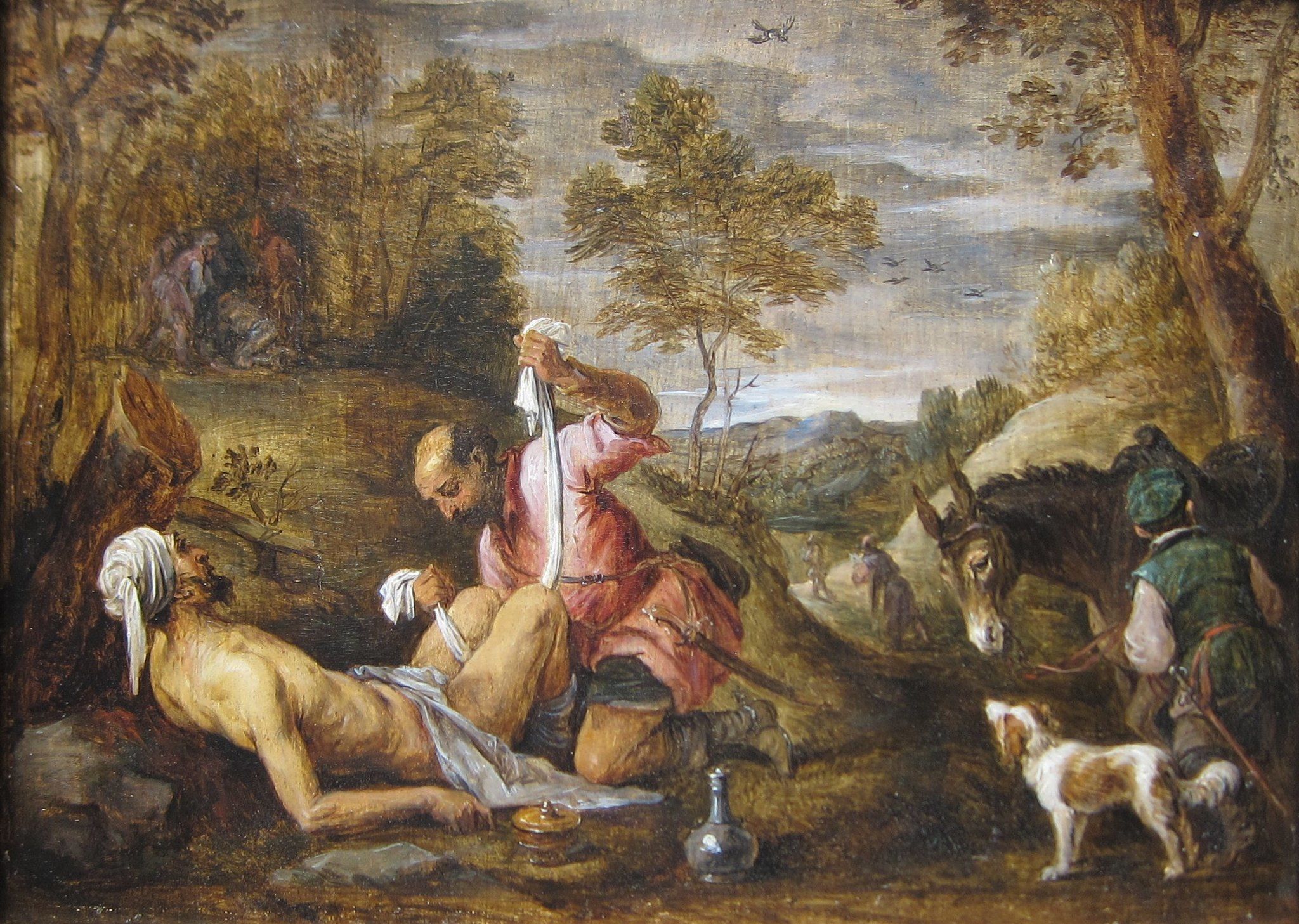
Suffering is “salvific,” the Pope repeated, but that does not mean that we should view it passively. Christ condemned this idea through his own healings and by his parable of the Good Samaritan.
That parable completes the Gospel of suffering, the Pope said. It shows us how to treat our suffering neighbours: with “sensitivity of heart” and “compassion” that are expressed in action. Thus we find self-fulfillment, for no one can “fully find himself except through a sincere gift of himself.”
Christ not only taught the Gospel of suffering; he also lived it. Thus he revealed its double aspect: how to do good by our own suffering and how to do good to those who suffer.
Father Hawkswell
will teach a free course on the Catholic faith starting Sept. 24. It will run Mondays till Pentecost from 11 a.m. to 1 p.m. at St. Anthony’s Church, 2347 Inglewood Ave., West Vancouver, and
again from 7 to 9 p.m. at the John Paul II Pastoral Centre, just off 33rd Avenue between Oak Street and Cambie Street). Everyone is
welcome, Catholic or non-Catholic.







