


Easter
Sunday, Year B
First
Reading: Acts
10:34a, 36-43
Second
Reading: Col
3:1-4
Gospel
Reading: Jn
20:1-18
Christ is risen! The tomb is empty! “He has been raised; he is not here. Look, there is the place they laid him.”
Does the news hit us like a hammer-blow, as it hit the women and the apostles, or has it sunk to the level of a comforting platitude?
Christ has risen not in a mystical or metaphorical sense, but bodily, in reality and in truth. Had we been there, we could have put a finger into the nail marks in his hands and feet and a hand into the wound in his side.
I thought about the difference between fact and metaphor recently when I recalled the words of a hymn: “You and I are the bread of life: … This is our body, this is our blood … Lives broken open, stories shared aloud, become a banquet, a living sign of God in Christ.”
Heard casually, it sounds good, but how different from what Jesus really said: “I am the Bread of life … If you believe in me, even though you die, you shall live forever, and I will raise you up on the last day.”
In abandoning Christ’s words for the words of that hymn, we descend from plain fact to poetic metaphor (if that). You and I are not the bread of life. What we eat at Mass is Christ’s flesh, not “lives broken open” or “stories shared aloud,” the banquet is not merely “a living sign of God in Christ,” but Christ himself: body, blood, soul, and divinity.
Like the Eucharist, the Resurrection is plain fact, not metaphor. On Good Friday, Jesus died. Experienced Roman soldiers could see he was dead, but to make sure, one of them lanced him to the heart.
His body was buried in a nearby rock tomb, hastily, because the Sabbath was beginning. To make sure no one came and stole the body (for Jesus had said he would rise again), the Jewish authorities persuaded the Roman governor to seal the tomb with a rock and post a guard.
The day after the Sabbath, some women went to anoint the body and give it a proper burial. They found the seal broken, the rock rolled back, the guards absent, the body gone, and an angel waiting for them in the empty tomb.
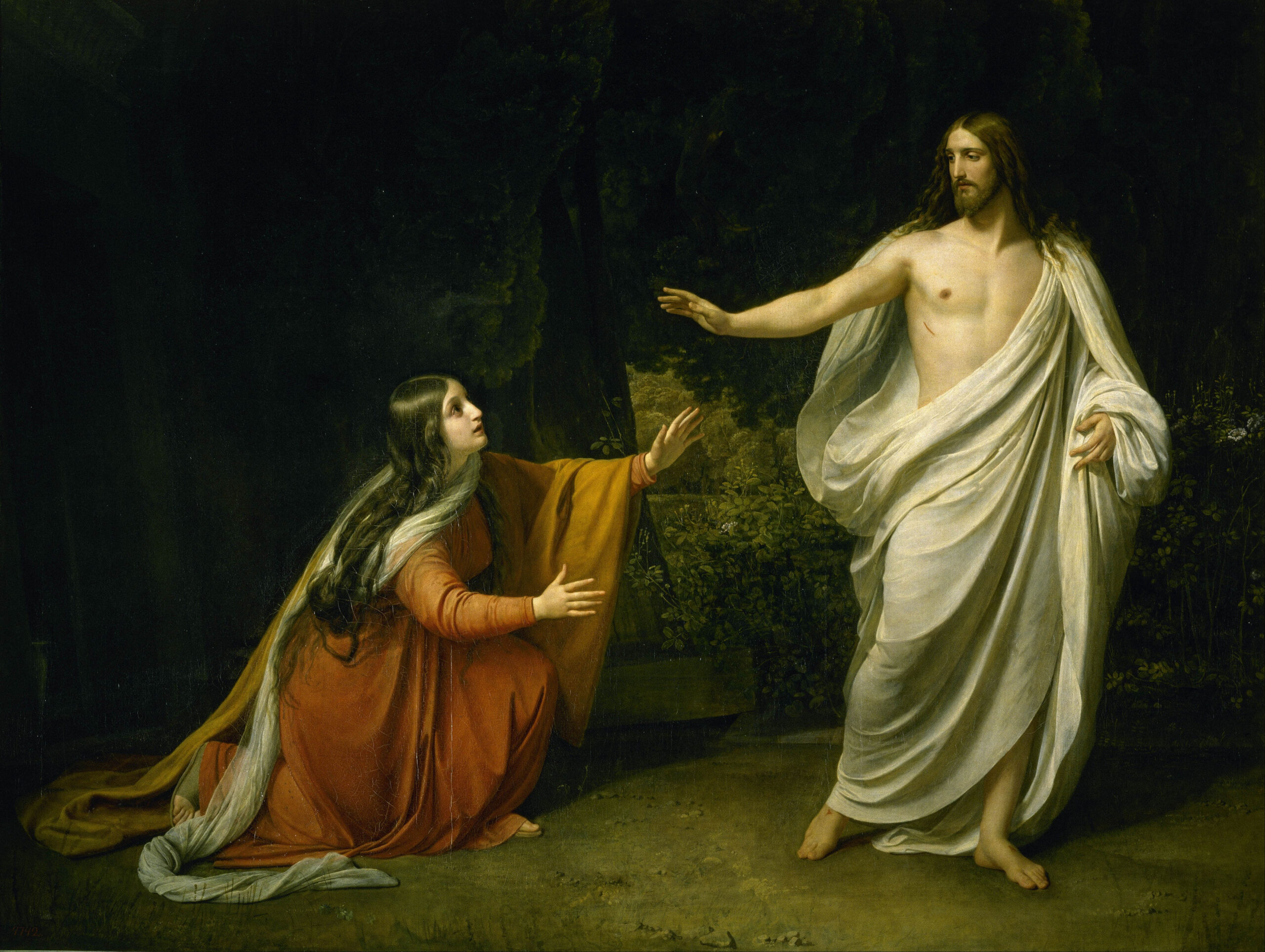
Soon afterward, Mary Magdalene met Jesus in the garden. Next two others met him on the road to Emmaus. Then the apostles saw him in the locked room where they were hiding. Finally, he appeared to hundreds at once.
Those who deny the plain fact of the Resurrection suggest that the apostles either imagined Jesus had risen or deliberately hid his body to bolster an incredible story. However, the apostles were hard-headed, practical fishermen and tax collectors, whom Jesus had often rebuked for their lack of faith. Far from being seized by a mystical exaltation or expectation, they had been demoralized and frightened by his death.
In fact, the shock had been so great that at first, they simply could not take in his Resurrection. They flatly refused to believe Mary Magdalene. They put no more faith in the two who had seen him on the road to Emmaus. When, finally, Jesus appeared to them, he took them to task for their disbelief and stubbornness. Even face to face with him, they were still incredulous for sheer joy and wonder. In fact, they thought they were seeing a ghost and Jesus had to eat some fish in front of them to prove he was alive.
The apostles’ conviction of Christ’s Resurrection was born not from their faith or credulity, but from the direct experience of their senses: what they saw and their hands touched, as St. John says.
Do we believe it? Unless we do, Easter has no meaning for us. If Christ did not rise, our faith is worthless and we are still in our sins.







