


We’ve written previously in this space about the chaotic events at Twitter that have dogged the company since its takeover by entrepreneur Elon Musk.
That $44 billion takeover, along with some literal kitchen sink bravado from the eccentric billionaire, is but a distant memory from 2022. Not only has that valuation been frittered down to a recent estimate of around $22 billion, the company isn’t even called Twitter any longer. It is now X Inc. Not that the move means much, mind you, at least for now.
It seems that of late every new day brings another story of change and confrontation at Twitter. Users of the social media platform are upset over changes and unexplained service outages, and advertisers are none too happy that tweet moderation has all but vanished.
Let’s not forget the many employees terminated by Musk, perhaps as many as 6,000, some within mere hours of his takeover. To be sure, Twitter co-founder Jack Dorsey took some of the blame, although not the associated costs, for those firings, saying he had let the company grow too big, too fast, without properly defining roles and expectations.
Chaos indeed. Turmoil. User defections to other platforms such as Mastodon. However predictions that the platform would implode, self-destruct if you will, appear to have been premature. When it comes to breaking news for instance, Twitter is pretty difficult to beat.
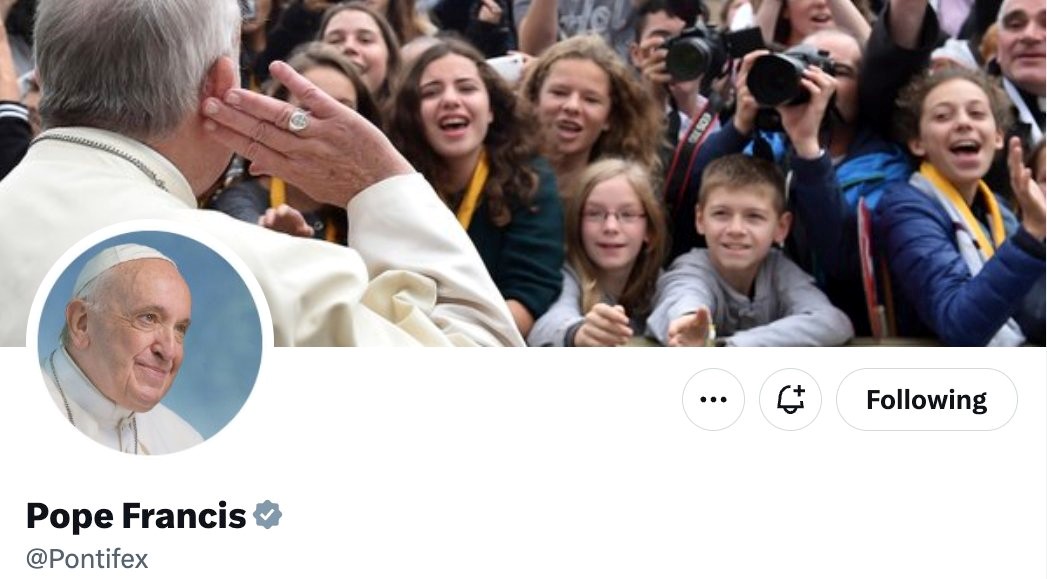
Most recently we have seen the so-called blue checkmark fiasco at Twitter. (It’s actually a white checkmark, on a blue background, but that’s a quibble.) For many, the Twitter checkmark was a badge of recognition, a mark of an account that had been verified and deemed to be of some public relevance.
Musk decided he wanted users to pay for verification and for a service he called Twitter Blue. Pay somewhere around $8 a month and you would be able to edit tweets, post longer – much longer – tweets and be deemed authentic. Initially, the service was to be automated. Anyone could receive the checkmark status. Predictably that led to unsavoury types and organizations buying the blue status.
Chaos. Another Musk rethink. Fast forward to late April and Musk ordered all legacy checkmarks removed, for individuals and corporations alike. Gone overnight. If Musk thought people would be stampeding to pay the new $8 monthly fee, he was dead wrong. In fact it became a mark of derision. High-profile accounts lost their status, along with, for example, news reporters with just a few hundred followers.
Perhaps wanting to stem the bad publicity, Musk said he was paying the monthly fee himself for a few notable accounts. Those of author Stephen King and athlete Lebron James come to mind, but neither actually wanted the symbol in the wake of the controversial moves.
In the Vancouver area, a cursory search turned up only a couple of high-profile accounts whose owners appeared to be paying for the checkmark status. Both are associated with news media, namely Global BC’s Keith Baldrey and the CBC’s Ian Hanomansing.
Hanomansing’s is somewhat puzzling considering that in another round of chaos at Twitter, Musk went to battle with publicly-funded media outlets. He decided that the likes of the BBC, CBC, and National Public Radio in the U.S. should have their Twitter profiles read “state-funded” or “government-funded” media. Naturally the organizations protested at labelling suggestive of government-controlled media under tinpot dictatorships.
All three organizations halted their Twitter activity. This appears to have caught Musk’s attention. In the case of the CBC, he initially modified the description to read “69% government-funded media” before finally removing any additional tags. He similarly appears to have removed labels such as “state-affiliated” for Russia’s RT and China’s Xinhua Twitter news feeds.
In an additional about-face, the main CBC and BBC Twitter accounts now sport a checkmark on a gold background, indicative, the company says, of “an official organization on Twitter.” NPR doesn’t have such a label yet, but Al Jazeera, for instance, does.
On the political side, few appear to have taken to paying for the checkmark. Again, in a cursory look, I only found Canada’s leader of the opposition, Pierre Poilievre, to be a paying customer. The Prime Minister’s account has a gray-backed checkmark, indicative of, in Twitter’s words, a “government or multilateral organization”.
So ends April. Oh, I almost forgot. Twitter also rolled out “subscription” accounts. Any user with an established presence can apply for a subscription account for which followers can pay a monthly fee to see “bonus” material. I’ve only seen a few examples appear so far in my Twitter stream. One offered space photos at $10 a month, and another offered “one dog photo per week,” for $3 I believe.
In my own case, the Twitter “monetization” link suggests I could earn $980 a month if two per cent of my followers were to sign on as subscribers for bonus material at the mid-tier level of $5 a month. To combine two positives into a negative expression, yeah, right!
As this column went to print another chaotic event was unfolding. Every Twitter account with more than a million followers was being assigned a blue background checkmark, in some cases against the wishes of the account holder. This may have been a reactionary move by Musk against a growing #BlockTheBlue movement on Twitter.
Is there more chaos ahead for Twitter? If Musk remains at the helm the answer would appear to be obvious – yes.
Another question to ask might be whether anyone would actually want to take over the chaotic Twitter enterprise.
Follow me on Facebook (facebook.com/PeterVogelCA), or on Twitter (@PeterVogel)







