


On June 17, the federal government declared a national climate emergency in Canada, which means something is seriously wrong. Climate change is happening and has been for many years.
As a reminder, 2016 was the hottest year on record, and the hottest years ever recorded are all in this century.
This is what scientists have been predicting for decades. Canada in particular, due to its northerly latitude, is warming faster than most other countries, which was also predicted.
If “business as usual” continues, we can expect to see a continuation of extreme climate-related natural disasters, water and food shortages, the evacuation of coastal cities, and civil unrest.
This concerns us gravely for many reasons, but in particular for Catholics as an area of morality. According to the Catechism of the Catholic Church (paragraph 2467), “All men are bound by a moral obligation to seek the truth and to adhere to the truth once they come to know it.
If an expert, such as a climate scientist or indeed a pope, tells us the truth about climate change and we choose to ignore them, not only are we living immorally but we are also denying what we know to be true. To put it more bluntly, “Those who knew their master’s will but did not do it will receive many lashes” (Lk 12:47).
In our examinations of conscience do we consider acts against the environment as sins? If I drive over the speed limit, or idle my vehicle’s engine for more than three minutes in the City of Vancouver (Bylaw 9344), these are illegal acts according to the laws of the land, and so obviously sins.
If I use a car for selfish reasons when I could have walked, cycled, or taken transit, this can also be considered immoral.
Do I separate my waste properly or am I too lazy? Do I consider the environment and society in how I live my life, or do I just consider my own needs?
Perhaps the time has come for priests to ask these kind of questions to those in confession. Maybe turning down the thermostat or using alternatives to car driving will be giving as penance.
For many of us living in Canada, polluting and degrading the environment have become part of our lifestyle, yet “humanity is called to recognize the need for changes of lifestyle, production, and consumption in order to combat this warming” (Laudato si’, Paragraph 23).
We need to take drastic action to reverse this trend and to change our culture. Many other developed countries are way ahead of us. In cities in Europe, such as Copenhagen and Amsterdam, cycling is the norm. In the United Kingdom most town and city centres are pedestrianized. Portugal is able to rely entirely on renewable energy to power its whole country.
Yet those in our own society who are actively caring for the environment and talking about it are still regarded as “different.” We say, “he’s into that,” or “that’s her thing.”
We all need to be caring for the environment or, put more correctly, we all need to stop not caring for the environment.
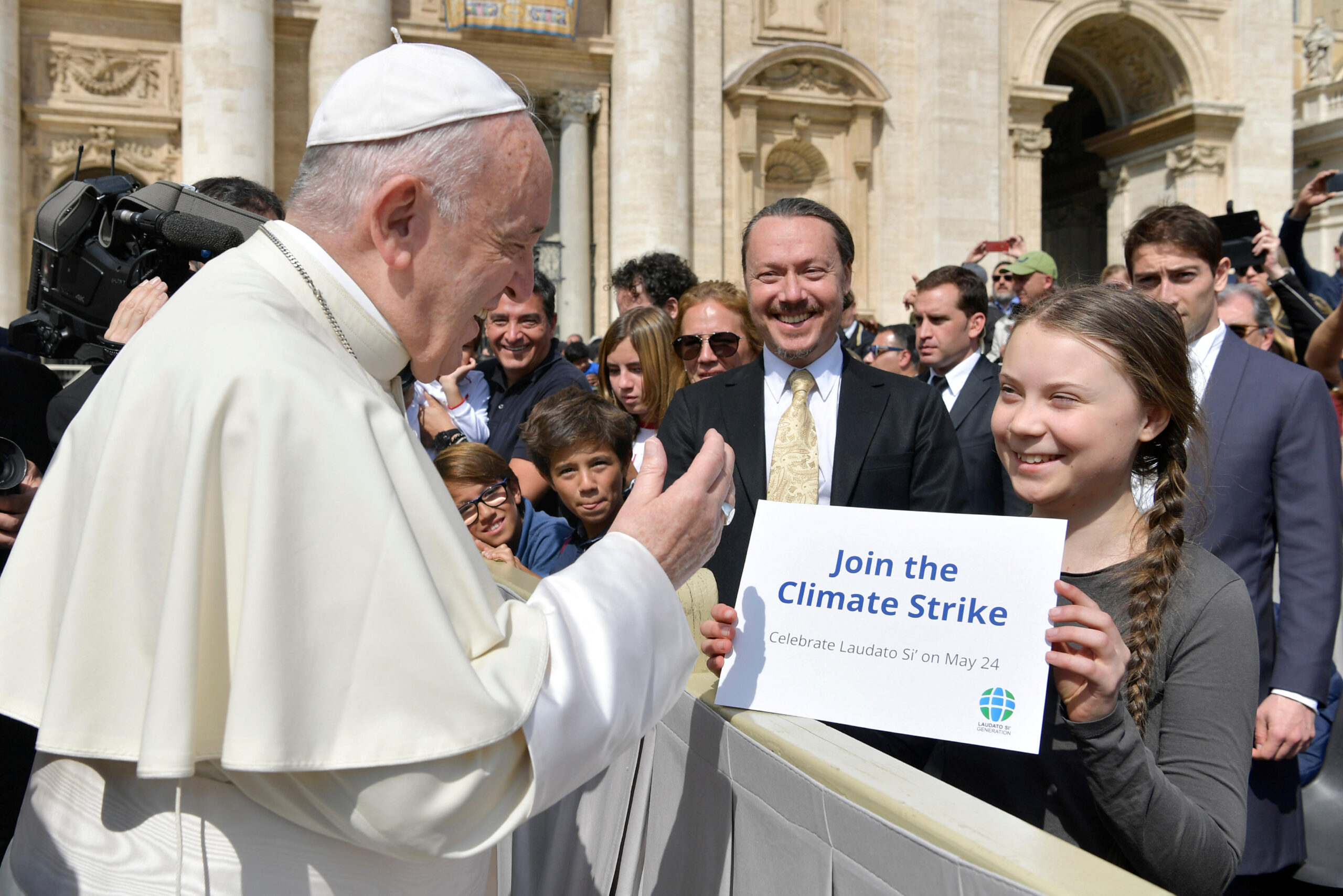
On Friday, Sept. 27, the Global Climate Strike will take place as young people demand that our governments and elected officials take action to tackle the climate crisis. This time, young people are calling upon “the adults” to join them. This is not a workers’ strike, but a political rally, and one will take place at Vancouver City Hall from 1 to 4 p.m. Visit https://globalclimatestrike.net/ for more information.
Joining the strike is one option, but each of us has a duty to take action to change our personal lifestyles. “Local individuals and groups can make a real difference” (LS 179).
I would like to commend those parishes that have formed environmental action groups. We must all work to make a difference now, as individuals and groups.
“There is a nobility in the duty to care for creation through little daily actions, and it is wonderful how education can bring about real changes in lifestyle” (LS 211).
A lay Dominican Care of Creation Workshop will be held Dec. 7 at St. Mary’s Church in Vancouver. Visit dominicanlaity.ca/events for details.
Mark Norbury is a lay Dominican and a professional geographer. He is RCIA coordinator at St. Joseph’s, Port Moody.







