


On March 27, while tracking military aircraft in European airspace, I spotted a small plane with the registration N95NA. Most wouldn’t have paid attention to such a plane showing up on their tracking screens, but in fact this plane was a harbinger of a feel-good story in the midst of the bleakness of the Russia-Ukraine war.
N95NA was headed to Kazakhstan, a staunch Russian-allied state. Kazakhstan is where the Soviet Union’s space program was born, where Yuri Gagarin blasted off to become the first human to reach space. Even following the breakup of the Soviet Union, Kazakhstan continued to be the primary launch site for Russia’s space program, and it continued to be the landing zone for returning cosmonauts and for astronauts from other nations who had launched to the International Space Station on Russian craft.
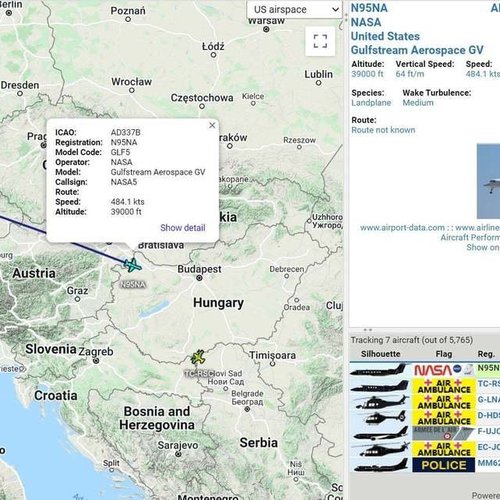
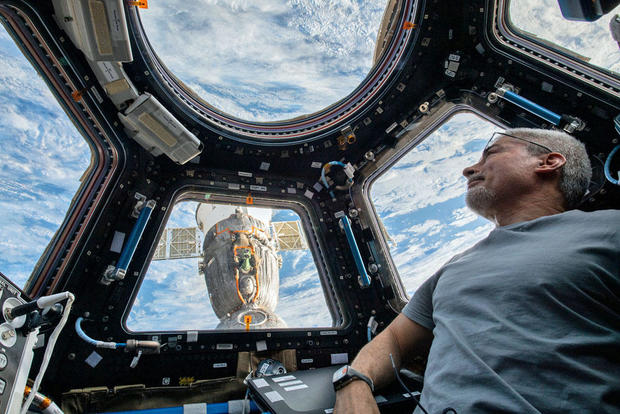
The fact that N95NA was headed to Kazakhstan was the clincher that American astronaut Mark Vande Hei would indeed be returning to earth as planned and scheduled, despite America and Russia otherwise being in a near standoff, and despite some incendiary remarks earlier by the head of the Russian space program.
After Russian space agency Roscosmos head Dmitry Rogozin issued statements implying that the ISS was in operational danger and that the American astronaut could be stranded, NASA issued a release stating that Vande Hei would come back on a Russian spacecraft ‘for sure.’ Basically, NASA managed to set a calming tone following Rogozin’s incendiary tweets.
What drove Rogozin to make such statements in the first place? Well, it’s a long story and it probably begins and ends with Vladimir Putin. Rogozin is well-connected politically, having headed political parties and being an elected official in Russia’s Duma. He became head of Roscosmos in 2018, appointed by Putin.
Rogozin has been sanctioned in the past. The government of Moldova declared him persona non grata in a dispute over airspace use. He has written that Alaska and the Aleutian Island chain should be returned to Russia. Suggesting that the ISS might be intentionally crashed onto the United States, or that Vande Hei would be left stranded after nearly a year in space, was simply unfathomable and privately NASA officials said this was “Rogozin being Rogozin.”
Rogozin took the helm at Roscosmos around the time that American dependence on Russian launches for astronaut rides to the ISS was waning. Once SpaceX was licensed to use its Dragon craft for such work, the lucrative $30 million or more per seat that NASA paid the Russian agency began to dry up.
Behind the scenes, NASA was ensuring that its professional contacts remained solid. Despite almost every other venture involving the US and Russia having been curtailed, if not completely cut off, the space program co-operation continued at the practical level.
NASA’s administrator Bill Nelson clarified the situation in a statement March 28 during a “State of NASA” speech at the Kennedy Space Center: “For the safety of our astronauts, the working relationship between NASA and our international partners continues, and that includes the professional relationship between the cosmonauts and our astronauts.”
Nelson told the Associated Press he wasn’t concerned about Rogozin’s tone. “That’s just Dmitry Rogozin,” he said. “He spouts off every now and then. But at the end of the day, he’s worked with us.”
Meanwhile, aboard the ISS, Russian cosmonaut and station commander Anton Shkaplerov addressed the turmoil on the planet below as he prepared to hand over command to American astronaut Thomas Marshburn: “People have problems on Earth. On orbit, we are one crew,” he said in English during the brief ceremony. “I think ISS is like a symbol of friendship and cooperation and a symbol of the future of the exploration of space.”
A day later Shkaplerov, Vande Hei, and another Russian cosmonaut, Pyotor Dubrov, squeezed into their Soyuz landing craft and headed back to earth for the traditional hard landing on the Kazakh steppe. After exiting the blackened lander Vande Hei was asked what he was most looking forward to. He had a simple answer, after reflecting on the ready-to-eat meals which are the typical fodder on the ISS, a cup of coffee with his wife, and guacamole dip with chips.
Vande Hei remained professional and measured in comments following the negative tone set by Rogozin before his safe return. The same could not be said for former astronaut Scott Kelly. He and Rogozin became embroiled in a Twitter spat after the latter released a bizarre video montage showing two Russians leaving the ISS and waving goodbye to Vande Hei.
Kelly called out Rogozin, initially via Twitter, until concerned NASA officials requested he stop. Kelly went on to explain in an op-ed in the Washington Post that he felt compelled to speak out at the perceived threats to the ISS program. Kelly noted that U.S.-Russian cooperation in space had helped ease Cold War tensions and that the shared station “has always been one of the great achievements of our nations that we came together to build and operate an orbiting station as a peaceful cooperation, and I was privileged to serve there.”
Not mincing words, Kelly addressed the war in his Post piece: “Putin must end his unlawful and immoral assault on the Ukrainian people, and Americans and Russians must work together to maintain our commitment to our shared humanity and the International Space Station. There is too much to be lost if we don’t,” he added.
Return aircraft flights for American astronauts such as the one I tracked across southern Europe will diminish as SpaceX and other launch companies take over the Roscosmos launch role. Hopefully the remarkable cooperation between nations that is a hallmark of the International Space Station continues for its remaining operational life, and then beyond into other ventures that benefit mankind in general.
Follow me on Facebook (facebook.com/PeterVogelCA), or on Twitter (@PeterVogel).
pvogel@outlook.com







