


Typically, when missionaries enter a parish to serve, they identify a particular need, obtain the pastor’s permission to address it, choose a saint whose intercession will help carry the project forward, and then inspire volunteers to offer their time, money, and experience so that there is no cost to the parish.
That kind of “missionary-designated project” might be the last thing you’d expect to see in a suburban Fraser Valley parish, but it’s exactly what quietly took place at St. James in Abbotsford. And with St. Joseph chosen as the patron, it was only fitting that the project involved renovations in need of a carpenter.
The old portable structure used for parish catechism instruction was the beneficiary. Its wheelchair ramp and front porch were showing their age, with rotten boards, a collapsing railing, and holes in the decking, while the whole building was badly in need of a fresh coat of paint. The 60 children and many adults who used the classroom each week never complained, but they were quick to show their excitement when Father Ashley gave his permission to begin the renovation.
After many discussions over coffee, our “earthly” master carpenter, Mark Douglas, presented his design, and a date for the tear-down was set.
When the day arrived, so did volunteers—an exuberant group ranging in age from 3 to 65.
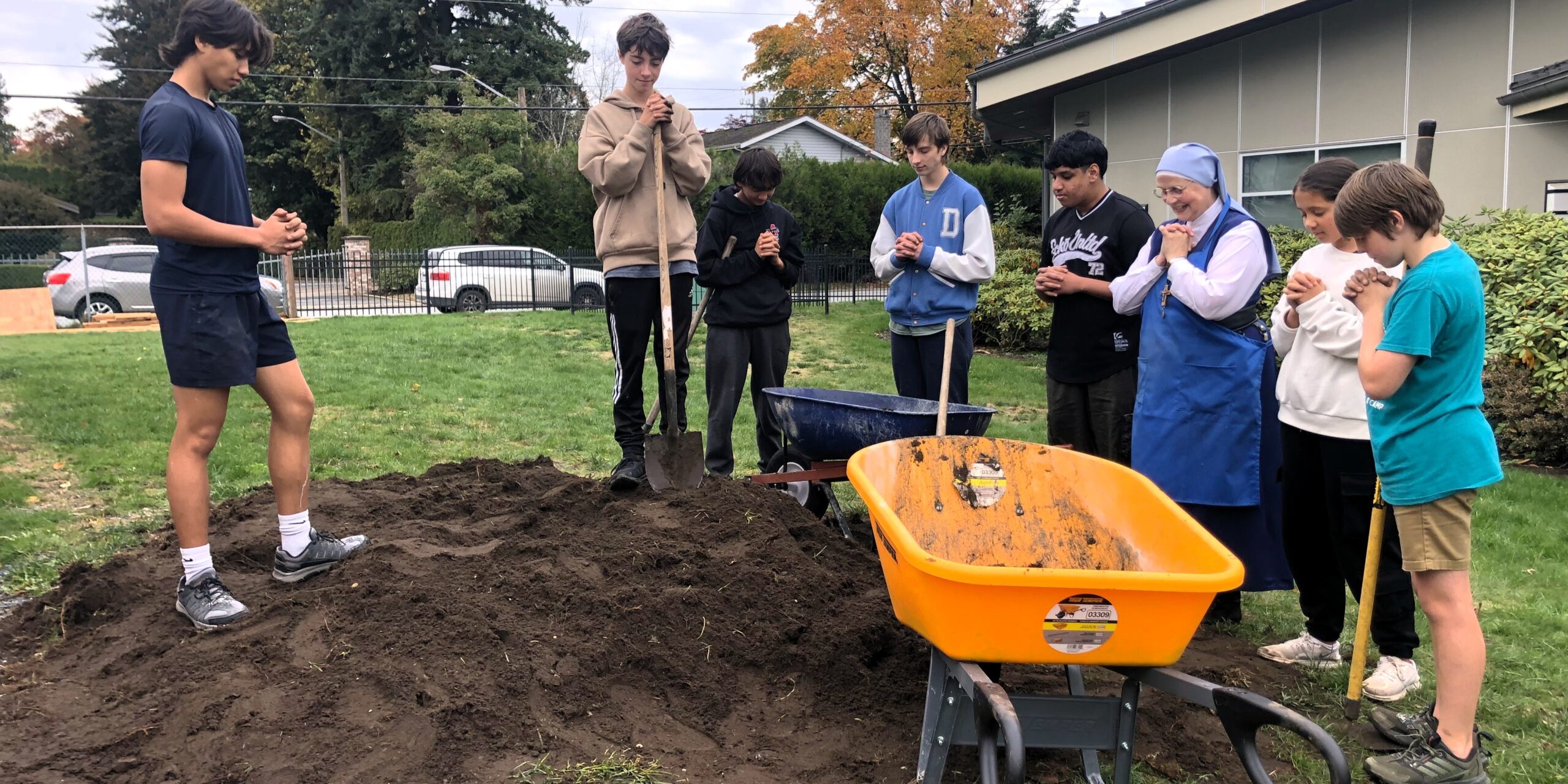
Before any work began, everyone gathered at the foot of the parish’s statue of St. Joseph to pray and ask for his intercession, entrusting the project and all glory to him. Inspired by prayer, the group picked up their tools and the work began.
The Rosary Club boys, teens, and dads worked together like a symphony. The sounds of sledgehammers, circular saws, crowbars, and drills blended with laughter and fellowship.
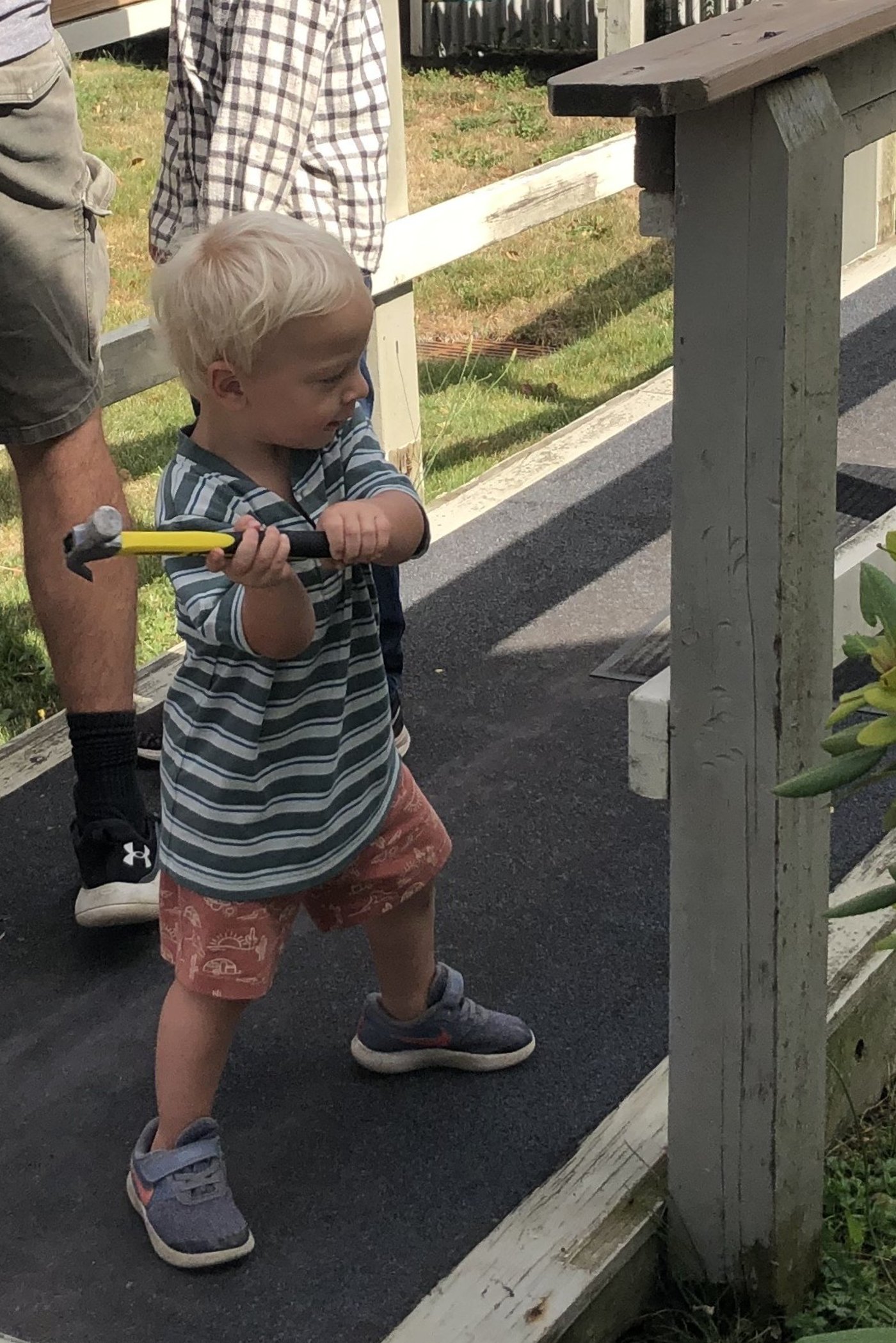
No one was too young to make a difference.
Meanwhile, the Rosary Club girls and moms prepared lunch and snacks for the workers, reflecting on how they were following the example of the Virgin Mary and the women who served Jesus and the Apostles.
By the end of a long, hot, and physically exhausting day, the tear-down was complete. All the hard work done by those in the past had served its purpose, and the remains were hauled away.
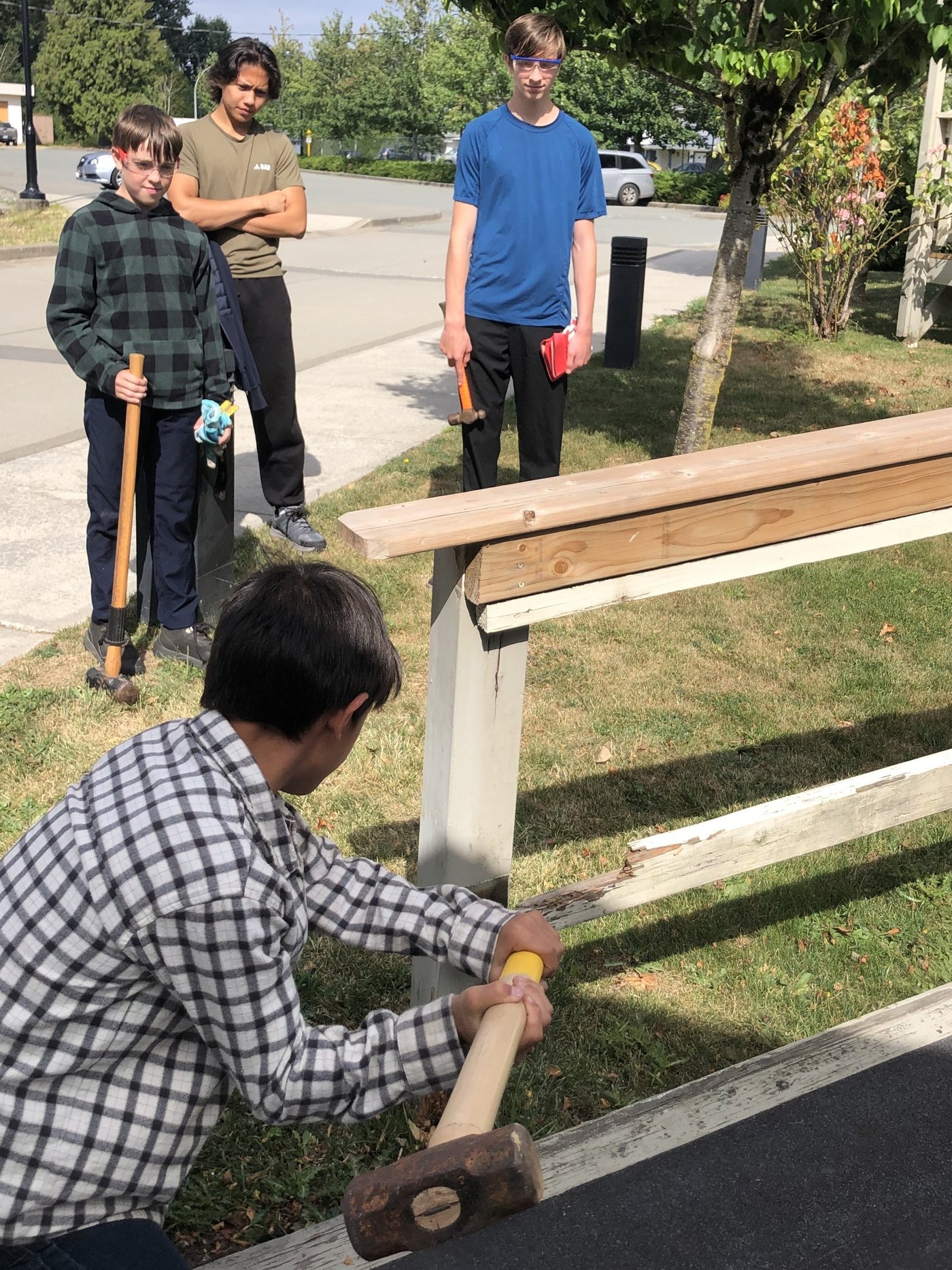
Starting the tear-down
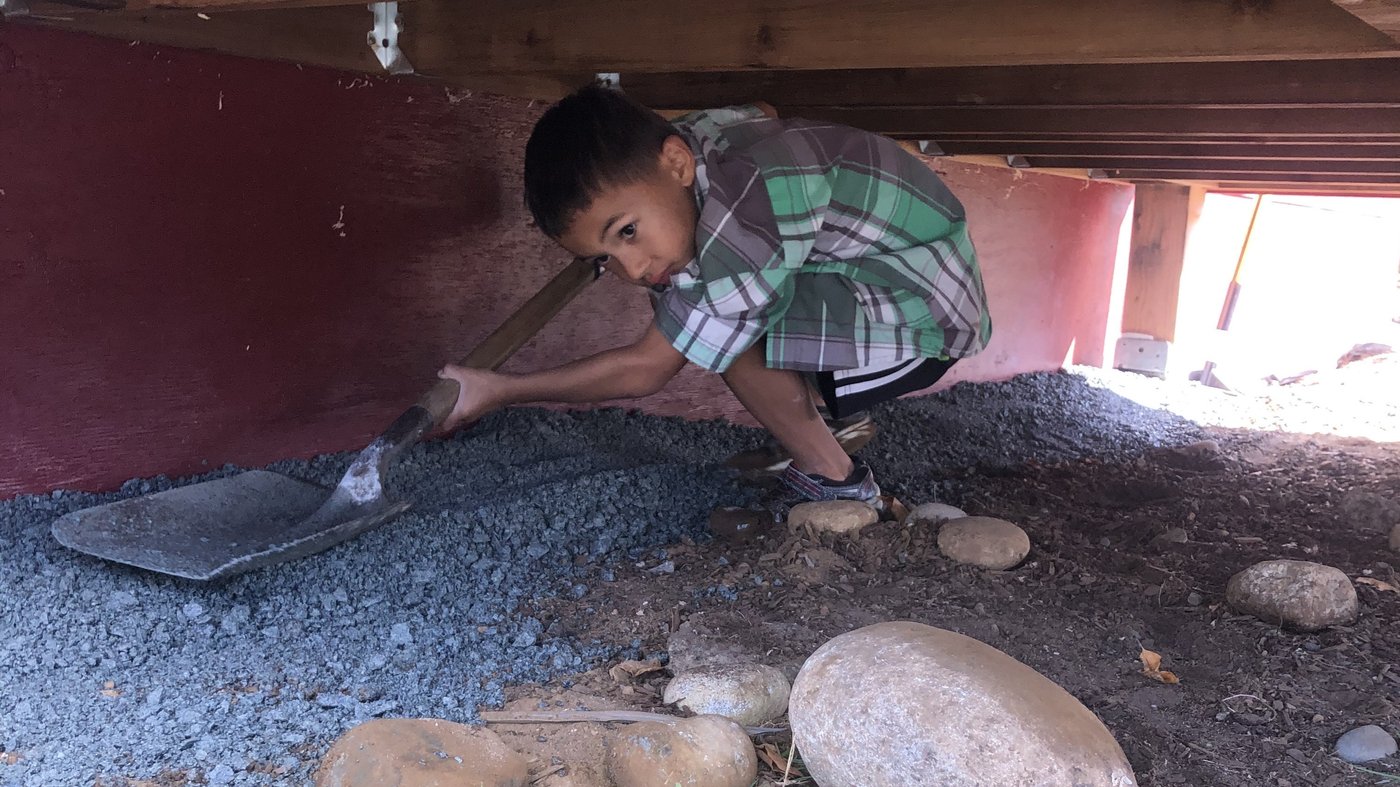
The next step was to make the building rat-proof. The men dug a trench around all four sides of the portable, laid down grid wire, and covered it with donated gravel. With each heavily loaded wheelbarrow and each shovel of gravel, the teens found joy in the workout and in claiming victory over the local rat population.
Because it was a federal holiday, many people were out strolling and enjoying the weather. One family stopped to comment, “Looks like you’re all having fun.” St. Joseph must have taken that as a sign of interest, and soon the dad had taken up a shovel and joined in. (Evangelization through gravel.)
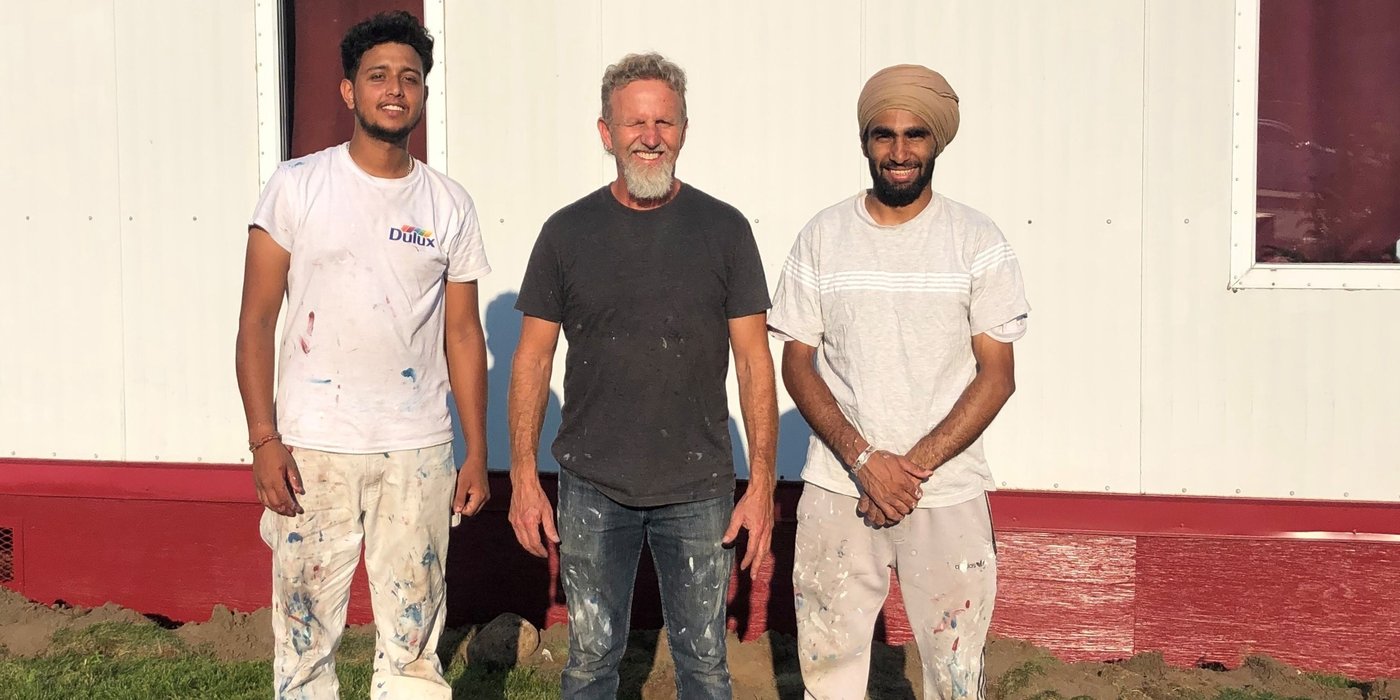
Attention then turned to bringing the trim paint colour into the 21st century. All the paint was donated, and then, to our surprise, two Sikh painters offered to donate their labour. (St. Joseph clearly touches the hearts of those who don’t even know him…yet.)
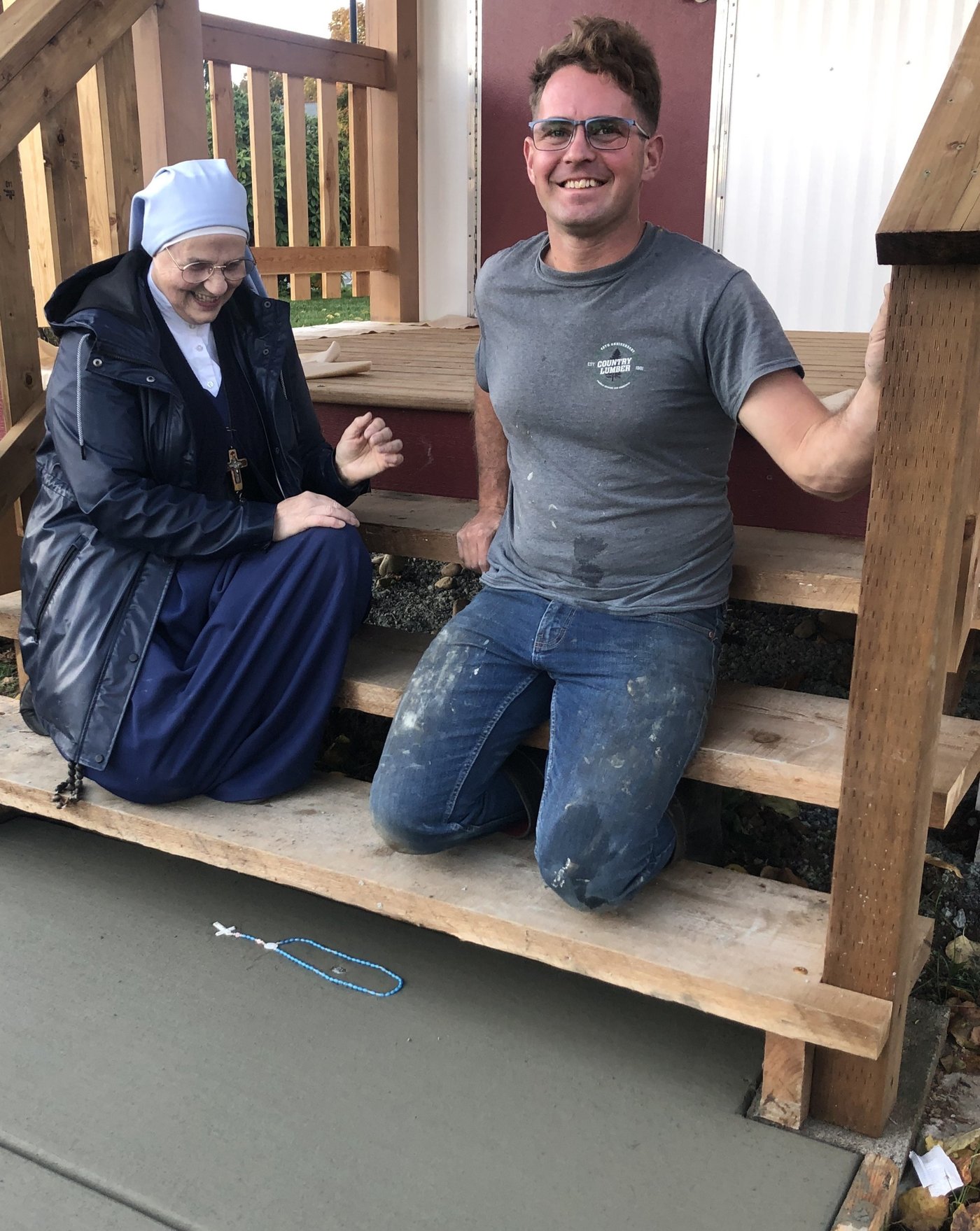
A rosary is imprinted in wet cement.
Work on the porch, railing, and roof took more time, depending on the availability of donations and volunteer hours. On many nights, Mark could be found working by the light of a headlamp or his truck’s headlights.
The Rosary Club boys became skilled in creating a beautiful, useful, and safe structure for love of God and neighbour. As I watched from a distance, my mind travelled back to that workshop where St. Joseph taught his trade to the young Jesus.
The project made use not only of new lumber, purchased at a discounted rate, but also reclaimed materials. Thick, century-old planks were repurposed as step treads, offering a quiet lesson for our youth that instead of taking part in today’s throwaway culture, it is still possible to choose to reuse, repair, and restore.
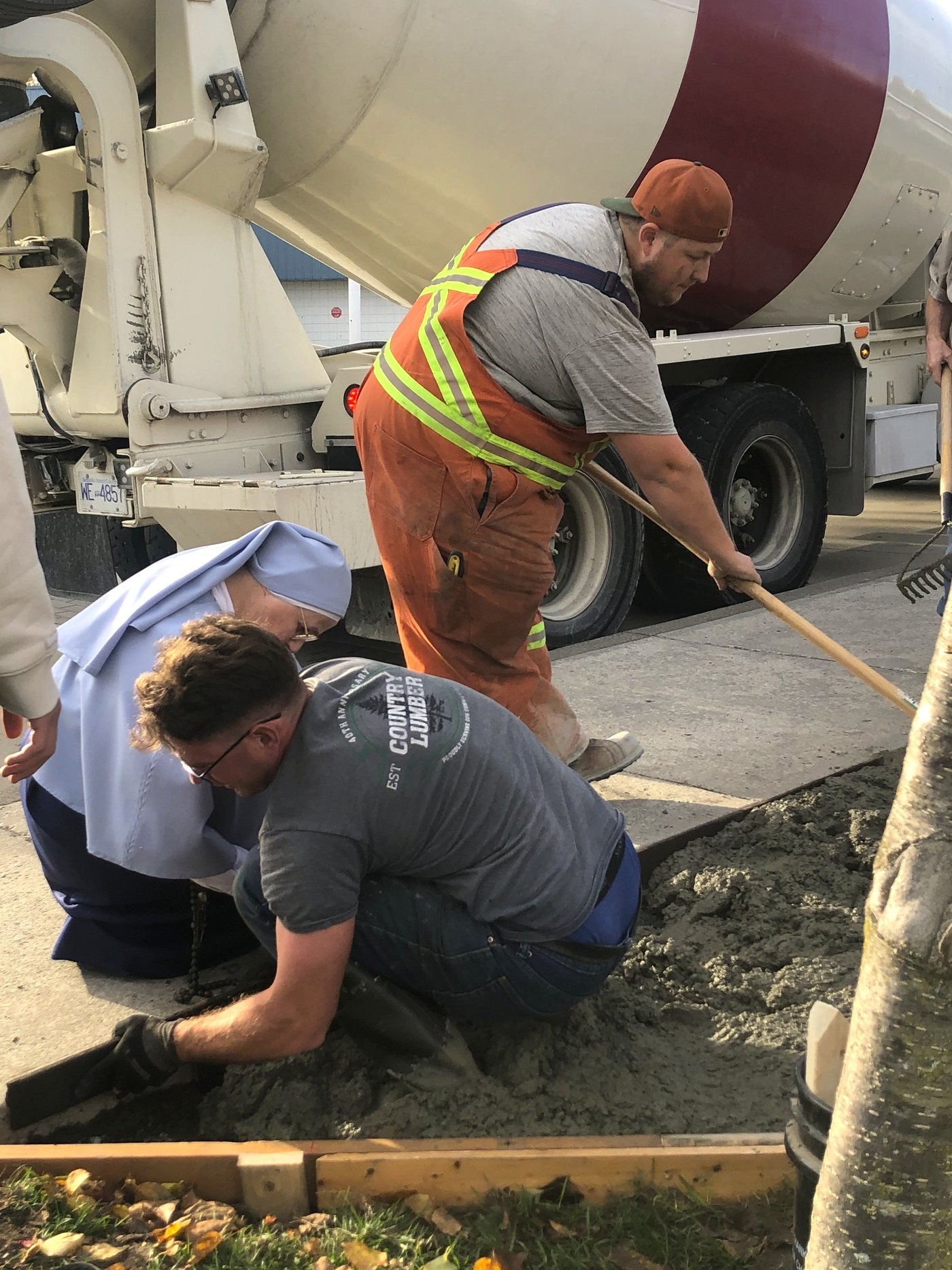
The variety of men and boys became a constant presence on the worksite, with the women and girls just as active, cleaning up scraps, raking, and helping with what the builders needed. For everyone involved, those days will become cherished memories, shared in years to come as lessons learned and experiences carried forward.
One highlight came on the day the concrete truck arrived to pour the sidewalk—the final major task of the renovation. While waiting for Mark to arrive from his job worksite, the concrete driver shared valuable knowledge about the making of a good and long-lasting sidewalk. We were all amazed at the complexity involved, and as one teen remarked, “I will never take sidewalks for granted again.” How thankful we were for this unplanned time and unexpected lesson, and he joined us in prayer as we gave thanks that everything had worked out so well.
As we stood admiring the finished project, a friend from nearby approached. After hearing about the day’s work, he asked, “Who was the tall man, all dressed in white, who was standing with you?”
We all looked at one another in surprise. “There was no one else here,” he was told. “No tall man was here.”
A brief silence followed before one of the teens spoke up: “It had to be St. Joseph.”
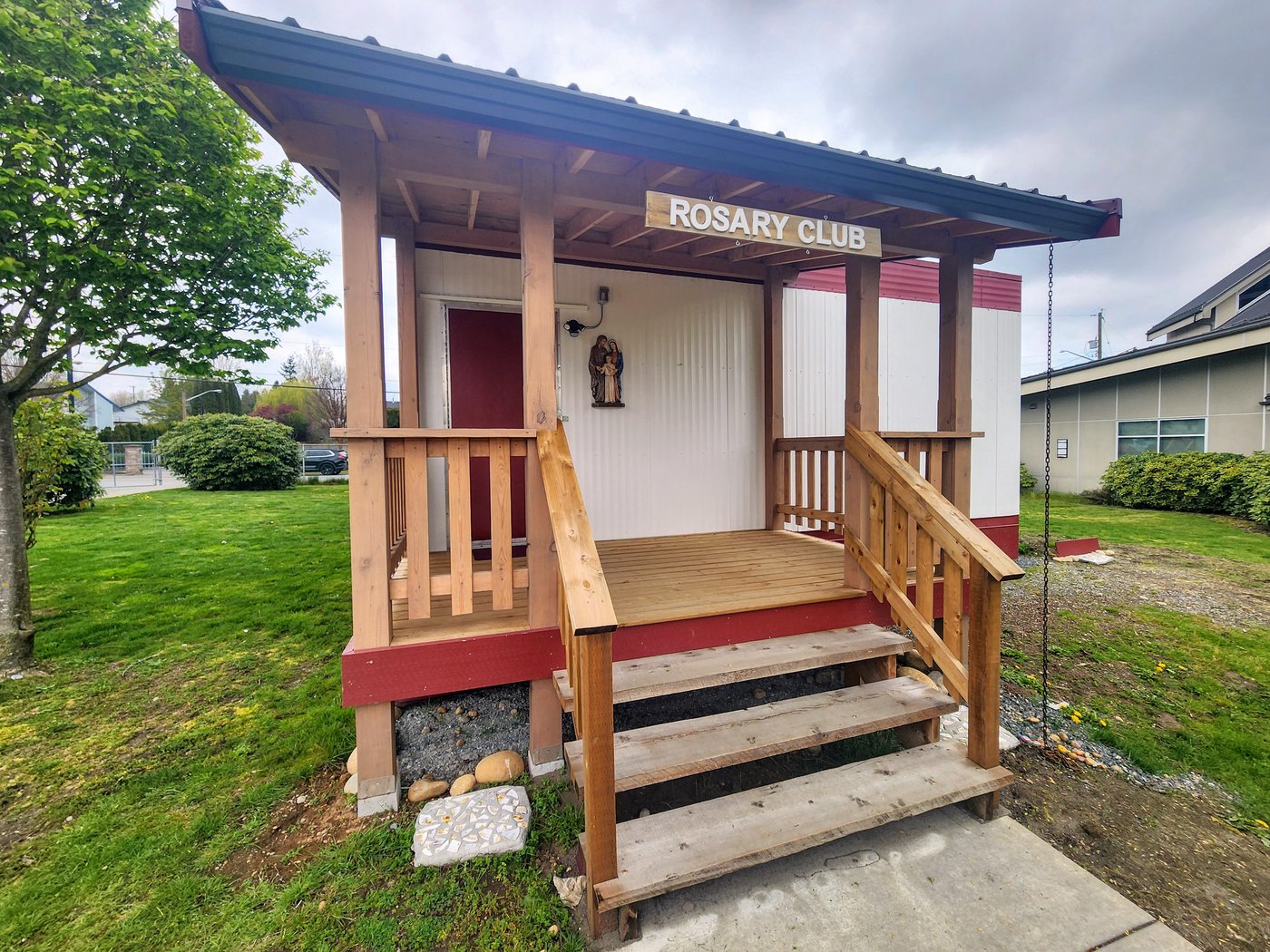
The tall man in white, clearly seen by this gentleman, was accepted by us all as the faithful intercessor who had accompanied the project through months of prayer, service, generosity, and hard work. Readers can decide for themselves, but the project was on holy ground, dedicated to God, and completed through unsolicited charity and service.
There were no injuries or mishaps. Strangers encountered along the way experienced the love of the Lord, and lasting friendships were formed. It was clear that St. Joseph had guided us all in our work.
And so, when you pass by the portable, please give glory to God and to St. Joseph…just as the Rosary Club children do.







