
Few mental traps seem as innocuous as the herding of our political instincts, energies, and ideas into the pens of the Left–Right distinction. Yet the very soft commonality of the terms makes them all the more obscuring – and damaging.
“Right” and “Left” are used as proxies for free markets versus socialist alternatives, conservative versus liberal, Tradition versus Progress, etc. We owe the idea to the seating arrangement of the National Assembly in Paris following the French Revolution, from which time it has become a placeholder for parties that favour either “order” or “movement.”
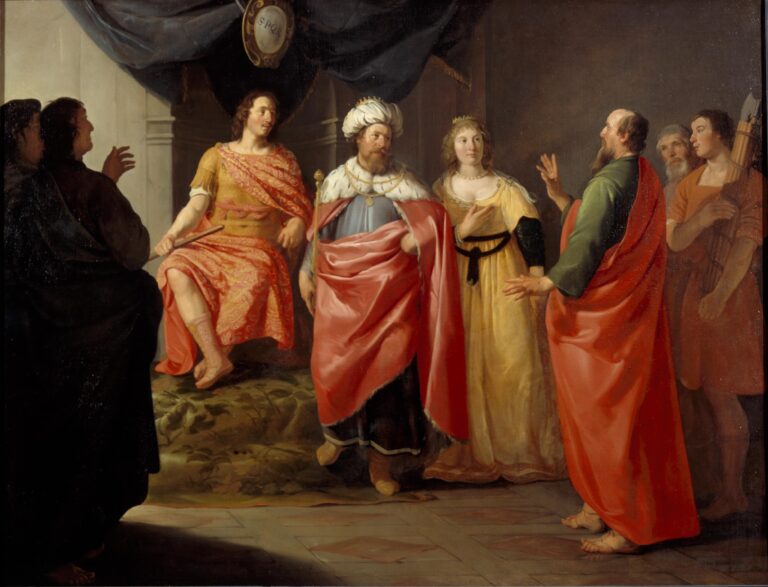
But surely, it might be argued, both order (as the perquisite of justice), and movement (as a living energy that can meet the changing demands of prudence) are essential? True enough, except that the divided French National Assembly post-1789, and the polarized politics it influenced, came after grievous loss of the socially and politically necessary counsel the Church can offer.
Fast forward to the available political options in 2025 Canada and it is increasingly obvious, both to intuition and on analysis, that the ideas and leadership needed to address what ails us are simply not on offer. Yet no one would have much trouble scoring the major parties from left to right. What true principles do they really advance?
If the left–right polarity was ever serviceable, it has surely outlived its day. Indeed it is in many ways intolerably costly.
Not only is the divide unhelpful for capturing real issues and options, it has a divisive logic that pits brother against brother. Indeed it often looks as if that is the point: left and right narratives protect unjust aggregations of power by concealing the actual interests and mechanics of the regimes we live under, and create antagonistic, adversarial dynamics that thwart natural and emerging fraternity.
In Canada, which suffers from weak fraternity and a poverty of positive common identity, this adversarial – and ultimately fratricidal – logic is especially costly.
Further, by emphasizing orientation by opposed camps, it has a tendency to suffocate the pursuit of grounded, durable, and possibly unifying principles.
What is the most promising vector of escape from the traps of a false L–R divide? Surprisingly to some, the answer increasingly looks like a reinvigoration of our social covenant in keeping with the principles of Catholic social teaching.
The basic principles of this approach include the conviction that all the private and worldly goods of a society cannot be rightly assessed without a strong awareness of the common good, and an orientation of that shared good to the highest and most spiritual Good. It also contains at least two axioms of justice:
Solidarity, which tells us that the welfare of each person in a political entity such as a nation, including the weakest and those who do not (yet) have a public voice, is inviolable and of great importance; and
Subsidiarity, which holds that individuals, families, small communities, and other intimate circles must remain empowered to determine everything within the sphere of their competence.
Those two principles might seem incompatible, but the stark reality is that societies such as Canada’s are often low in both solidarity and subsidiarity. Individuals, families, etc. are neither furnished with flourishing in basic material or spiritual goods by the common good, nor are they free to acquire and cultivate these goods on their own.
On the one hand, we are our brothers’ keeper, and their want of essential goods is a social and political problem. On the other hand, the prerogatives of smaller circles of intense attachment, from private property to family rearing, are sacrosanct. If that is so, why are politicians who meaningfully promote this balanced picture scarcely to be found?
The question brings us back to the hopefulness of our present moment. The answer is that new grassroots trends include hopeful shoots. Once-unchurched men and women, troubled by the turbulent darkness of the secular world, are swimming towards Catechism classes as the only “ship on the horizon.” Similarly, the Church itself, once casually dismissed as irrelevant, is increasingly identified as the only truly catholic – that is, broad, inclusive, and universal – hub of belonging that can unite mankind in a globalized, connected, yet wearied and precarious world.
The Church offers uniquely valuable, humane answers to social problems, and in some cases, the only answers. Given her divine mandate, this is to be expected, but there are many tokens evident to common sense, from the Church’s nonpareil network of social services worldwide, to the useful example of political pluralism found in medieval Catholic societies.
If the fulfillment of this promise seems remote, it is in truth certainly a large development only beginning truly to sprout up. But a growing number of people see a meaningful and substantial expression of political Catholicism as not only salubrious and necessary for all, but inevitable.
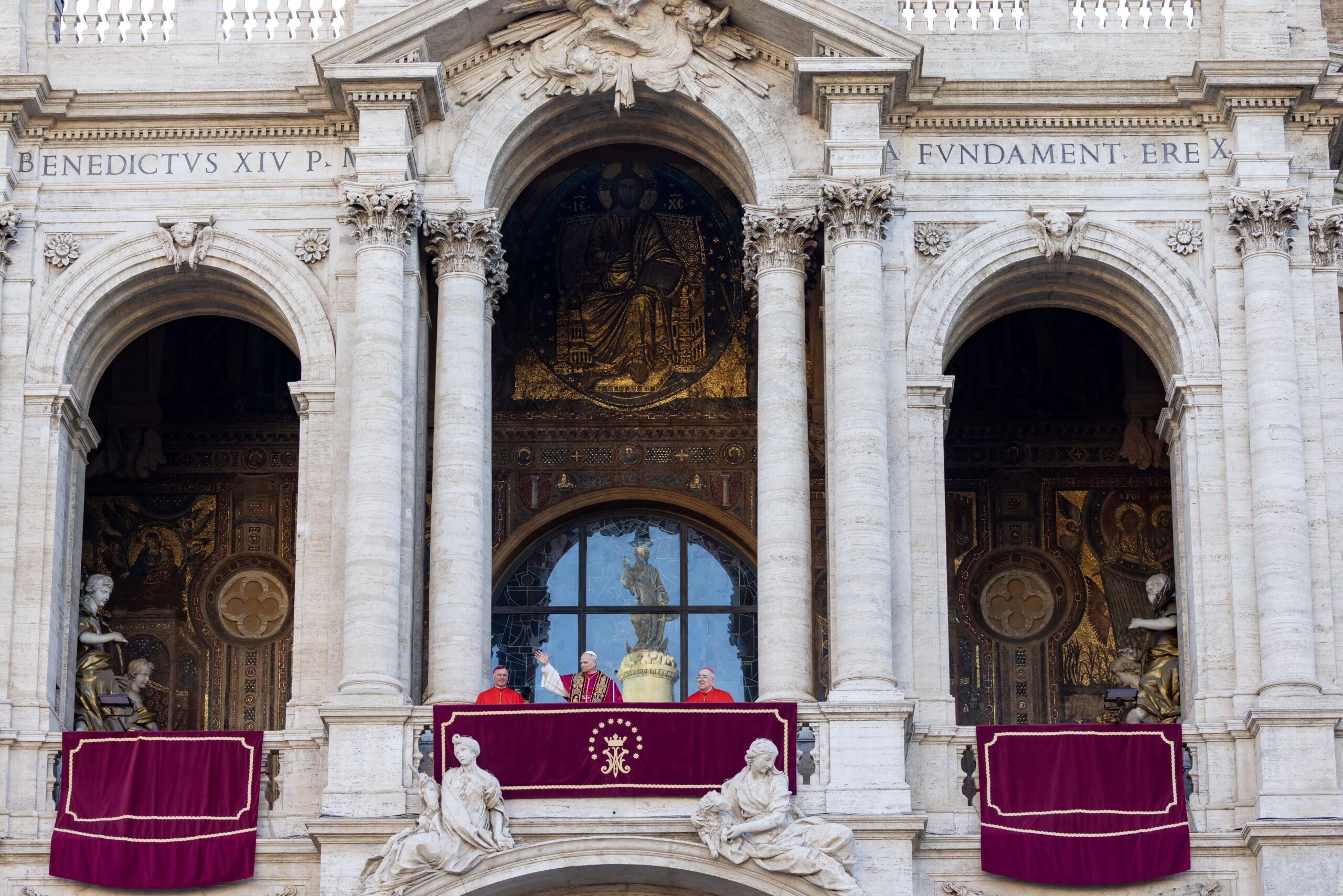
For evidence of the early fulfillment of this “remote” promise, consider the recent election of Pope Leo XIV.
His chosen name evokes both Leo the Great, who checked the advance and worldly power of the conqueror Attila, and Leo XIII, who more recently challenged the dominant ideologies of the 19th and 20th century with a moral appeal.
In the early days of his papacy, Leo XIV has been quietly drawing on the spirit and ideas of his forebears. In doing so, he has not only eluded easy classification along anything like a prevalent Left–Right spectrum: he has gently begun to open a space of equilibrium opposed to a spirit of polarization in general.
The applicability of this approach is unmistakably political, partly because it fits a truly prudential and fraternal exercise of power. But it is emphatically personal and familiar in its centre mass because it leans so heavily on patient attentiveness and irenic, but potently symbolic, gestures.
Consistently touted as an extremely good listener, the new Pope is clearly listening for something, part of which is the opportunity to respond in a way that first acknowledges, and then directs, the passions, concerns, and priorities in different voices.
We should be clear-eyed about this: power accrues, as observant men of prudence have noted, to those who can mediate equitably, compassionately, and with an appreciation for different axiomatic values.
This kind of power, however, depends upon taking very seriously what Pope Leo has asserted – that peace is more than just the momentary absence or checking of conflict. And that entering into real dialogue is not weakness, but a regimen of strength – indeed, mutual strengthening.
Men of significant temporal power seem to understand this. The Church excels at discerning how excellence in hard practical matters can be harnessed to eternal and irreducible truths and goods. And it is a singular voice when it comes to preserving a concern for the priceless, if vulnerable, value of the human in light of ideals like efficiency and scalable action.
The Pope has identified what is provisionally called artificial intelligence as a major challenge in this area, and the current vice-president of the United States, among others, has agreed these are areas where the Church is competent and needed as a player.
If you are doubtful that such comments mark the start of a significant political or social development, that is understandable. But do not be too surprised if fruitful co-operative initiatives slowly proliferate between some of the leading powers in human affairs and the Church, including the new Pope who helps to shepherd it. And some of these early fruits may be more significant in time than most of us would dare hope.
Your voice matters! Join the conversation by submitting a Letter to the Editor here.