
Chapter 6 of the Acts of the Apostles opens with a practical conflict: “At that time, as the number of disciples continued to grow, the Hellenists complained against the Hebrews because their widows were being neglected in the daily distribution” (Acts 6:1).
The Hellenists were Greek-speaking Jews who had lived outside Palestine, used the Greek Scriptures, and carried more Hellenistic culture; the Hebrews were Aramaic-speaking Jews from Palestine who used the Hebrew Bible.
Theophylact of Ohrid wrote, “The neglect of the widows did not arise from malice but from the carelessness of the people.” St. Bede notes that the Hebrews unintentionally favoured their own widows “inasmuch as they were more fully instructed,” creating an inequity that needed apostolic attention.
The Twelve respond by calling the whole community together. They say, “It is not right for us to neglect the word of God to serve at table. Brothers, select from among you seven reputable men, filled with the Spirit and wisdom, whom we shall appoint to this task, whereas we shall devote ourselves to prayer and to the ministry of the word.” (Acts 6:2–4) The apostles’ sequence—prayer first, then the ministry of the word, then the service of material goods—sets the inner logic of the Church’s life. Aratus (a sixth-century poet) points out that bodily nourishment without spiritual nourishment leaves the soul hungry.
Chrysostom explains that the apostles then leave the selection to the people, “in order that it should not seem that they favour some in preference to others.” Chrysostom is also careful to distinguish human action (election) from divine power (ordination): “They set them apart from the multitude. The people themselves drew them to the ordination.”
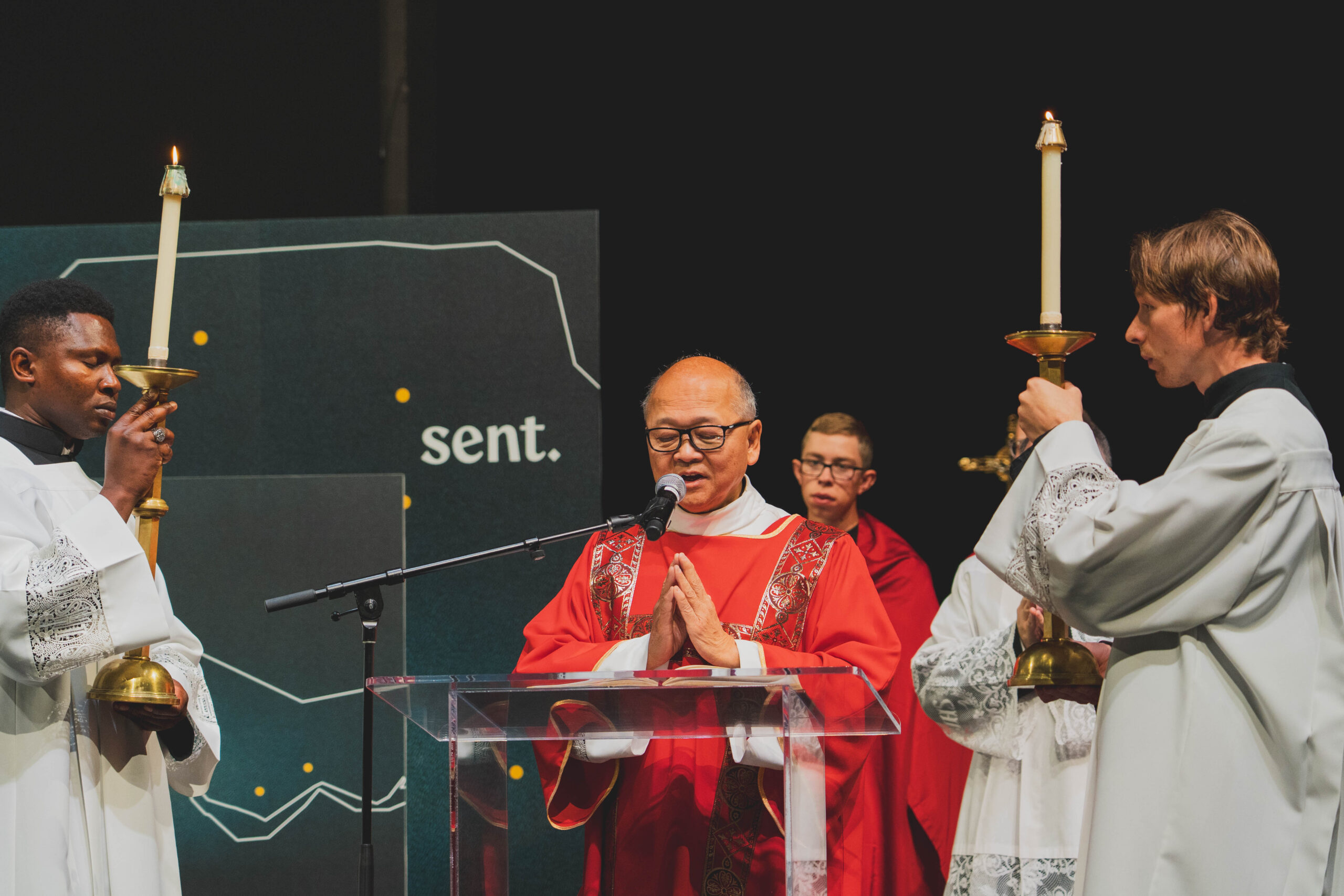
The Church has long seen this moment as the origin of the diaconal order. The Second Vatican Council, in Lumen Gentium 29, describes the diaconate as “at a lower level of the hierarchy,” with deacons receiving the imposition of hands “not unto the priesthood, but unto the ministry,” and being dedicated to the people of God “in conjunction with the bishop and his body of priests, in the service of the liturgy, of the Gospel, and of works of charity.”
In the rite of ordination, the Church exhorts the deacon: “Believe what you read, teach what you believe, and practice what you teach.” This threefold mandate echoes Scripture itself—faith born of hearing (Rom 10:17), fidelity in preaching (2 Tim 4:2), and integrity of life (Jas 1:22). As St. Gregory the Great reminds us, the preacher must first drink deeply of the Word before offering it to others.
“The word of God continued to spread, and the number of the disciples in Jerusalem increased greatly; even a large group of priests were becoming obedient to the faith.” (Acts 6:7) Chrysostom marvels, “In Jerusalem the number increased. It is wonderful that where Christ was slain, there the preaching increased!”
St. Stephen now emerges as the first non-apostolic major witness in Acts. Luke parallels Stephen with Jesus: both are filled with wisdom and power, both work wonders, both face false witnesses who accuse them of threatening the Temple and the Law, and both display a supernatural radiance at their trials. The reader is invited to see the disciples’ lives as a continuation of Christ’s own witness.
Before Stephen even speaks, “all those who sat in the Sanhedrin looked intently at him and saw that his face was like the face of an angel” (Acts 6:15). The Navarre commentary recalls that the face of Moses, when he came down from Sinai, reflected the glory of God and made the people afraid. Father William Kurz notes that this moment is Christological: “Before Stephen can even begin his defence against their false charges, God is silently testifying to him by manifesting heavenly glory on his face.”
Chrysostom comments: “‘They saw,’ it says, ‘that his face was like the face of an angel.’ This was his grace. This was the glory of Moses. Gracious did God make him, now that he was about to speak, so that immediately by his very look he might strike them with amazement. For indeed there are faces full of spiritual grace, lovely to behold for those who desire them and commanding respect from enemies who hate them.”
Your voice matters! Join the conversation by submitting a Letter to the Editor here.
相信、教導、實踐:執事的召叫
宗徒大事錄第6章以一個實際的衝突作為開端:「那時候,門徒們漸漸增多,希臘化的猶太人,對希伯來人發出了怨言,因為他們在日常的供應品上,疏忽了他們的寡婦。」(宗 6:1)所謂「希臘化的猶太人」,是指那些在巴勒斯坦以外生活、說希臘語、使用希臘文聖經、並帶有更多希臘文化背景的猶太人;而「希伯來人」則是指在巴勒斯坦生活、說亞拉美語、使用希伯來聖經的猶太人。
奧赫里德的特敖斐拉托(Theophylact of Ohrid)寫道:「寡婦被忽略並非出於惡意,而是因為人們的疏忽。」聖伯達(St. Bede)也指出,希伯來人無意間偏袒了自己的寡婦,「因為她們受過較充分的教導」,這造成了一種需要宗徒介入的失衡。
於是十二宗徒召集眾門徒說:「讓我們放棄天主的聖言,而操管飲食,實在不相宜。所以,弟兄們!當從你們中檢定七位有好聲望,且充滿聖神和智慧的人,派他們管這要務。至於我們,我們要專務祈禱,並為真道服役。」(宗 6:2–4)宗徒所呈現的次序—先祈禱、再宣講聖言、然後服務物質需要—揭示了教會生活的內在邏輯。六世紀詩人阿拉托(Aratus)指出:若只有身體的食糧而沒有靈性的滋養,靈魂仍然會飢餓。
金口若望(Chrysostom)解釋宗徒為何把揀選的工作交給團體:「為免使人覺得他們偏袒某些人。」他也謹慎區分人的行動(選舉)與天主的能力(祝聖):「他們把這些人從群眾中分別出來;是群眾自己把他們帶給他們覆手。」
教會長久以來視這一刻為執事聖職的起源。第二屆梵蒂岡大公會議在「教會憲章」第 29 條中描述執事職為「在教會聖統的下一級」,執事藉覆手禮「不是為作司祭,而是為服務」,在主教及其司祭團的共融之下,為天主的子民作禮儀、講道及愛德的服務工作。
在執事祝聖禮中,教會如此勸勉執事:「你要相信你所誦讀的,教導你所相信的,實踐你所教導的。」這三重使命呼應了聖經本身—信仰是出於報道(羅 10:17)、務要宣講真道(弟後 4:2)、按這聖言來實行(雅 1:22)。如聖額我略一世提醒我們:宣講者必須先深深飲於天主聖言,然後才能將之分施給他人。
「天主的道漸漸發揚,門徒的數目在耶路撒冷大為增加,司祭中也有許多人,服從了信仰。」(宗 6:7)金口若望驚嘆道:「在耶路撒冷,信徒的數目增加了。奇妙的是:就在基督被殺害的地方,宣講反而更加興盛!」
聖斯德望此時成為宗徒大事錄中第一位非宗徒的重大見證人。路加把斯德望與耶穌作平行對照:兩者都充滿智慧和能力,都行奇事,都面對假證人指控他們威脅聖殿與法律,並且在受審時都顯出超自然的光輝。讀者被邀請看見:門徒的生命正延續著基督本身的見證。
在斯德望尚未開口之前,「所有坐在公議會的人都注目看他,見他的面容好像天使的面容。」(宗 6:15)納瓦爾聖經註釋(Navarre Commentary)提醒我們:梅瑟從西乃山下來時,他的面容反映天主的光榮,使百姓感到畏懼。威廉克爾茲神父(Fr. William Kurz)指出,這一刻具有基督論意義:「在斯德望尚未開始為自己辯護之前,天主已默默為他作證,讓天上的光榮在他的面容上彰顯。」
金口若望評論說:「經上說:『見他的面容好像天使的面容。』這是他的恩寵,這是梅瑟的光榮。天主在他即將發言之前,使他的面容充滿恩寵,好讓他僅憑外貌就能令人驚異。的確,有些面容充滿屬靈的恩寵,對渴望天主的人來說令人喜悅,對仇敵則令人敬畏。」
Your voice matters! Join the conversation by submitting a Letter to the Editor here.