

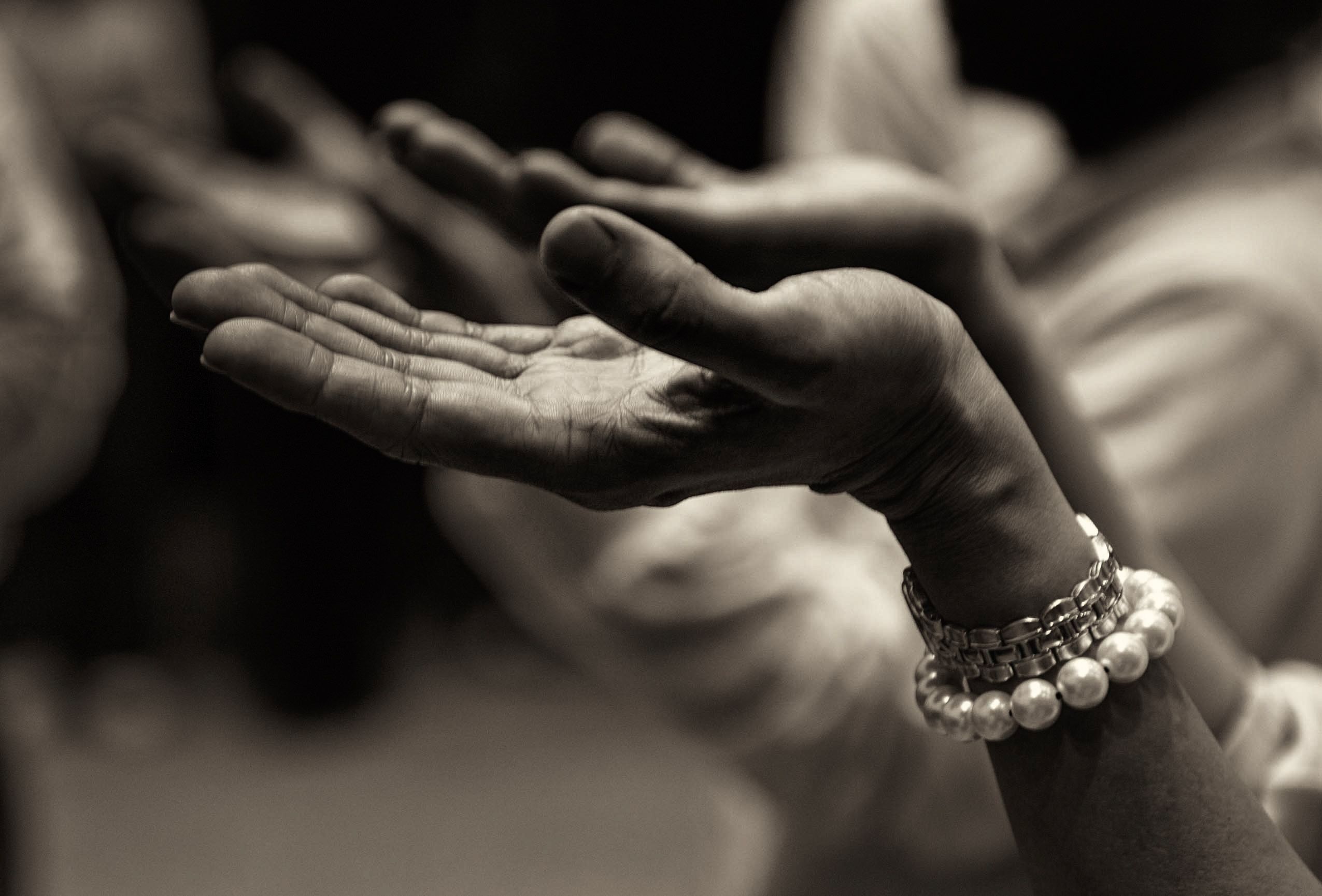

Maybe your Lent has gotten away from you or maybe like so many of us, you’ve given up on Lent because you weren’t doing it perfectly. If there was ever a time to risk doing something badly for the sheer experience of it, now is the time: Lent.
The desert of Lent, if given permission to be a desert, creates a gaping space and a longing for something to fill the silence.
Silence begs for prayer.
Prayer in the desert takes an extra dose of confidence and, by extension, faith. It is so tempting to complicate prayer; but it is simply this: speaking into the silence with confidence.
Father Bob Sharkey, a deceased priest of the Madonna House Apostolate, a Catholic community of lay men and women and priests, once said that the most important posture to assume in prayer is that of confidence.
“Maybe you could spend more time on [your prayer]. Maybe there’s room for improvement. Maybe you don’t pray as often as you should. But basically, when you pray, your prayer is prayer,”
Father Sharkey writes.
It is blissfully simple.
In a time where there are how-to videos on how to “correctly” cut a butternut squash, it is easy to see why not many of us have confidence in spades. Ours is an unsure, tentative generation. We are paralyzed by the likelihood of messing things up. So, the logical conclusion is “why bother starting at all?”
For the Christian, these culture-wide perfectionistic tendencies create a massive block to vulnerability with God in prayer. It could be that the second we start to pray, we think we are already doing it wrong. Or when we feel certain emotions, perhaps we consider ourselves to be barred from addressing God. As if we have to be put together and freshly showered to encounter the one who created us.
Aside from being a tactic of the enemy, perfectionism in prayer also creates an aversion toward vulnerability which is indispensable to the Christian experience. Vulnerability is the space where we meet others and it is the space where loneliness goes to die. St. Teresa of Calcutta said that loneliness is the most widespread and perhaps the most crippling disease of our time.
The first step to reclaiming confidence in prayer is to no longer allow yourself to utter half-prayers or trail-off sentences in your heart. Force a thought to its end, and confidently offer it to God as an offering of truth from the altar of your life. It is sacred to God because it is your prayer and it is real. This “mindfulness” in addressing God will increase the authenticity of your prayers (and also every realm of your life).
In Ignatian spirituality, every movement of the heart has significance. We need not always give credence or power to each and every thought necessarily, but in learning to “hear” and register our thought patterns and our deep-seated emotions, we can learn to stand in them and offer them to God. In so doing, we “live and move and have our being” in God. Only within this intimate communion of prayer will we hear God say “this is the way, walk in it”
(Is 30).
“Your prayer is acceptable because it is prayer,” Father Sharkey writes. “It seems a simple thing or even a stupid thing to say, but it was a kind of minor revelation to me to even recognize that, to feel that truth. It doesn’t need any justification other than itself. It’s good and God hears it.”







