


St. Boniface, known as the Apostle of the Germans, was born in Wessex in the south of Great Britain in about 675 and was baptized with the name of Winfrid. He was educated by the Benedictines at Exeter and then at Nursling. He entered the Benedictines at Nursling and was ordained a priest at the age of about 30.
Feeling the call to evangelize the non-Christians on the continent, Winfrid presented himself to Pope Gregory II, who on May 15, 719, commissioned him to evangelize the pagan tribes of Germany and changed his name from Winfrid to Boniface.
In 722, Boniface was consecrated a bishop in Rome and given jurisdiction over all of Germany. Pope Benedict XVI described the episcopal ministry of Boniface: “In addition to this work of evangelization and organization of the Church through the founding of dioceses and the celebration of Synods, this great Bishop did not omit to encourage the foundation of various male and female monasteries so that they would become like beacons, so as to radiate human and Christian culture and the faith in the territory. He summoned monks and nuns from the Benedictine monastic communities in his homeland who gave him a most effective and invaluable help in proclaiming the Gospel and in disseminating the humanities and the arts among the population. Indeed, he rightly considered that work for the Gospel must also be work for a true human culture.”
Pope Benedict XV wrote, “His zeal kept him from laziness and prevented him from even thinking about rest or staying in one place as in a peaceful harbour. It spurred him to undertake difficulties and the most humble work solely to obtain or to increase the glory of God and the salvation of souls.”
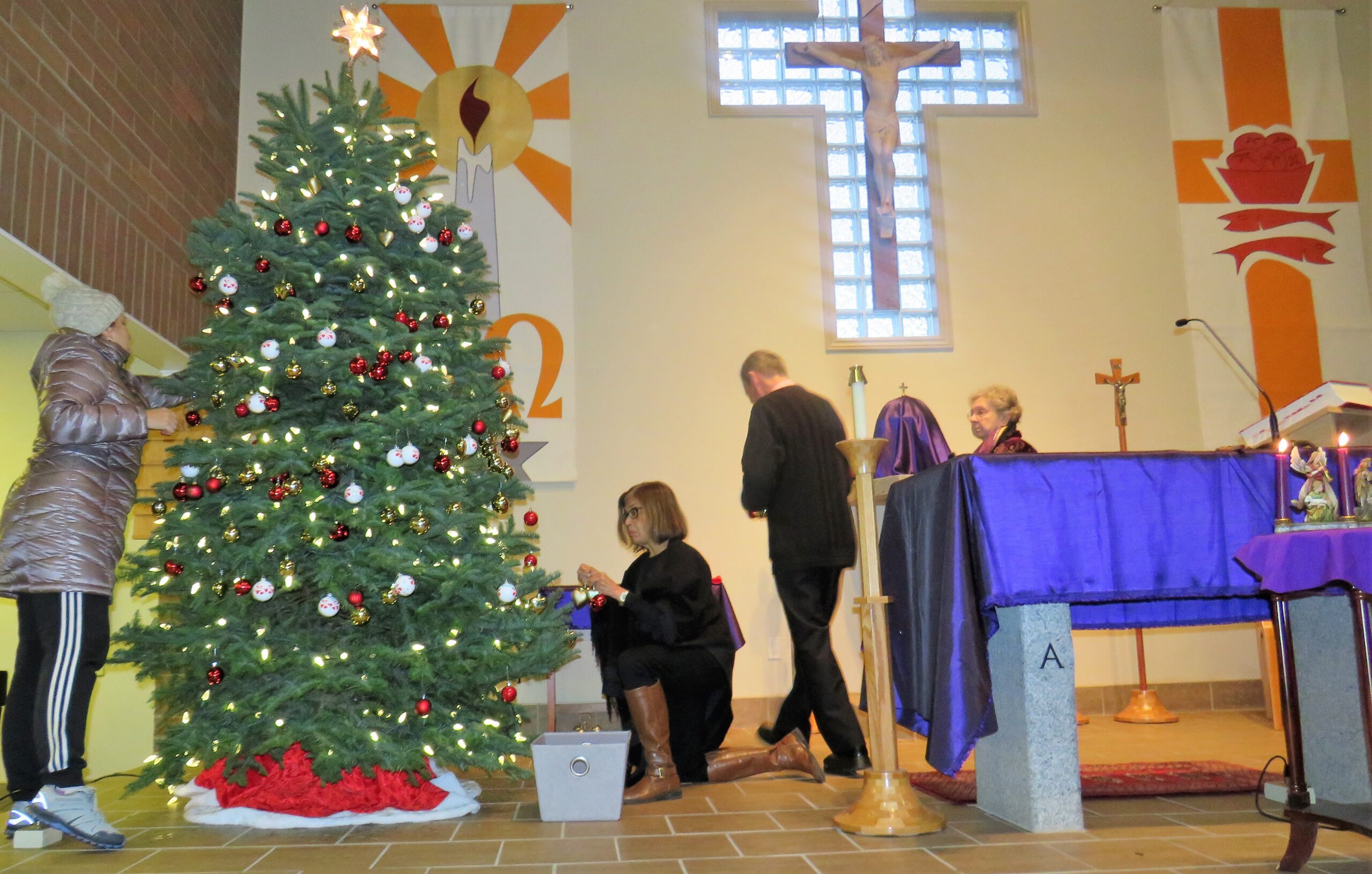
The custom of the Christmas tree began with Boniface. The inhabitants of the German village of Geismar gathered around a huge old oak tree (known as the “Thunder Oak”) each winter for human sacrifice to a pagan god. One Christmas Eve, Boniface went there and interrupted the sacrifice. He grabbed an axe and chopped down the Thunder Oak. The people were astounded. Boniface pointed to a little fir tree that was behind the fallen oak tree and said, “This little tree, a young child of the forest, shall be your holy tree tonight. It is the wood of peace … It is the sign of an endless life, for its leaves are ever green. See how it points upward to heaven. Let this be called the tree of the Christ-child; gather about it, not in the wild wood, but in your own homes; there it will shelter no deeds of blood, but loving gifts and rites of kindness.”
When he was almost 80, Boniface began a new evangelizing mission in Frisia (present day Holland). He wrote to Bishop Lull: “I wish to bring to a conclusion the purpose of this journey; in no way can I renounce my desire to set out. The day of my end is near and the time of my death is approaching; having shed my mortal body, I shall rise to the eternal reward. May you, my dear son, ceaselessly call the people from the maze of error, complete the building of the Basilica of Fulda that has already been begun, and in it lay my body, worn out by the long years of life”
On June 5, 754, while Boniface was preparing to administer confirmation at Dokkum, the town was attacked by a band of pagans. He forbade his followers from fighting saying, “cease, my sons, from fighting, give up warfare, for the witness of Scripture recommends that we do not give an eye for an eye but rather good for evil. Here is the long awaited day, the time of our end has now come; courage in the Lord!” Boniface and his attendants were martyred.
Click here to send us a letter to the editor about this or any other article.
『德國人的使徒』
聖波尼法爵被稱為『德國人的使徒』,他在675年生於威塞克斯,他以溫弗里德名它受洗。他在埃克塞特然後在努斯林的本篤會接受教育。約30歲時在努斯林的本篤會晉鐸。
感受到向歐洲大陸的非基督徒福傳的呼叫,溫弗里德向教宗額我略二世表達了自己。在719年5月15日額我略二委托他向德國多神教的部落傳福音,並將溫弗里德名字改為波尼法爵。
在722年,波尼法爵在被祝聖為主教,並被賦予對整個德國的管轄權。教宗本篤十六世描述了波尼法爵的主教事工:『除了通過建立教區和舉行教務會議來傳福音和組織教會的工作外,這位偉大的主教也沒有遺漏鼓勵建立各種男女修道院,使它們在這領域中像燈塔一樣,輻射人類和基督文化以及信仰。他召集了家鄉本篤會修道院社區的修士和修女,在宣講福音中,和在民眾中傳播人道中,他們給了他最有效和最寶貴的幫助。事實上,他真確地認為,為福音而工作也必須是為真正的人類文化而工作。』教宗本篤十六世寫道:『他的熱情使他不至於懶惰,甚至不讓他考慮休息或呆在一個地方,就像在一個寧靜的港口一樣。這促使他承擔困難和最卑微的工作,只是為了獲得或增加天主的光榮和靈魂的救贖。』
聖誕樹的傳統由波尼法爵開始。蓋斯馬村的居民每年冬天都會聚集在一棵巨大的老橡樹(被稱為“雷霆橡樹”)周圍,向異教的神作活人犧牲的獻祭。在一個聖誕前夕,波尼法爵前往制止這犧牲。他拿起斧頭砍下了雷霆橡樹。人們震驚了。波尼法爵指著倒下的橡樹後面的一棵小樅樹說:『這棵小樹,森林的幼童,今晚將成為你的聖樹。它是平安的樹木…它是無盡生命的標誌,因為它的葉子是常青的。看看它怎樣指向天堂。它被稱為基督—小孩的樹;不要在野外,但在你自己家內收藏它;在那裡,它不會沾染任何血的行為,而是愛的禮物和仁慈的禮儀。』
當他快80歲時,波尼法爵在弗里西亞(今荷蘭)開始了新的傳福音使命。他給盧爾主教寫道:『我想結束這次旅行的目的。我絕不能放棄出發的願望。.我結束的日子近了,我死亡的時間快到了;脫下我必死的身體,我將得到永恆的獎賞。願你,我親愛的兒子,不停地從錯誤的迷宮中召喚人們,完成已經開始的富爾達大教堂的建設,並將我被長期生命損害的身體安放其間。』
754年6月5日,當波尼法爵斯準備在多庫姆施放堅振時,該鎮遭到一群異教徒的襲擊。他禁止他的追隨者打仗,說:『我的兒子們,停止打仗,放棄爭戰,因為聖經的見證建議我們不要以眼還眼,而是以善報惡。這是期待已久的一天,我們結束的時候已經到來;主內的勇氣!』波尼法爵和他的侍從都殉難了。
Click here to send us a letter to the editor about this or any other article.







