
A Heart That Held the Whole Church
By Whitehorse Bishop Héctor Vila
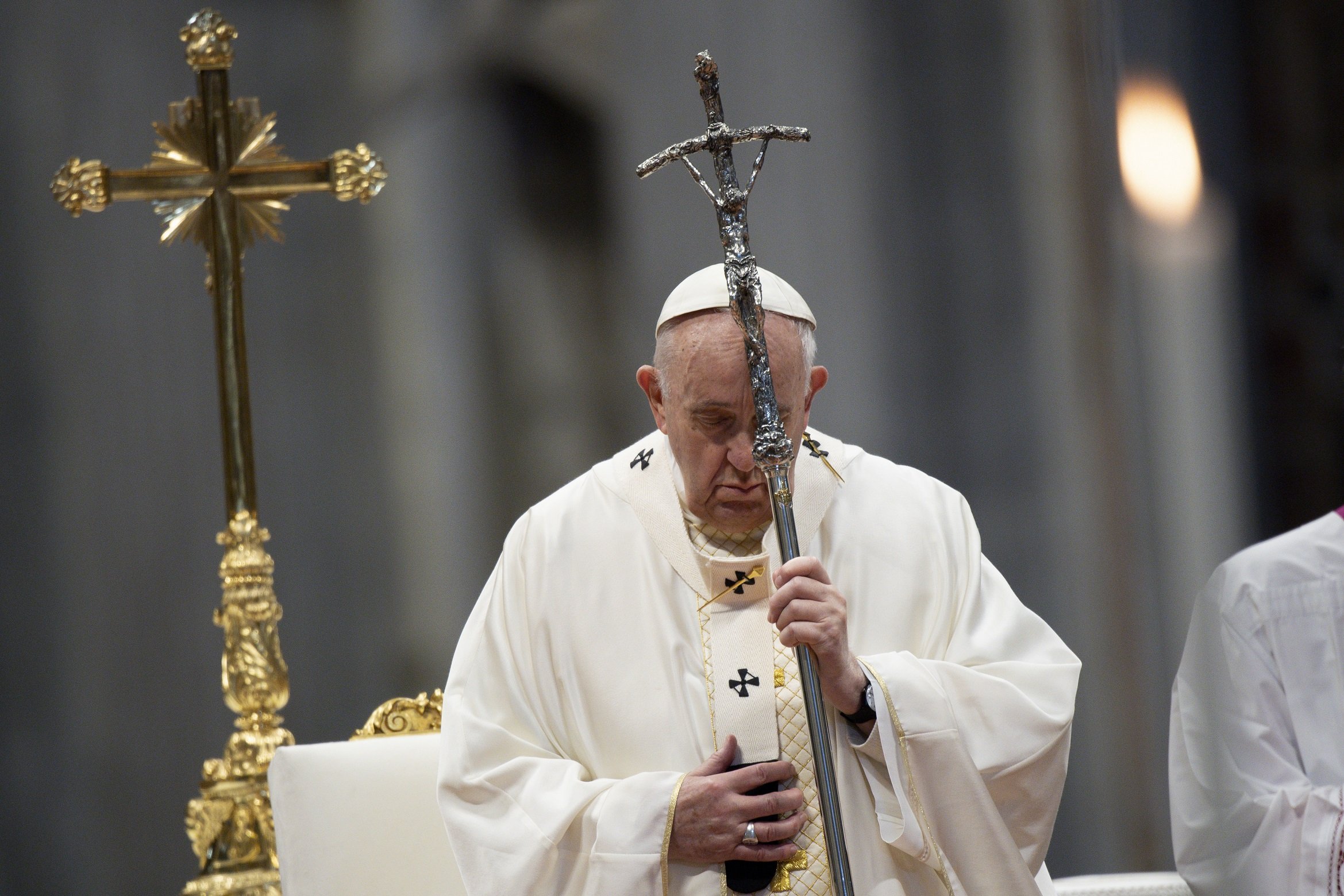
Every time I had the privilege of encountering the Holy Father Pope Francis, even if just for a brief moment, I left with the unmistakable sense that he carried the entire Church, including the Diocese of Whitehorse, in his heart and in his hands. It was visible in his eyes, tangible in his presence. He bore the joys and wounds of the Church like a true shepherd, always attentive to the needs of even the smallest in his flock. His words always radiated encouragement, compassion, and light.
Through his witness, you felt the weight of the world not as a burden, but as a calling—a calling to care, to speak the truth with love, and to offer the consolation of Christ at every opportunity. His ministry was a heartbeat in rhythm with the Church’s deepest yearnings.
A memorable occasion that resounded in the Diocese of Whitehorse was Pope Francis’ visit to Canada in July 2022. His response to the complex legacy of residential schools was not one of defensiveness or direction, but of deep humility. He did not seek to control the narrative or dictate the healing; instead, he invited us to seek communion, to truly listen to one another, to live and be together, and to walk side by side on the path of reconciliation.
In a world often driven by urgency, instantaneity, and command, Pope Francis stood as an example of perseverance, gentleness, and patience. He taught us never to flee from the battle, never to lose heart, but to keep our gaze fixed on the unshakable hope that is Christ’s love. He breathed relentlessness in love and embodied the Gospel message with his life: that even in our deepest suffering, hope does not disappoint.
Pope Francis’ love for the poor, his devotion to the vulnerable, and his fearless commitment to our common home and the margins of society were not occasional acts—they were the very rhythm of his life. He went to the peripheries out of love. He evangelized tirelessly with both tenderness and strength, like a father whose heart was never far from his children.
He carried a staff of humility that could break through even the hardest walls, and a witness of Christ’s love that transcended boundaries of culture, language, and difference. His missionary spirit was like “a rushing mighty wind which filled the entire house,” urging us forward to go beyond what is comfortable, to enlarge the space of our tent, to reach out where love is most needed, and to proclaim Christ not only in words, but in the radical, transforming power of presence.
I must share that I remain deeply touched and grateful for Pope Francis’ expressed joy at the occasion of the Diocese of Whitehorse’s 50th anniversary in 2017. I treasure his warm welcome at Casa Santa Marta and the apostolic blessing he generously bestowed upon all the faithful of the Diocese of Whitehorse, as he also blessed an image of our protectress, Our Lady of Guadalupe, for this occasion.
Painting with broad strokes
By Eparchy of New Westminster Bishop Michael Kwiatkowski
When Pope Francis was elected in 2013, the Church and the world leaned toward a deep hope that he would bring leadership and faith and, yes, holiness to a people that very much wanted and needed these things. I remember thinking that this Pope from Argentina would offer at least a stronger and louder voice for the poor and disenfranchised. He did do that throughout his pontificate.
He often had people wondering where he was going on an issue. He would pose, not necessarily contradictory positions, but would make comments that seemed to paint with broad strokes, leaving others to discern the details and the borderlines. He spoke to Argentinian youth at the massive youth rally in Brazil, telling them to “make a mess.” And, it seems to me that he liked doing that himself. He might say or do something that would create a controversy—make a mess—and then we would see where and how far it led the Church universally or within a particular society. He got the Church talking and reassessing whether we are doing what we should be doing at this moment in history. He challenged us not to become comfortably complacent with the truth, but to be sure that we are sharing that truth with all people regardless of the consequences.
One of Pope Francis’ philosophies for the modern Church that struck a chord with me is one that he expressed in an interview in his first year, when he said, “I see the Church as a field hospital after battle.” There is so much going on in the world, and people approach the Church and its pastors seeking help and healing and a chance to live. I realize that not every situation can be “fixed” immediately or even easily. However, I agree with the attitude that we should do what we can at the moment with what we have from the vast wealth of wisdom and grace that the Church has to offer.
Pope Francis created 113 new cardinals. That is an estimated 80 per cent of the cardinals who will choose his successor. He also approved or appointed many bishops throughout the world. This includes some 38 per cent of the bishops of the Ukrainian Catholic Church, of which I am a part. In fact, I am one of “his” bishops, appointed about a year and a half ago to the New Westminster Eparchy here in British Columbia. This involves a good number of challenges—not all foreseen. But I am grateful to him for the appointment, as it gives me new opportunities to do some good by the grace of God. I will keep Pope Francis in my prayer, and ask him to do the same for me and the people he entrusted to my care.
Inspired by a shepherd
By Victoria Bishop Gary Gordon
Shortly after our Holy Father, Pope Francis, announced the Year of Mercy at the beginning of his pontificate, I was transferred to Victoria. Over the years, there have been many moments when Pope Francis has deeply moved and inspired me, but three in particular stand out.
The first was during the Easter season of his first year as pope. His celebration of the Mass of the Lord’s Supper took place in a prison, where he washed the feet of inmates. It was a powerful, humble gesture—one that sent a clear message about the importance of caring for those on the margins and in the peripheries.
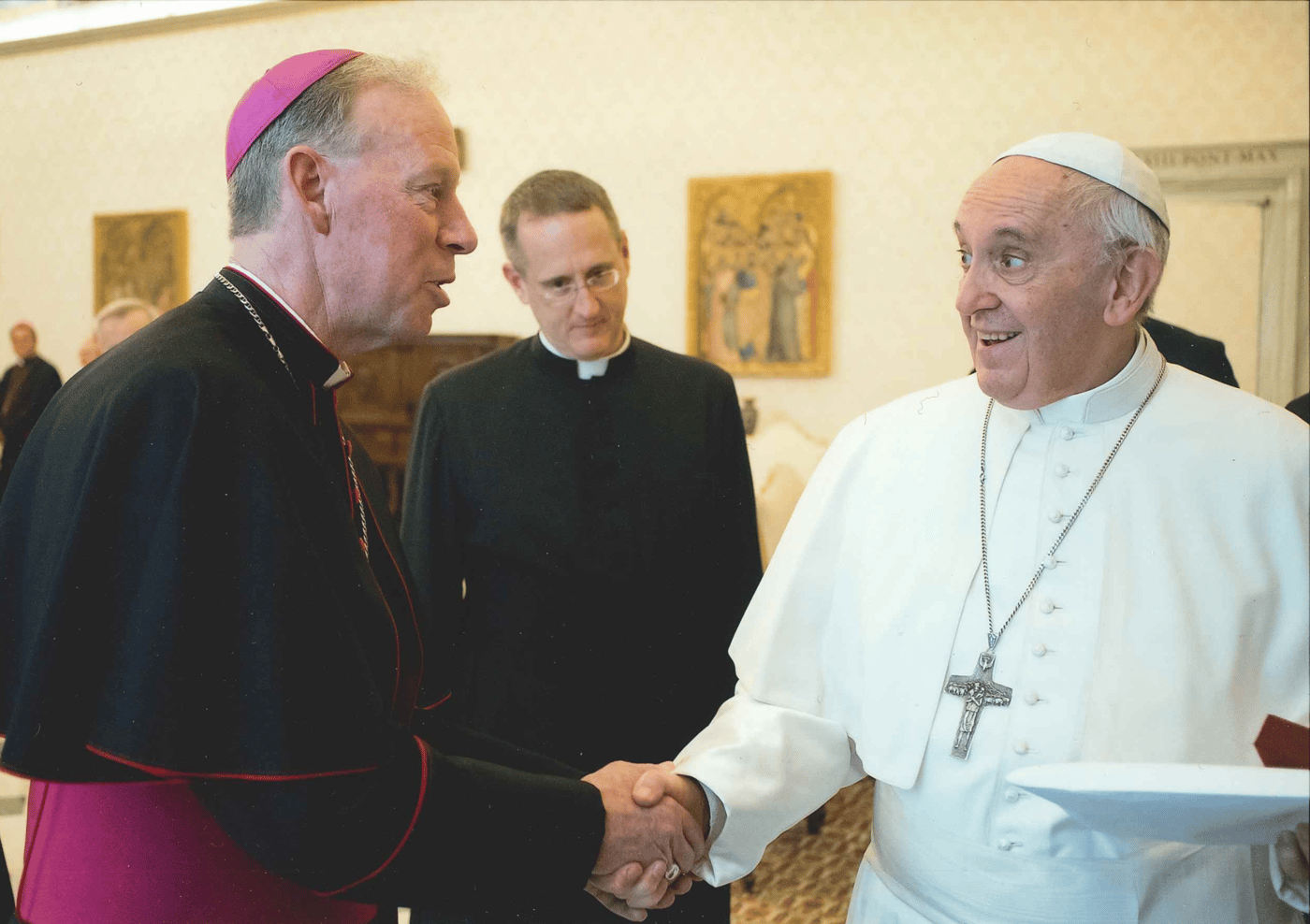
The second moment came during an ad limina visit in the fall of 2014. We Western bishops sat in a circle with the Holy Father—perhaps our first experience of a listening circle, a format that would later become central to the synodal journey. Pope Francis spoke with us openly, and we with him, in a spirit of deep honesty and communion. He spent much of that conversation speaking about the plight of refugees during a particularly challenging time for the world—a challenge that continues to this day. He gently but firmly asked, “What can you do about this? What are you going to do?” His concern for the displaced and vulnerable was another beautiful indication of where his heart was.
The third moment came during the Pope’s penitential pilgrimage, aimed at advancing reconciliation with Indigenous people in Canada. At Lac Ste. Anne, he was wheeled into the lake in his chair to offer a blessing—perhaps even seeking healing through those miraculous waters. It was a deeply moving moment for me because it touched a corner of my own family history. My own mother, as a child, had made pilgrimage journeys to Lac Ste. Anne many times—so I really resonated with that moment.
In so many ways, I have learned from our Holy Father’s example. He has called our Church to be open and inclusive to all, and that deeply affirms my own ministry—which has been to avoid relying solely on the ‘tried and true’ and instead move more fully and deeply into the peripheries, both geographical and existential. And here is the Pope, at the highest level, making the same choices I’ve tried to make throughout my life.
I truly see the Church flourish when it is absolutely committed—in all its pastoral work and ministry—to the poor, to the vulnerable, and to the greatest needs of people, whether they are Catholic or not.
Our Holy Father’s witness demonstrated to me the Jesus who died on the cross for the whole world—and for that, I am deeply grateful.
A Church that is close to her people
By Kamloops Bishop Joseph Phuong Nguyen
With a heart overflowing with gratitude and humility, I reflect on the profound moment when our Holy Father, Pope Francis, entrusted me with the sacred responsibility of shepherding the Diocese of Kamloops. This is more than an appointment—it is a sacred vocation: to journey with the faithful, to listen with compassion, and to lead with the heart of Christ.
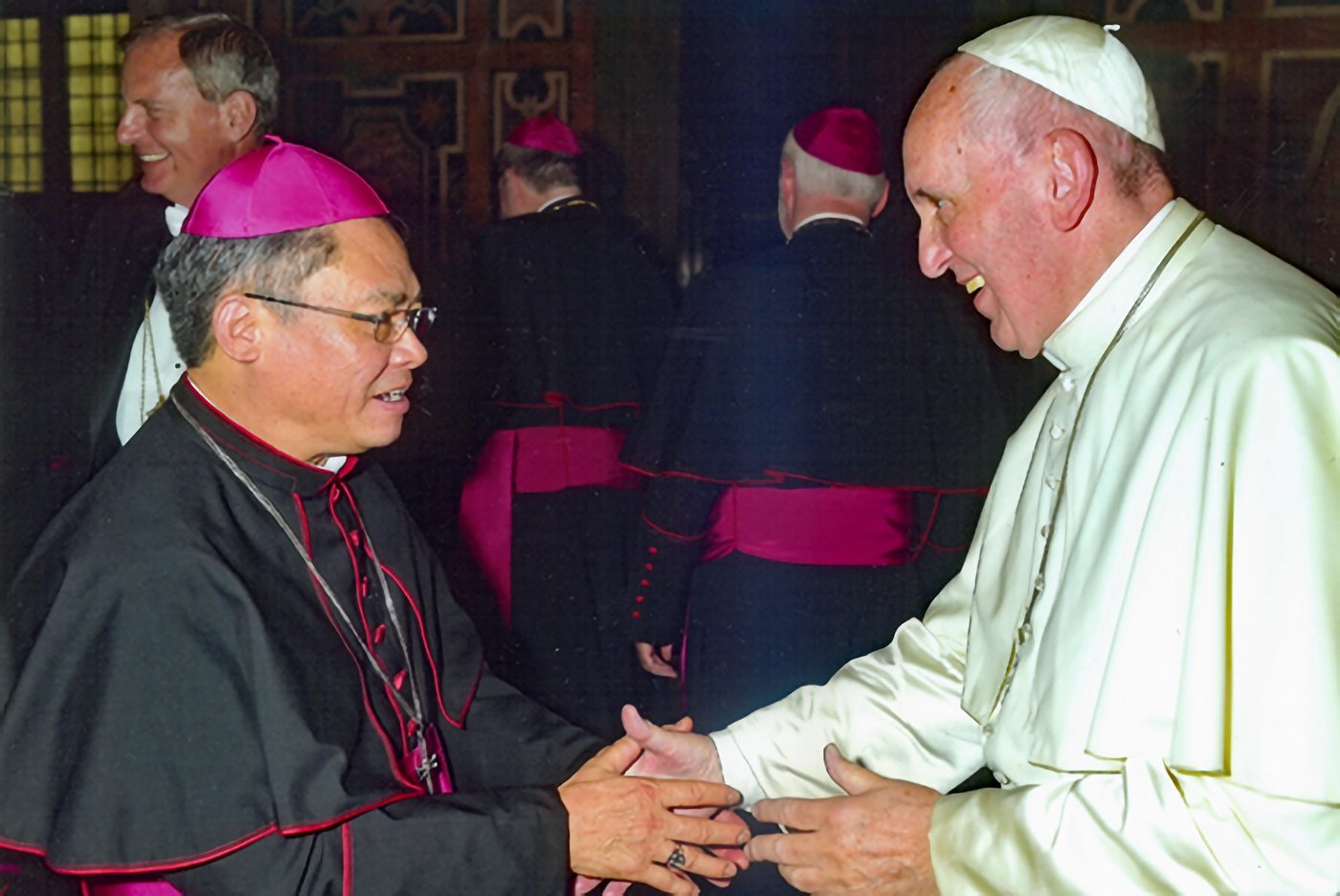
My journey has been one marked by grace. In 2016, as a newly ordained bishop, I had the privilege of travelling to Rome alongside fellow bishops from around the world for an audience with Pope Francis. Each of us was granted the opportunity to meet him personally. When my turn came, I introduced myself as a refugee from Vietnam. Without hesitation, the Holy Father embraced me. In that simple yet profound gesture, I felt the boundless depth of his compassion. Over time, I have come to understand even more clearly his unwavering love for refugees and for all those who live on the margins of society.
The tenderness and commitment Pope Francis shows toward the vulnerable have remained a source of inspiration for me. I’m also reminded of a long-held question I carried in prayer throughout my years as a seminarian, priest, and later as a bishop: Why was Saint Joseph—not merely because he is my beloved patron, but as the patron of the universal Church—not included in the Eucharistic Prayer? When Pope Francis made the decision to include Saint Joseph, my heart was filled with joy and gratitude. It was yet another beautiful sign of his deep attentiveness to the spiritual heart of the Church.
Pope Francis continually calls us to be a Church that is a “field hospital”—a Church that reaches out to the wounded, walks alongside those on the peripheries, and proclaims the joy of the Gospel. I draw deep inspiration from his vision of a Church that is close to her people: tender, merciful, and rooted in the lived realities of our communities.
As we look ahead to the Jubilee Year 2025, under the theme “Pilgrims of Hope,” may we walk together in faith, hope, and love, ever keeping our eyes fixed on Jesus, the Good Shepherd, and care for one another with the same tenderness and mercy that Pope Francis so beautifully embodies.
With gratitude and sorrow: remembering Pope Francis
By St. Paul, Alberta Bishop Gary Franken
It is with profound sadness that we mourn the passing of His Holiness Pope Francis, who dedicated himself to the Catholic Church and led her with humility for the past 12 years. We pray for the repose of his soul.
As we mourn the death of Pope Francis, I recall how early in his pontificate he initiated the Holy Year of Mercy and, more recently, invited us to that same mercy in the Jubilee Year as pilgrims of hope. I pray that he, who reminded us of our faith in the mercy of God, now knows this by sight as he is welcomed into the eternal peace of Christ. His legacy — especially his visit to Canada for our Indigenous Peoples, and his tireless work in fostering synodality — will continue to bear fruit.
Pope Francis’ historic visit to Canada in July 2022 was a momentous event for our Church in our journey of healing and reconciliation with the Indigenous Peoples of this land. “The Holy Father called on us to continue to assist survivors and families in healing from the traumas they have suffered.”
Today, we continue — as he exemplified during this significant visit — to listen, to dialogue, and to walk with the Indigenous Peoples as we journey toward reconciliation. He not only listened and dialogued with them — he expressed his heartfelt closeness. This is synodality at work. He also offered apologies for the impact of colonization and for the participation of the Catholic Church in the operation of residential schools throughout Canada. For his presence among us in Canada, we will be forever grateful.
Eternal rest grant unto him, O Lord, and let perpetual light shine upon him. May he rest in peace.
Further details will be forthcoming. Please check the website of the Canadian Conference of Catholic Bishops at www.cccb.ca or our diocesan website at www.dostp.ca.
It is with gratitude for his pontificate that we entrust him to our Lord.
Bishop Franken is the former vicar general of the Archdiocese of Vancouver
Your voice matters! Join the conversation by submitting a Letter to the Editor here.